Walking Away Is Not Winning: A Personal View on Maritime Disputes and MoUs
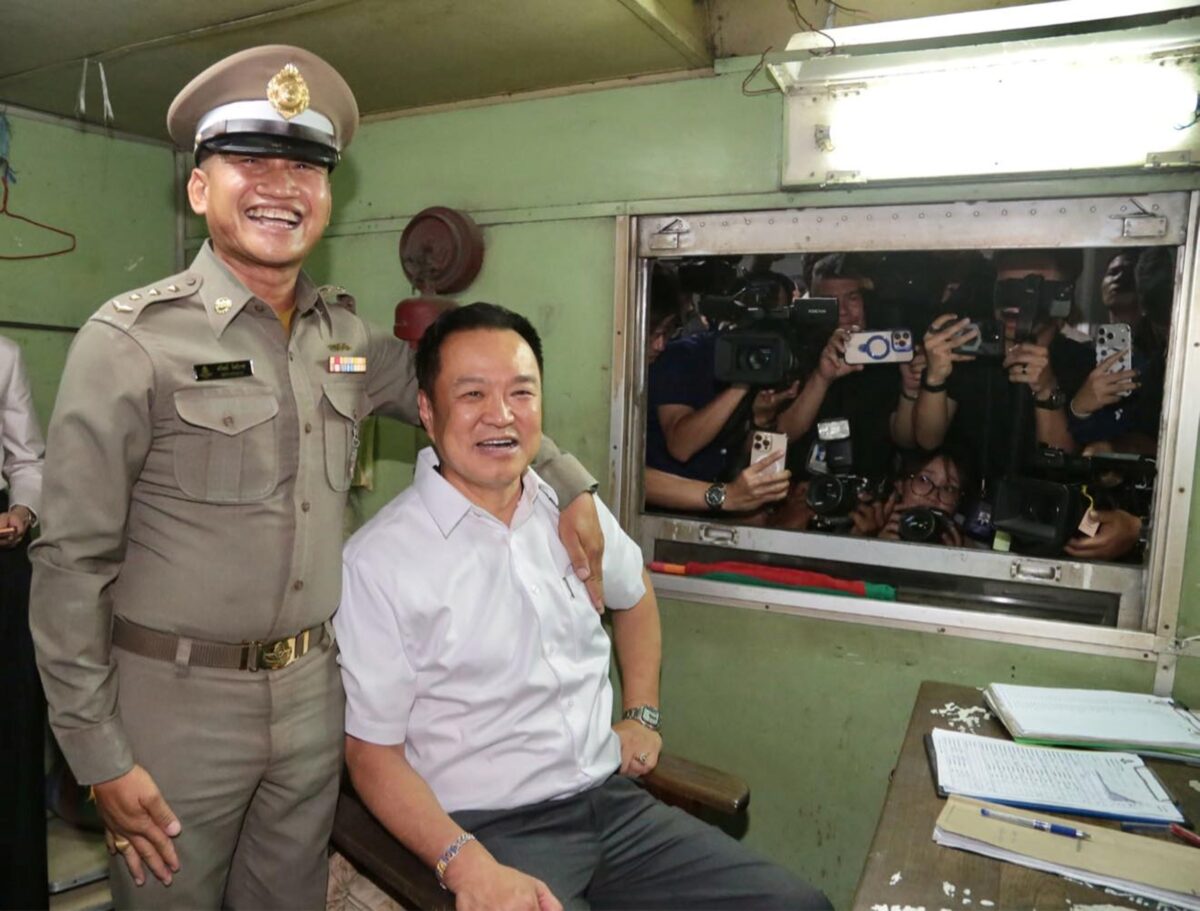 Thai Prime Minister Anutin Charnvirakul visits a police station recently; his government is trying to scrap the MOU 2001 (MOU 44) with Cambodia, which establishes a bilateral dialogue for maritime dispute resolution. FB
#opinion
In my view, the modern world has already provided us with a clear and fair framework to manage the oceans. That framework is the UN Convention on the Law of the Sea — a system designed to ensure that all nations, regardless of size or power, can protect their maritime rights through law rather than confrontation.
At the heart of UNCLOS is the Exclusive Economic Zone (EEZ), which gives coastal states the right to benefit from natural resources within 200 nautical miles of their coastline. For a country like Cambodia, this is not just a legal concept — it represents opportunity, sovereignty and the future of our people.
However, reality is often more complicated. Maritime boundaries can overlap, and when they do, countries must find ways to manage these differences peacefully. This is why memoranda of understanding (MoUs) are important. They are not final solutions, but they are practical tools that allow cooperation while respecting each side’s claims.
From my perspective, the question of “who wins” when one party withdraws from an MoU is the wrong question.
If a country walks away from an MoU, it may believe it is gaining freedom or strength. But in truth, it is stepping away from dialogue and mutual understanding. Without an MoU, tensions can increase, uncertainty grows and the risk of conflict becomes higher. Investors hesitate, cooperation stalls and the situation becomes more fragile.
On the other hand, the country that continues to respect international law and supports peaceful mechanisms may seem patient, even restrained. But I believe this position reflects strength, not weakness. By standing with legal principles and international norms, that country builds credibility and trust in the eyes of the global community.
There are established mechanisms, such as the International Tribunal for the Law of the Sea, where disputes can be addressed fairly. Choosing law over unilateral action is not only wise — it is necessary in today’s interconnected world.
In my opinion, when one side withdraws from an MoU:
It does not truly “win”, because it loses a platform for cooperation and risks greater instability.
The other side does not truly “lose”, because it retains legal and moral standing under international law.
Ultimately, both sides lose something valuable — but the one that remains committed to law and dialogue stands on firmer ground for the future.
I believe that maritime disputes should never be treated as zero-sum games. The ocean is shared, and its resources should be managed responsibly and peacefully. Walking away from cooperation is not a sign of victory — it is a step backward.
In the end, real strength lies not in abandoning agreements, but in upholding them while seeking fair and lasting solutions under international law.
Tesh Chanthorn is a Cambodian citizen who longs for peace. The views and opinions expressed are his own.
-Phnom Penh Post-