Hun Sen warns Thai move to end maritime MoU may fuel row
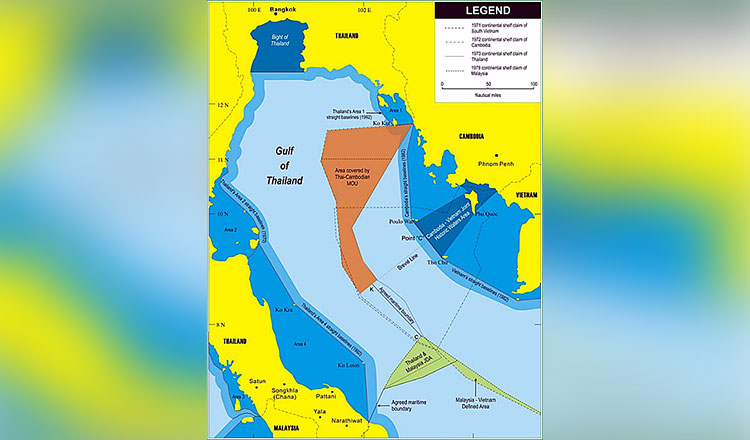 Map shows the Cambodia-Thailand overlapping claims area in the Gulf of Thailand. Arsana and Schofield
#National
Synopsis: Even Thailand’s analysts counsel against ending the agreement with Cambodia to address overlapping claims in the Gulf of Thailand, says acting Head of State, citing Thai security expert Surachart Bamrungsuk.
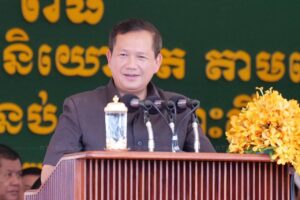
Acting Head of State Hun Sen warned that Thailand’s push to cancel the 2001 maritime MoU with Cambodia could signal a shift away from bilateral negotiations, while analysts said the move is driven by nationalism and risks dismantling a long-standing framework for managing overlapping claims in the Gulf of Thailand.
The 2001 MoU is a landmark agreement between Cambodia and Thailand regarding an overlapping claims area (OCA) in the Gulf of Thailand. Signed on June 18, 2001, it establishes a framework for the joint development of oil and gas resources and the delimitation of maritime boundaries.
The agreement seeks to establish a treaty for sharing the costs and benefits of exploiting petroleum resources in the disputed area. It also provides a mechanism to agree on a mutually acceptable maritime boundary in accordance with international law.
In a social media statement, Mr Hun Sen noted that Thai scholars and analysts have historically opposed the cancellation of the MoU.
“These analysts generally tend to oppose its cancellation, and I would like to express my respect for those views,” he said.
The Cambodian leader questioned whether Thailand’s recent efforts to revoke the MoU are an attempt to internationalise the maritime dispute, diverging from bilateral negotiation frameworks.
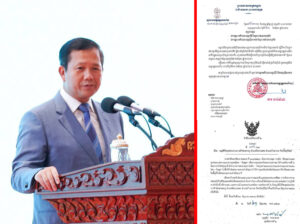
Along with the post, Mr Hun Sen shared a Khmer translation of an article by Thai security expert Surachart Bamrungsuk arguing against the move.
In the article, Surachart critically examined the Thai government’s reported intention to cancel what is often referred to as “MoU 44”. He argued that such a move is driven more by domestic nationalist sentiment than by legal or diplomatic necessity.
According to the analysis, the MoU serves as a negotiation mechanism rather than a treaty dividing maritime resources such as oil and natural gas. Its cancellation would effectively dismantle the existing framework for dialogue, forcing both sides to establish a new provisional arrangement—potentially complicating future negotiations.
Surachart said a similar attempt to cancel the deal in 2009 under then Prime Minister Abhisit Vejjajiva failed to take full legal effect as it did not follow proper procedures under the Vienna Convention on the Law of Treaties, including formal notification to Cambodia.
The Thai scholar suggested that the new push to cancel the MoU may be linked to rising nationalist sentiment in Thailand, particularly following armed conflict between the two countries last year.
He pointed to the influence of nationalist political groups and the role such rhetoric may play in electoral politics.
Surachart questioned the justification that cancelling the MoU would allow both countries to rely directly on international maritime law, such as the United Nations Convention on the Law of the Sea. He argued that the MoU is already grounded in the same legal principles.
He warned that abandoning the MoU could undermine Thailand’s own national interests by discarding a structured negotiation platform developed over years of diplomatic engagement. He doubted a new framework would be more effective than the existing one to resolve the overlapping claims, considering the complexities of maritime disputes and the historical context of the negotiations involved.
Foreign Affairs and International Cooperation Minister Prak Sokhonn said Cambodia will pursue peaceful, law-based mechanisms to resolve maritime disputes should Thailand withdraw from the agreement.
He cautioned that the end of the MoU would also mean the end of the only negotiation mechanism between the two sides and could potentially escalate their territorial dispute.
In an interview with National Television of Cambodia (TVK) on Friday, Sokhonn stressed that abandoning the pact would mean relinquishing a bilateral framework that has managed sensitive continental shelf disputes for nearly 25 years.
“In the absence of this bilateral framework, Cambodia would continue its efforts to explore alternative avenues for peaceful resolution in accordance with international law,” Sokhonn said.
He said a formal withdrawal by Thailand would signify the termination of the only mutually established mechanism designed to address these overlapping claims.
“Cambodia remains steadfast in upholding peaceful approaches and legal principles to safeguard its sovereignty and territorial integrity,” he said, adding that Cambodia’s priority remains regional stability through adherence to global legal standards.
Thailand’s Foreign Minister Sihasak Phuangketkeow is expected to submit the proposal to withdraw from the MoU to the Cabinet on May 5 for approval.
Sihasak outlined the plan during a briefing to 84 diplomats from 58 countries and eight international organisations, where he also reviewed Thailand’s recent foreign policy engagements.
Thailand’s approach, he claimed, was to adopt a forward-looking stance, especially on border issues requiring close coordination with neighbouring countries.
Sihasak said the proposal to cancel MoU 44 does not mean an end to negotiations, adding that it reflects the reality that talks under the framework have made little progress over the past 20 years.
Asian Vision Institute President Chheng Kimlong said the repeated attempts by Thailand to withdraw from border demarcation-related agreements with Cambodia show the Thai government’s stance in the border dispute.
“It is clear that Thailand does not respect the mutual understanding and spirit of peace that it reaffirmed with Cambodia when the MoUs were signed, which in turn displays the country’s lack of respect for international laws,” he said.
“By trying to revoke the MoU, Thailand is telling the world that it is not treating its neighbours as equals, which goes against the very basic foundation of international laws.”
Kimlong said that as long as Thailand is pursuing such goals, it will continue to escalate the row with Cambodia.
“It means that Thailand is opting for a ‘might is right’ scenario and the law of the jungle to solve the border dispute with Cambodia,” he said. “If that’s not a violation (of the peace agreement), I don’t know what is.”
-Khmer Times-
Map shows the Cambodia-Thailand overlapping claims area in the Gulf of Thailand. Arsana and Schofield