Analyst urges ‘patriotic, precise’ language in media coverage of border issues
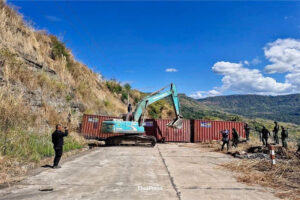
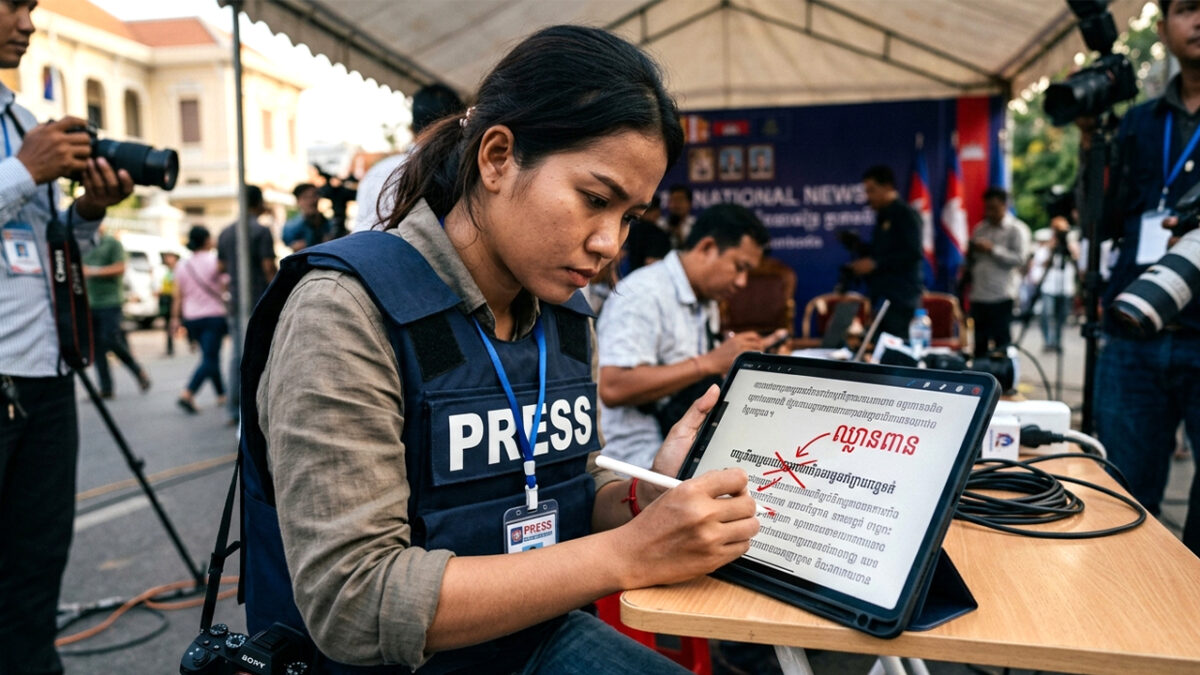 Social analysts have urged journalists to use precise language when discussing the Thai occupation of Cambodian territory. The Post generated-AI
#National
A Cambodian social analyst has called on local journalists to adopt a more “patriotic” approach when reporting on sensitive Thailand–Cambodia matters, arguing that the choice of language and sources can shape public perception and national interests.
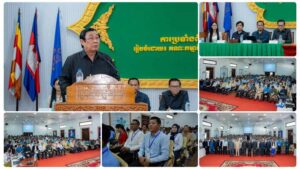
Speaking at the “AI Ethics and Professionalism: How Should We Move Forward?” forum, held in Phnom Penh on May 1, the Royal Academy of Cambodia’s Yong Peou stressed that coverage of border and historical issues should be handled with caution, warning against what he saw as overreliance on foreign narratives — particularly from Thai sources.
“We must be careful with how we frame these issues,” he said.
“When it comes to sovereignty and territorial integrity, we should not dilute the reality. If there is encroachment, we should have the courage to call it that,” he added.
Peou criticised what he described as a tendency among some journalists to cite foreign interpretations of history and geopolitics without sufficient scrutiny, arguing that such practices could inadvertently reinforce narratives that undermine Cambodia’s position.
His remarks come amid broader discussions about the role of media in an era increasingly shaped by digital platforms and artificial intelligence, where information can be rapidly amplified regardless of its origin or accuracy.
The analyst noted that Cambodia faces structural disadvantages in the production of historical and cultural documentation, pointing out that neighbouring countries have invested heavily in knowledge production over decades.
As a result, he noted, externally generated content may dominate digital and AI-driven information ecosystems, influencing how regional issues are understood.
“Other countries have built extensive archives and narratives over a long period,” he said.
“If we are not careful, those perspectives will dominate, especially when people rely on AI tools that draw from existing data,” he warned.
Speaking alongside him, Soklim, co-founder of a popular digital platform, raised concerns about the behaviour of information consumers in the digital age, noting that most people tend to search for everything on Google or through AI technologies, but pay little attention to the sources or how the data is “trained”.
He warned that without understanding how these technologies work, users may unknowingly accept biased information, while other countries, such as Thailand, are heavily investing in building and training their own data systems.
“People search for everything on Google or AI, but rarely think about where that data comes from or who created it. Meanwhile, neighbouring countries are working very seriously on this,” he said.
Peou urged journalists to strengthen professional standards while remaining mindful of national context, emphasising that patriotism and professionalism should not be seen as mutually exclusive.
“At the core of journalism is responsibility — not only to truth, but also to society and the nation,” he said.
“We must ensure that our work contributes positively to the country,” he added.
He noted that Cambodia’s media landscape has expanded significantly in recent years, with more individuals and organisations entering the sector, but he cautioned that growth in numbers has not always been matched by improvements in quality and ethical standards.
He also warned against the risks of provocative or “inciting” content, particularly on politically sensitive topics, noting that misrepresentation or inflammatory framing could escalate tensions or distort public understanding.
“A single sentence, if misused, can have serious consequences,” he said.
“Journalists should not underestimate the power of their words,” he added.
Peou’s comments add to ongoing debates over media ethics, the influence of digital technologies, and the balance between national interest and journalistic independence in Cambodia’s evolving information landscape.
-Phnom Penh Post-