Cambodian JBC protests Thai renaming of road, other violations on occupied land
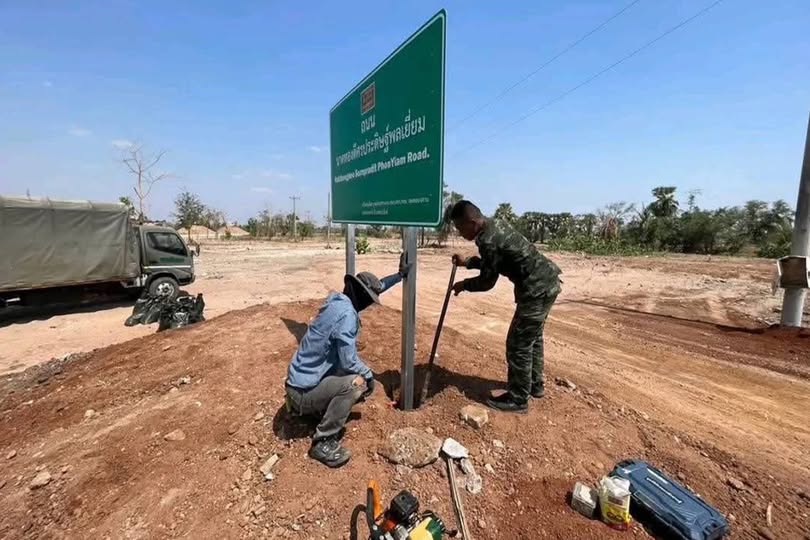 The Thai military recently renamed National Road 58, on Cambodian territory in Chouk Chey village. FB
The Cambodian side of the Joint Boundary Commission (JBC) has vehement protested the illegal occupation of Cambodian territory by the Thai military. This includes ongoing violations of Cambodian sovereignty through flying drones, laying barbed wire, placing shipping containers, planting Thai flags, digging canals, building roads and trenches, and renaming National Road 58.
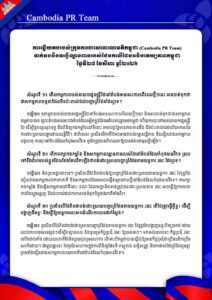
According to a press release issued today by the State Secretariat for Border Affairs (SSBA), the Thais have also altered the border environment in the areas of Tamone and Preah Vihear temples, bulldozed and destroyed the homes and properties of Cambodian citizens, and prohibited Cambodians from returning to live in their own homes.
The release noted that all of these activities constitute grave violations of international law, the UN Charter, the ASEAN Charter, the 2000 Memorandum of Understanding, the minutes of previous JBC meetings, and all past agreements mutually agreed upon by both sides — most notably the mandate of the JBC itself.
“The Cambodian Joint Boundary Commission maintains a firm stance in protecting the Cambodia-Thailand international border line left behind by the Indochina-Siam Border Commission. It does so by adhering to the principles of international law, the principle of inviolability of borders (Uti Possidetis Juris), the Franco-Siamese conventions and treaties, maps, and border demarcation minutes of the Indochina-Siam Border Demarcation Commission, as well as various agreements and relevant documents previously agreed upon by both sides,” it said.
The SSBA reaffirmed that the Cambodian JBC will not recognise any border line alterations resulting from the use of force.
It appealed to all compatriots and the public to trust the Royal Government of Cambodia and Cambodia’s JBC, noting that they uphold the highest professional conscience and responsibility by prioritising the supreme national interest, particularly the protection of territorial integrity and national sovereignty.
-Phnom Penh Post-
———————