Thai Talk of Bilateral Dialogue Rings Hollow While Seeking to Unilaterally Revoke 2001 MOU
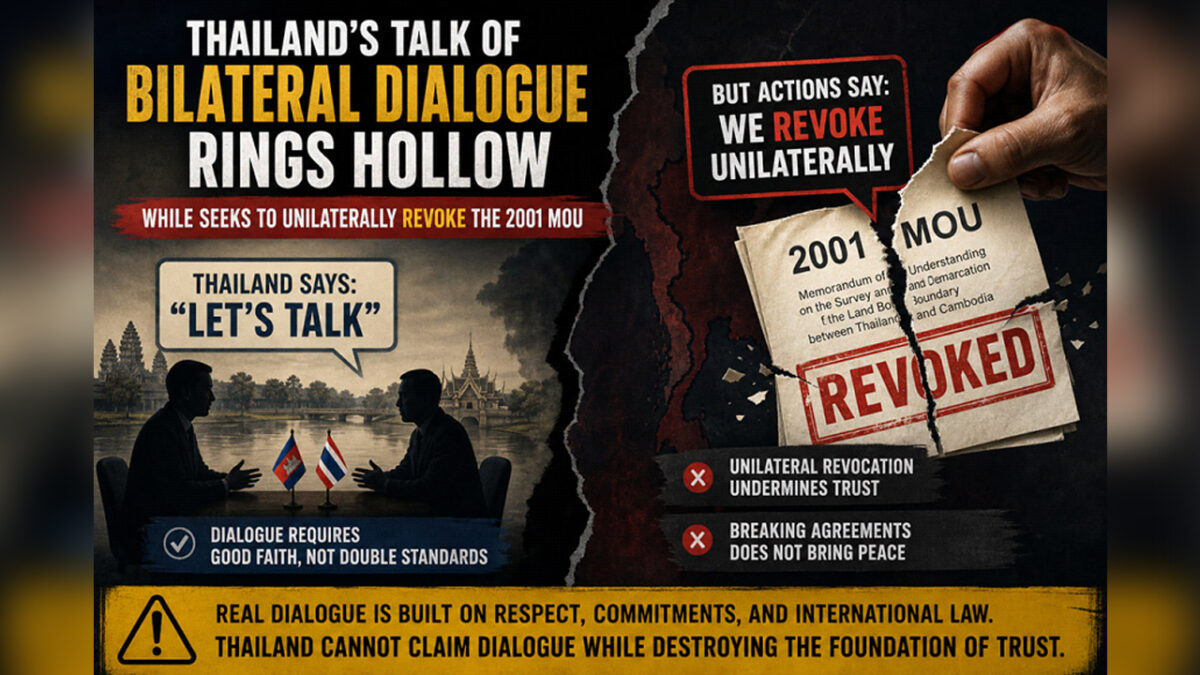 The author suggests that Thai diplomatic efforts appear to demonstrate a double standard. Supplied
#opinion
In recent years, Thai officials have repeatedly emphasised the importance of bilateral meetings and peaceful dialogue with Cambodia to resolve longstanding border and maritime issues. Yet actions speak louder than words. Thailand’s recent push to revoke the 2001 Memorandum of Understanding (MoU) on overlapping maritime claims raises serious questions about its commitment to good-faith negotiations and respect for signed agreements. This move not only undermines decades of diplomatic efforts but also highlights a troubling pattern of double standards in Thailand’s approach to Cambodia.
Signed in Phnom Peh on June 18, 2001, the MoU established a bilateral framework for addressing overlapping claims to the continental shelf in the Gulf. It envisioned two parallel processes: joint development of resources in the disputed area and delimitation of the maritime boundary in accordance with international law. For over two decades, this agreement has served as the primary mechanism guiding discussions between the two neighbours, reflecting a shared understanding that complex maritime disputes require cooperation rather than confrontation.
Cambodia has consistently upheld this spirit of partnership. Despite challenges, Phnom Penh has engaged in multiple rounds of talks and maintained that the MoU remains a valid and valuable instrument for mutual benefit. The agreement embodies principles of good neighbourliness, mutual respect and adherence to international norms — values essential for stability in Southeast Asia.
Thailand’s current government, however, appears ready to abandon this framework unilaterally.
Citing prolonged deadlock and only a handful of negotiation rounds, Thai authorities have signalled their intention to terminate the MOU, arguing it has failed to produce results. While frustration with slow progress is understandable, unilateral revocation sets a dangerous precedent. International agreements, even memoranda of understanding, are not disposable when they become inconvenient. They represent solemn commitments between sovereign states.
Double Standards and Selective Goodwill
Thailand’s position reveals an inconsistency that Cambodia finds deeply concerning. On one hand, Bangkok frequently calls for bilateral meetings and “good neighbourly relations.” On the other, it seeks to discard the very agreement that structures those discussions on maritime issues. This selective approach raises doubts about Thailand’s goodwill.
If the MOU has indeed stalled, the logical path forward is intensified dialogue within its framework or mutual agreement to amend or replace it — not unilateral abrogation. Cambodia has not consented to termination, and under principles of international law, matters concerning bilateral treaties require consensus through proper diplomatic channels. Unilateral action risks escalating tensions and eroding trust built over years.
This is not an isolated incident. Historical patterns show Thailand applying different standards when dealing with Cambodia compared to other neighbours. While Thailand resolves or manages disputes with others through patience and compromise, its approach to Cambodia often appears more rigid. The overlapping claims area holds potential for shared prosperity through joint resource development — benefits that could support economic growth on both sides of the border. Revoking the MOU without a viable alternative risks turning a manageable dispute into a prolonged conflict, depriving both nations of opportunities for collaboration.
Cambodian Minister of Foreign Affairs and international Cooperation, Prak Sokhonn, has expressed deep disappointment and regret over Thailand’s move. He rightly notes that the 2001 MoU is more than a technical document; it carries significant political weight as the foundation for resolving overlapping claims peacefully. Terminating it unilaterally would reject the only agreed bilateral mechanism, leaving a vacuum that could invite instability.
Respect for Agreements
Cambodia has always advocated for peaceful resolution through dialogue, respect for international law (including UNCLOS) and adherence to signed agreements. This stance aligns with ASEAN’s principles of consensus and non-interference, as well as the broader goal of regional stability.
Thailand should reconsider its position. Revoking the MoU without mutual consent contradicts the spirit of bilateralism it claims to champion. Instead, both countries should return to the negotiating table with renewed commitment. Joint development could bring tangible benefits — revenue from resources, job creation and strengthened economic ties — while boundary delimitation proceeds fairly under international standards.
The Gulf is not a zero-sum arena. It is a shared maritime space where cooperation can yield win-win outcomes. Cambodia remains open to constructive engagement and stands ready to discuss any concerns Thailand may have regarding the MoU.
However, progress requires sincerity from both sides. Thailand must demonstrate goodwill by honouring existing agreements rather than dismantling them prematurely.
In an era of geopolitical uncertainty, with major powers competing for influence in the region, smaller nations like Cambodia and Thailand must prioritise unity and mutual respect. Unilateral moves that undermine bilateral frameworks only invite external interference and weaken ASEAN’s collective strength.
Cambodia calls on Thailand to pause its revocation efforts and engage in genuine, good-faith dialogue. Respect for international and bilateral agreements is not a sign of weakness — it is the foundation of mature diplomacy and lasting peace. The people of both nations deserve leaders who choose cooperation over confrontation and shared prosperity over division.
As neighbours bound by history, culture and geography, Cambodia and Thailand have far more to gain by working together than by tearing up agreements. It is time for Thailand to match its words of bilateral engagement with actions that build confidence, not erode it. Only through fidelity to signed commitments can we resolve our differences peacefully and chart a brighter future for both peoples.
Seun Sam is a policy analyst at the Royal Academy of Cambodia. The views and opinions expressed are his own.
-Phnom Penh Post-