Climate Change and Its Impact on Education
 Climate Change and Its Impact on Education
#opinion
Climate change is increasingly recognized not only as an environmental crisis, but also as a growing challenge to human development and social progress.
Among the sectors affected worldwide, education is becoming one of the most vulnerable. Rising temperatures, floods, storms, droughts, wildfires, and environmental degradation are disrupting learning systems and threatening the future of millions of students around the world.
Education is one of the foundations of human progress. It shapes knowledge, skills, innovation, and opportunity. Yet climate change is placing growing pressure on schools, universities, teachers, and students, particularly in vulnerable and low-income regions.
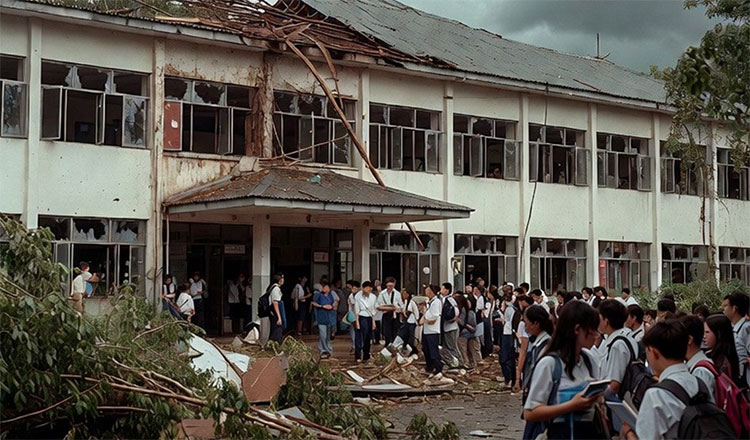
Extreme weather events are among the most immediate threats. Floods, storms, and wildfires damage school buildings, roads, electricity systems, and educational infrastructure, forcing temporary or long-term school closures. In many developing countries, schools are not designed to withstand climate-related disasters, leaving students without safe learning environments.
Heat waves are also affecting education in many parts of the world. Excessive temperatures reduce concentration, learning ability, and classroom productivity, especially where schools lack ventilation or cooling systems. In some countries, schools are forced to shorten schedules or suspend classes entirely during periods of extreme heat.
Climate change also indirectly disrupts education through its impact on livelihoods and poverty. Families affected by droughts, crop failures, floods, or economic hardship may struggle to afford school expenses or may require children to work and support household survival. As a result, vulnerable children, especially girls in some regions, face higher risks of dropping out of school.
Water scarcity and food insecurity further affect student health and attendance. Poor nutrition, disease outbreaks, and lack of clean water reduce students’ ability to learn and participate fully in education. Climate-related displacement and migration can also interrupt schooling for millions of children forced to leave their homes due to environmental disasters.
The impacts are especially severe in poorer countries and rural communities where educational systems already face limited resources and infrastructure challenges. Ironically, many of these regions contribute the least to global greenhouse gas emissions but suffer disproportionately from climate-related disruptions.
At the same time, climate change is reshaping the role of education itself. Schools and universities are increasingly expected to prepare future generations to understand environmental challenges and build sustainable societies. Climate education, environmental awareness, scientific literacy, and sustainable practices are becoming essential parts of modern learning.
Education is therefore both a victim of climate change and a key solution to it.
Investing in resilient educational infrastructure is becoming increasingly important. Schools must be safer, greener, and better prepared for climate-related disasters. Governments and communities should strengthen disaster preparedness, improve access to clean water and sanitation, and ensure continuity of learning during emergencies.
International cooperation is equally necessary. Supporting vulnerable countries through climate financing, educational support, and sustainable infrastructure development can help protect children’s right to education in the face of growing environmental risks.
Climate change ultimately reminds humanity that development cannot remain sustainable if environmental systems continue to deteriorate. Education, which represents hope and opportunity for future generations, depends heavily on social stability, healthy environments, and resilient communities.
In the end, climate change threatens more than buildings and infrastructure. It threatens knowledge, opportunity, and the future potential of millions of young people worldwide.
Protecting education from climate change is therefore not only an environmental responsibility, but also an investment in human progress, equality, and the future of civilization itself.
-Khmer Times-