War of words escalates at UN; analyst suggests Cambodia cannot trust Thai ‘bilateral’ intentions
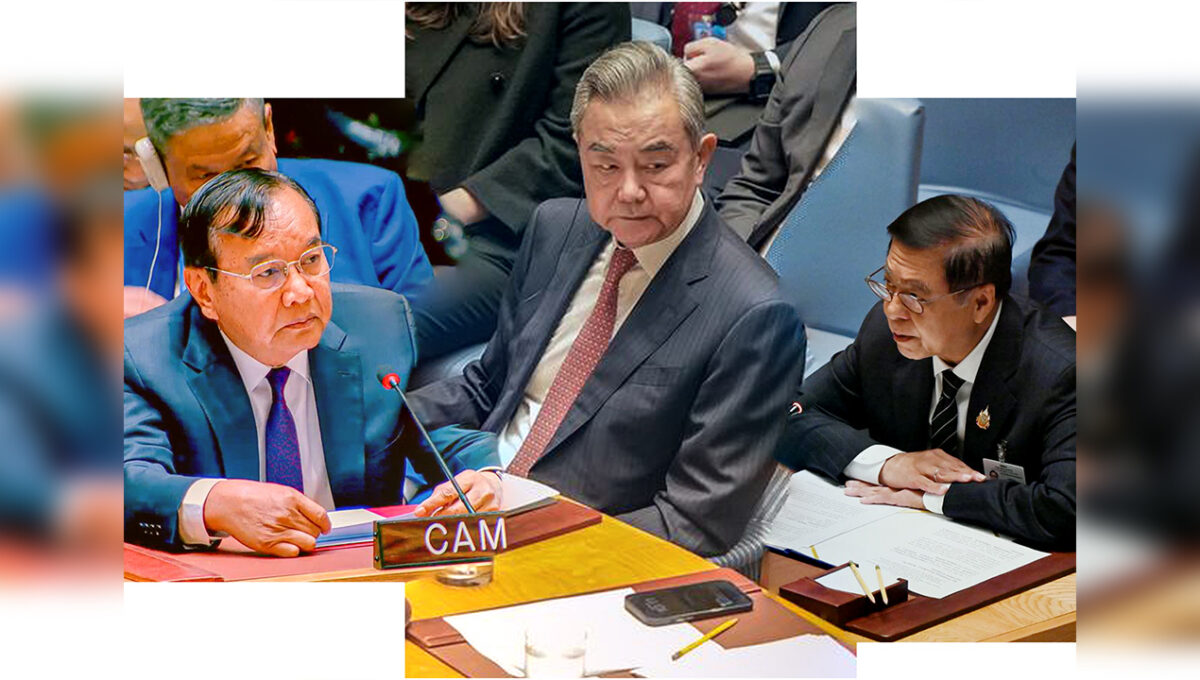 Foreign minister Prak Sokhonn used a UN Security Council debate to accuse Thailand of maintaining occupied positions inside Cambodian territory. Supplied
#National
Cambodia has renewed efforts to internationalise its border dispute with Thailand, with Minister of Foreign Affairs and International Cooperation Prak Sokhonn using the UN Security Council (UNSC) to accuse Thailand of maintaining occupied positions inside Cambodian territory, despite an existing ceasefire agreement.
Speaking during a UNSC open debate in New York on May 26, Sokhonn warned against attempts to alter borders through force or “faits accomplish,” while urging the full implementation of the bilateral peace agreements reached following months of border tensions and military confrontations.
“While the ceasefire continues to hold, we remain concerned by the situation on the ground in the occupied areas well inside Cambodian territory,” he told the council.
The remarks drew a swift response from Thailand, whose foreign minister Sihasak Phuangketkeow accused Cambodia of attempting to gain a “unilateral advantage” by repeatedly raising the dispute at international forums.
According to Thai media reports, Sihasak said lasting peace would require “sincerity” from both countries and warned that continued public accusations against Thailand risked undermining bilateral relations and ongoing negotiations.
The exchange highlighted continuing strains between the two ASEAN neighbours despite a December 27, 2025 ceasefire.
The latest tensions began escalating in mid-2025 after military movements and competing territorial claims triggered full-scale armed confrontations between Cambodian and Thai troops near several sensitive frontier areas.
Both sides accused each other of violating agreed positions and attempting to establish new facts on the ground.
Regional diplomatic efforts later helped prevent a broader escalation, with ASEAN-mediated talks in Kuala Lumpur and subsequent ceasefire negotiations involving international observers helping to stabilise the situation.
The border dispute itself has roots stretching back decades, particularly around areas near the UNESCO-listed Preah Vihear Temple and other ancient temple complexes located along undemarcated sections of the frontier.
Fighting between Cambodian and Thai forces between 2008 and 2011 left soldiers and civilians dead and displaced thousands after tensions intensified following Cambodia’s successful registration of Preah Vihear temple as a World Heritage Site.
In 2013, the International Court of Justice (ICJ) reaffirmed Cambodia’s sovereignty over the area surrounding the temple and ordered Thailand to withdraw troops from the vicinity. However, competing territorial interpretations and unresolved border demarcation issues have continued to fuel periodic tensions.
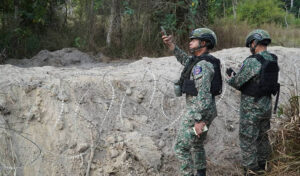
Cambodia has repeatedly accused Thai forces of occupying territory inside Cambodian borders, including areas near Ta Krabey, Ta Mone and K’na temples, while Thailand has consistently rejected accusations of territorial expansion.
Geopolitical analyst Yang Peou believed that Cambodia’s decision to continue raising the issue internationally reflects declining confidence in bilateral mechanisms with Thailand.
“Thailand has invaded Cambodia, and yet it demands that Cambodia not bring this issue to the international stage,” he said, in an analysis which followed the UNSC meeting.
Peou argued that Thailand’s previous withdrawal from the 2001 memorandum of understanding concerning overlapping maritime claims had weakened Cambodian trust in bilateral negotiations.
He also claimed international involvement had been critical in reducing tensions during the 2025 border crisis, pointing to ASEAN-backed ceasefire arrangements reached in Kuala Lumpur.
“If Cambodia does not take this to the international level, Thailand will continue its brazen encroachment,” he told The Post.
Peou further alleged that Thai military activities and symbolic actions near disputed temple areas had deepened mistrust between the two countries, adding that Cambodia’s leadership faced growing domestic pressure to continue defending its territorial claims through diplomatic channels.
“If Thailand wants Cambodia to stop raising it in international forums, one must ask: can Cambodia trust in dialogue with Thailand? Will Thailand respect it? Will Thailand be willing to withdraw its troops from Cambodian territory? Will Thailand be willing to remove its barbed wire and shipping containers?” he questioned.
He maintained that Cambodia’s decision to raise the issue at international forums, including the UN, was not escalatory but necessary for de-escalation and enforcement of agreements.
According to him, international involvement has previously played a key role in preventing further escalation during the 2025 border tensions and in supporting ceasefire arrangements.
“Cambodia must raise this issue in international forums, such as the UN,” he said.
He added that without external involvement, the situation on the ground would likely worsen:
“Without international involvement, Thailand does not comply.”
Despite the sharp rhetoric, both governments publicly reaffirmed their commitment to maintaining the ceasefire and pursuing peaceful solutions under international law.
During his UNSC remarks, Sokhonn said Cambodia remained committed to resolving disputes through diplomacy, dialogue and adherence to the UN Charter, while emphasising the importance of sovereignty, territorial integrity and peaceful settlement mechanisms.
-Phnom Penh Post-