Cambodians Mourn the Destruction of Ta Krabey Temple, Destructor Pretends to Be Heritage Protector
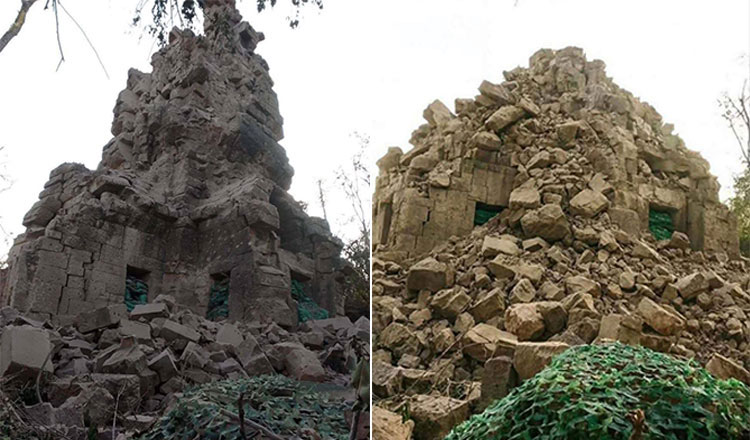 Cambodians Mourn the Destruction of Ta Krabey Temple, Destructor Pretends to Be Heritage Protector
#opinion
The destruction of cultural heritage is never erased by subsequent symbolic gestures. This fundamental principle lies at the heart of the tragedy surrounding Ta Krabey Temple, an 11th-century Khmer sanctuary situated along the Dangrek mountain range in the sovereign territory of the Kingdom of Cambodia. Recent visits by senior Thai officials to the site raise an important question: can such acts negate or obscure the earlier destruction inflicted upon this historic monument? The answer, under both law and conscience, is unequivocally no.
Ta Krabey Temple, built during the reigns of Kings Suryavarman I and Udayadityavarman II, stood for nearly a millennium as a testament to the spiritual, architectural, and cultural achievements of the Khmer civilization.
Remote and long preserved within a forested sanctuary, the temple held deep cultural and religious significance for Cambodian communities. It was not merely an archaeological structure, but a living symbol of identity, continuity, and heritage.
In December 2025, this sacred site suffered catastrophic damage as a result of military actions attributed to Thai armed forces. The destruction, which followed earlier damage to other heritage sites, represents a profound loss not only to Cambodia but to humanity as a whole. Cultural property, once destroyed, cannot be restored to its original authenticity. Its loss is permanent, and its consequences transcend national boundaries.
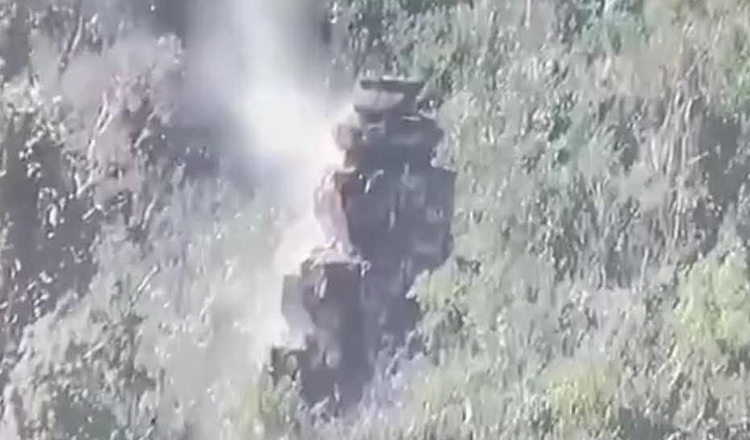
Despite repeated formal protests by Cambodia, Thai authorities have continued activities at and around Ta Krabey Temple, including organizing visits and facilitating public presence at the site. The subsequent visit of senior Thai ministers on 22 April 2026 has been presented as a form of engagement. However, such gestures are inherently symbolic and cannot erase or neutralize prior acts of destruction. Under international law, including the principles embodied in the 1954 Hague Convention and the 1972 World Heritage Convention, damage to cultural heritage remains legally and historically significant regardless of subsequent actions.
More concerning is the risk that such visits may contribute to the creation of a fait accompli, reinforcing an unlawful situation on the ground while diverting attention from accountability. Cultural heritage protection is not achieved through post hoc appearances, but through respect, preservation, and adherence to international obligations.
Without acknowledgment of harm, investigation, and appropriate remedies, symbolic acts risk being perceived not as protection, but as distortion.
The legal framework governing the area is equally clear. Ta Krabey Temple lies within Cambodian territory as established by the Franco–Siamese Treaty of 1907 and its subsequent delimitation instruments, as well as later bilateral agreements such as the 2000 Memorandum of Understanding and the Terms of Reference of 2003.
Continued activities by Thai authorities at the site, despite Cambodia’s formal objections, constitute not only a violation of sovereignty but also an unlawful exercise of jurisdiction, undermining ongoing efforts toward peaceful resolution through the Joint Boundary Commission.
At a broader level, the case of Ta Krabey Temple reflects a troubling global pattern: the instrumentalization of cultural heritage in situations of conflict. When destruction is followed by symbolic gestures of concern, the line between preservation and appropriation becomes blurred. This undermines the integrity of international cultural protection regimes and weakens collective efforts to safeguard humanity’s shared heritage.
Cambodia’s position remains consistent and grounded in international law. The country calls for the cessation of all unauthorized activities at the site, the withdrawal of personnel, and the respect of established mechanisms for peaceful dispute resolution.
At the same time, it calls upon the international community, including UNESCO and relevant institutions, to uphold the principles of cultural heritage protection and to ensure that acts of destruction are neither forgotten nor obscured.
Cambodians today mourn the loss of Ta Krabey Temple, not only as a physical structure, but as a symbol of history, identity, and continuity. Its destruction must be recorded truthfully, addressed responsibly, and remembered collectively. No subsequent visit, however high-level, can undo what has been lost.
In the preservation of heritage, as in justice, acknowledgment must precede reconciliation, and accountability must accompany memory.
-Khmer Times-