Temple Diplomacy or Administrative Annexation? The Erosion of the Cambodian-Thai Status Quo
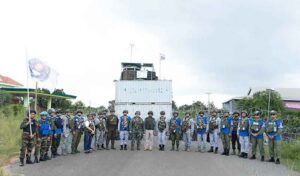
 Thai citizens drive up to Ta Krabei temple before Khmer New Year. FB
#opinion
The Songkran Smoke Screen
At first glance, the announcement by the Thai 2nd Army Region to “open” Prasat Ta Krabei (referred to in Thailand as Prasat Ta Kwai) to the public for the Songkran festival appeared to be a rare olive branch. For four days — April 13 to 16 — the gates of a flashpoint that defined the 2025 border crisis have been swung open. However, beneath the festive veneer of “temple diplomacy” lies a far more cynical reality: a deliberate exercise in administrative possession designed to normalise military occupation and systematically dismantle the legal status quo.
By unilaterally controlling the access, movement and narrative of a site that legally belongs to Cambodia under the 1907 Franco-Siamese Treaty, Thailand is not celebrating a holiday; it is laundering a territorial violation through “soft-power” encroachment.
The Myth of the ‘Temporary Opening’
In international law, the act of “opening” or “closing” a site is a definitive assertion of jurisdiction. When the Thai military issues queue tickets, sets visiting hours and enforces “strict rules” on Cambodian soil, they are exercising sovereignty by proxy.
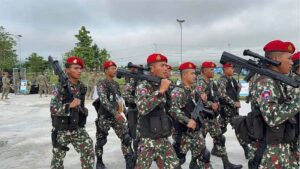
Under the 2000 Memorandum of Understanding (MOU) on Land Boundary Demarcation, both nations are strictly prohibited from engaging in any activity that alters the environment or the legal status of contested areas until a final delimitation is reached. Thailand’s current management of Prasat Ta Krabei is a textbook violation of Article 5 of that agreement. By transforming a demilitarized zone into a military-managed tourist attraction, Bangkok is unilaterally rewriting the rules of engagement while the Joint Boundary Commission (JBC) remains sidelined. This is not cooperation; it is a fait accompli enforced by the presence of an occupying force.
The Annex Map Vs Administrative Creep
The legal heart of the matter remains the 1907 Franco-Siamese Treaty and the accompanying Annex I map. While the 1962 and 2013 International Court of Justice (ICJ) rulings primarily addressed the Preah Vihear temple, the underlying legal logic — that the frontier follows the watershed line as depicted in the Annex I map — establishes a binding precedent for the entire Dangrek range.
Under these maps, Prasat Ta Krabei falls within Cambodian territory. Yet, the Thai military’s “security” narrative — citing landmines and safety — has become a permanent excuse for an exclusive presence. This Songkran opening is a strategic “breather” that masks a long-term goal: creating a de facto reality where the international community and the public eventually view Thai administration of the temple as a mundane, undisputed fact.
Ritualised Expansionism at Ta Mone Thom
This pattern of encroachment extends beyond Ta Krabei to the Ta Mone Thom (Prasat Ta Muen Thom) complex, where Thai authorities have similarly staged unilateral religious ceremonies. By cloaking military presence in the sacred robes of tradition, Bangkok is attempting to “sanctify” its occupation.
These ceremonies are not innocent acts of faith; they are calculated displays of ownership intended to establish a spiritual and historical link to land that remains legally Cambodian. Like the controlled access at Ta Krabei, the unilateral management of rituals at Ta Mone Thom serves to further sideline diplomatic mechanisms and replaces bilateral cooperation with a provocative performance of sovereignty. This ritualised expansionism confirms a systemic strategy to rewrite the border through cultural persistence.
A Dangerous Escalation of Border Tensions
Beyond the controlled narrative of tourism and tradition, these persistent violations represent a dangerous escalation of tensions along the border.
By bypassing established diplomatic channels and opting for unilateral military-led initiatives, Thailand is moving away from the spirit of the ICJ rulings and toward a policy of “might makes right”.
This aggressive posture forces a reactive militarisation on the Cambodian side, effectively turning a cultural heritage zone back into a potential combat theatre. Far from a peaceful holiday gesture, the 2nd Army’s actions serve as a provocation that tests Cambodia’s patience and undermines regional stability. This shift from diplomatic dialogue to “administrative fait accompli” signals that Thailand is no longer interested in a negotiated settlement, but is instead intent on a slow-motion annexation of contested territory.
A Call for Legal compliance: Respect the Status Quo
Thailand must recognise that temporary festive gestures cannot substitute for binding legal obligations. We call upon the Thai authorities to immediately cease all unilateral administrative and military manoeuvres that violate the spirit of the 2000 MOU and the letter of the 1907 Treaty. Respecting the status quo is not a matter of military discretion; it is a mandate under international law. It is time for Bangkok to abandon “sovereignty by proxy” and return to the Joint Boundary Commission (JBC) to resolve these disputes through genuine, law-based dialogue rather than unilateral encroachment. Genuine peace is built on the sanctity of treaties, not the seasonal charity of an occupying army.
The Verdict: Silence is Acceptance
For Cambodia, this is not just about a few days of tourism or a single ceremony; it is about the systemic erosion of sovereignty. Every ticket issued and every ritual performed by a Thai official on these sites is a strike against the sanctity of international law and the treaties that govern the border. As the incense smoke clears after Songkran, the reality remains: these temples are not gifts for Thailand to give — they are sovereign rights for Cambodia to reclaim.
Opening a gate you have no legal right to lock is not a gesture of peace — it is a continued violation of the status quo.
Panhavuth Long is founder and attorney-at-law of Pan & Associates Law Firm. The views and opinions expressed are his own.
-Phnom Penh Post-