How the Hormuz chokepoint is accelerating global security and energy transitions
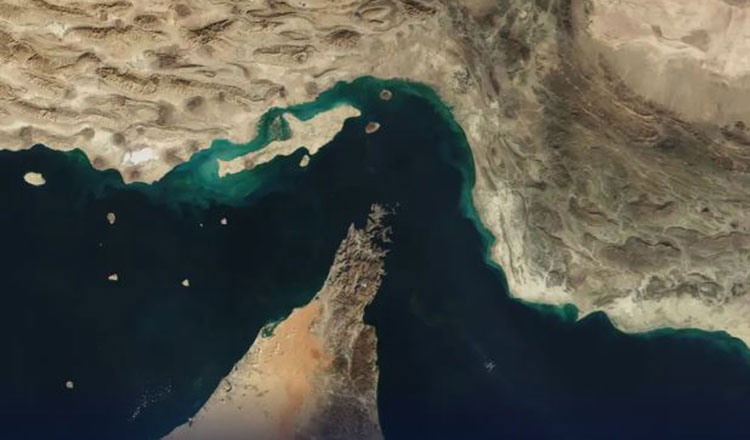 A satellite view of the Strait of Hormuz, the world’s most critical oil chokepoint, located between Iran and the Musandam Peninsula. DW
#opinion
War in the Middle-East is forcing the world to change how it handles energy and national security
The military conflict that began early this year, pitting Iran against the United States and Israel, initially caused fear that World War III has erupted. Although this has yet to prove to be the case, the war has accelerated a number of changing patterns within global security dynamics, causing great concern among many observers.
Unlike the world wars of the 20th century, where the US benefitted from distance and late entry, this conflict finds Washington a direct, primary combatant, navigating a battlefield where its traditional advantages are methodically challenged and its business networks are bleeding from the collateral damage.
Shift in global partnerships and distancing of allies
One of the most notable political shifts of this conflict is a change in traditional alliances. In a departure from the broad coalitions seen in previous decades, several long-term partners have opted for a more cautious, strategic distancing from the US.
Faced with the immediate threat of energy shortages and high cost of a prolonged conflict, many American allies are prioritising their own economic stability and national security. They won’t even allow the US to use their airbases or consider sending troops to assist in this war. These countries either fear retaliation from Iran and its military networks, whose missiles can reach Europe—it has been clearly demonstrated in the Middle East that any country hosting a US military base will not be spared from attacks—or they do not recognise the benefits of the war.
This shift has left the US and Israel to bear the majority of the military and financial burdens, reflecting a move away from the automatic global consensus that often supported past military actions.
Energy security inversion and Hormuz chokepoint
The conflict has fundamentally inverted the global energy security map, acting as a violent catalyst for a transition that was previously expected to take decades. With the Strait of Hormuz—a corridor for 20% of the world’s oil—becoming the primary theatre of leverage, oil prices have shattered records at $150 per barrel.
This crisis has pushed Iran into a situation of “If I die, everyone else die too”. Tehran has shown a willingness to cripple global shipping and neighbouring military and energy infrastructures. Every country is feeling the heat of the war even though they may be thousands of kilometres away from the conflict zone. No one is spared in this energy crisis.
The result is the largest fossil fuel supply shock in modern history, forcing nations to view energy independence as a matter of immediate survival rather than a long-term environmental goal.
This crisis has also accelerated currency diversification in energy markets. Non-dollar energy trades—evidenced by the increasing use of the Chinese yuan in the Strait of Hormuz—suggest that the long-standing, singular dominance of the US dollar in global energy is transitioning towards a more fragmented, multi-polar financial landscape.
EV paradox: Overcapacity meets existential demand
Perhaps the most ironic shift is how the war has resolved the West’s “overcapacity” dispute with China.
While the US and EU previously imposed tariffs on Chinese electric vehicles, the wartime surge in fuel prices—up 27% in the US and over 90% in some Asian markets—has made affordable transport a necessity that overrides trade protectionism.
The conflict has served to rescue Chinese manufacturers such as BYD, who were previously struggling with a domestic slowdown but are now seeing a massive surge in international demand. This shift is particularly evident in Southeast Asia and Europe, where the immediate necessity of escaping oil-driven transport and inflation has caused regional demand to override previous political rhetoric and trade protectionism.
This shock is creating a fundamental shift in consumer behaviour that is unlikely to reverse, effectively locking in permanently higher global EV adoption rates regardless of the manufacturer’s origin.
New architecture of security: Bases as liabilities
Technologically, the conflict has shattered the myth of high-tech invulnerability and exposed the frailty of concentrated power projection.
The vulnerability of physical airbases has become a central lesson of the conflict, proving that traditional, immovable facilities are easy targets for long-range missiles. The large presence of US military bases in the region is now increasingly viewed as a liability rather than an advantage, as IRGC forces utilise these concentrated footprints as convenient targets for precision strikes.
This tactical shift is compounded by a profound cost-exchange failure, where mass-produced, low-cost drones like the Shahed models can easily oversaturate and overwhelm multimillion-dollar defence systems. When a drone costing only $2,000 forces the expenditure of a multi-million interceptor, the model of warfare becomes sustainable for the attacker while becoming economically bankrupting for the defender.
Nuclear deterrence as ultimate self-defence
Most concerning is the shift in the global security mindset regarding nuclear weapons.
The United States’ use of “decapitation” tactics has de facto rendered the deterrent infrastructure of every country useless no matter how advanced they are. Venezuela and Iran are prime examples.
All powers are now convinced that even the most advanced defence force is no longer sufficient to guarantee their sovereignty.
In this context where might makes right, the notion of ultimate defence has been redefined: nuclear weapons are increasingly seen as the only reliable deterrent against direct intervention by superpowers.
This situation establishes a dangerous trend on the global security stage, exacerbating mistrust, accelerating the arms race for the world’s most feared weapons, and making the planet dangerous for every single country.
No country is insulated, unreachable, or impenetrable.
The cost of security is prohibitive for developing countries, whose survival is at stake in this new dangerous global security conditions, marked by daring unilateralism, spontaneous and overwhelming invasions and decapitations, and the compelling desire to acquire nuclear weapons as a means of defence.
Chan Kunthiny is a Phnom Penh-based geopolitical and security analyst. The views expressed here are the author’s own.
-Khmer Times-
—————-