Opinion: At Our Borders, the Weight of Ghosts
 Opinion: At Our Borders, the Weight of Ghosts
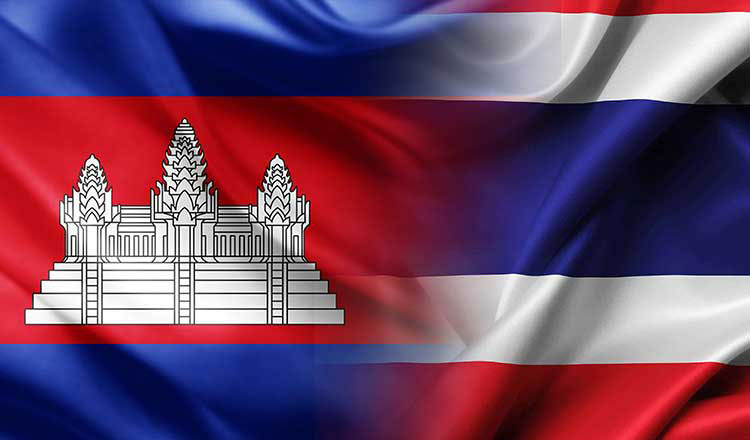
Khmer Times | Since July 24, Cambodia—our country—has been going through a painful ordeal: an armed confrontation with Thailand. Once again, the drums of memory stir our hearts, maps ignite, and borders burn. Yet this is not a simple territorial dispute. It is a war born from history—or more precisely, from a particular way of telling it.
For the past four days, our soldiers have been facing not only Thai troops but also memories turned into strategy, and past humiliations transformed into a national myth. For more than a century, Bangkok’s elites have cultivated a national wound: that of the so-called “lost territories.”
That pain, very real at its origin—inflicted by French colonial cannons in 1893—has, over the decades, been shaped, magnified, and repurposed until it became an ideology. The ideology of a mutilated body that must be restored: a dreamed-of Thailand, larger, stronger, encompassing Laos and, of course… Cambodia.
Let us be clear: we do not blame the Thai people. We challenge the official narrative that binds them—from the earliest days of school—in redrawn maps and textbooks repainted in the colors of revenge. They are taught that we Khmers are the “younger brothers” of a “great Thai nation,” that our land is a forgotten branch of the Siamese tree. That is how a map becomes a battlefield.
It is important to understand that Thai nationalism was not born of the people. It was born of elites—first monarchy, and then military. It was built on two seemingly opposing but in fact complementary pillars: on one side, the glorious myth of a country that was never colonized; on the other, the painful narrative of national humiliations inflicted by the West. These two stories—one overly grandiose, the other deeply wounding—have converged into a single obsession: to restore an amputated kingdom.
Beginning in the 1930s, successive governments turned that obsession into a political tool, a means of mobilizing people against the “foreigner,” against “betrayal,” and even against democracy itself.
That is why we Cambodians better understand the chronic hostility surrounding our temple of Preah Vihear. It is not just a sacred rock atop a mountain. It is a symbol—a living testament that our sovereignty disturbs a memory crafted to justify expansion.
Today, in 2025, Cambodia does not claim any territory. We do not need expanded borders. What we need is peace, mutual respect, and regional cooperation. We have suffered enough—through colonization, decades of war, and genocide…
What we ask is that history no longer be used as a weapon, but as a lesson. That children—both in Thailand and here—be taught that the other is not an enemy, but a neighbor. That our cultural differences are not hierarchies, but shared treasures.
Our people—ancient and proud—do not have to bow to the dreams forged by the cartographers of irredentism. Our sovereignty is not up for negotiation. It is, like that of any nation, non-negotiable.
We extend our hand to those in Thailand who understand that the greatness of a country is not measured in square kilometers, but in its ability to live in peace with its neighbors.
Jean-Francois TAN