Kingdom joins Board of Peace, signalling strategic gains and new diplomatic opportunities
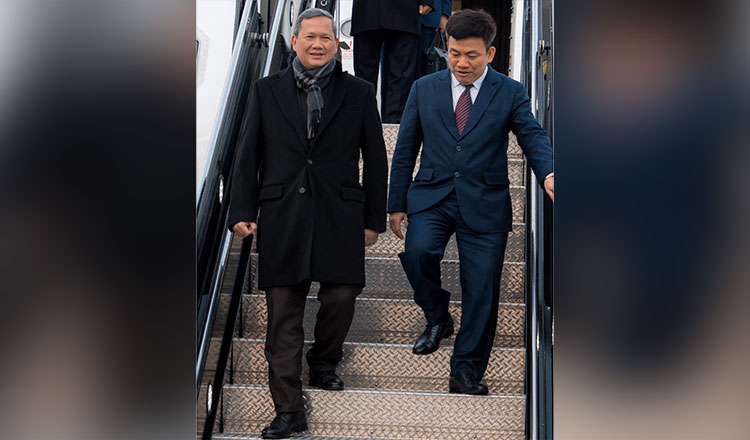 Prime Minister Hun Manet (L) arrives in the United States to attend the inaugural meeting of the Board of Peace in Washington, DC. He is accompanied by Cambodian Ambassador to the US Koy Kuong. PMO
#National
Synopsis: Cambodia’s participation in the US Board of Peace signifies the country’s wish to reinforce its image as a peace-loving nation while raising its diplomatic leverage via enhanced access to influential world leaders and policymakers.
Prime Minister Hun Manet’s participation in the inaugural meeting of the Board of Peace (BoP) in Washington, DC is expected to reinforce and institutionalise Cambodia’s image as a peace-orientated nation, while strategically enhancing its diplomatic leverage, regional standing and access to high-level “personal diplomacy” with influential global leaders and decision-makers.
Mr Hun Manet, accompanied by a delegation, arrived in Washington yesterday to attend the first meeting of the BoP, where he will meet President Donald Trump and world leaders to mark the formal commencement of the board’s mandate, focusing on Gaza reconstruction, peacebuilding and broader regional and global stability talks.
Delegations from at least 20 countries are expected to participate, including several heads of state or government. Among the Association of Southeast Asian Nations (ASEAN) member states, Mr Hun Manet will be joining Vietnam’s top leader To Lam— the General Secretary of the Communist Party of Vietnam, and Indonesian President Prabowo Subianto, who also confirmed their attendance at the first leaders’ meeting.
The meeting, scheduled for Thursday at the Donald J Trump Peace Institute, recently renamed by the State Department (formerly the United States Institute of Peace—USIP), is expected to host delegations from over 20 countries.
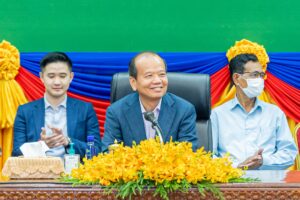
“Joining the inaugural meeting of the ‘Board of Peace’ as a founding member, alongside President Donald Trump in Washington, provides opportunities for Cambodia to show the world that Cambodia is a peaceful and peace-building country,” said renowned Cambodian economist Ky Sereyvath. “It does not mean that only the government maintains peace during the conflict between Cambodia and Thailand, but also that Cambodia does what it says,” he said.
Sereyvath, who is also Director-General of the Institute of China Studies at the Royal Academy of Cambodia (RAC), said that by joining the Peace Council, Cambodia aims to immediately promote ceasefires and ensure peace along the border, particularly between Cambodia and Thailand.
“It provides an opportunity for Cambodia to receive more investors from the US and other countries as Cambodia is in the status of a Peace Council member,” he added.
According to a statement by the Ministry of Foreign Affairs and International Cooperation, the body was established following a United Nations Security Council resolution adopted on November 17, 2025. Its primary objective is to promote global peace and spearhead reconstruction efforts in Gaza.
Beyond its mandate on Gaza, participating world leaders are expected to hold discussions on regional and global stability, development and security. During his visit to the US capital, Mr Hun Manet is scheduled to hold bilateral meetings with American dignitaries and international counterparts, focusing on strengthening diplomatic ties and expanding multi-sectoral cooperation.
On his way back from the US, he will visit Geneva and Brussels. The ministry said the visits are aimed at strengthening Cambodia’s partnerships with key European stakeholders and international organisations.
Thong Mengdavid, a geopolitical and international security analyst, said yesterday that by participating in the inaugural meeting of the BoP, Cambodia signals an intention to position itself as a normatively committed, peace-orientated state.
“Such engagement reflects an effort to align with multilateral initiatives aimed at conflict resolution, including ongoing hostilities in Gaza and other regions,” he said. “Cambodia’s longstanding contributions to United Nations peacekeeping operations— through the deployment of thousands of personnel—have already cultivated a reputation as a constructive actor in global security governance.”
According to Mengdavid, who is also Deputy Director at the China-ASEAN Studies Centre, Cambodia University of Technology and Science (CamTech), involvement in the BoP would likely reinforce and institutionalise this image.
“Beyond reputational considerations, participation in the BoP may also serve strategic objectives. Engagement in a new multilateral platform provides Cambodia with opportunities to collaborate with major powers and regional stakeholders on issues of shared security concern. In particular, it may create additional diplomatic space to address tensions along the Cambodia–Thailand border within a broader peace-oriented agenda,” he added.
“While the Gaza conflict may serve as an initial focal point for the Board’s activities, the institutional framework could expand to encompass other disputes, including those in Southeast Asia,” he said.
“Thus, Cambodia’s participation may be understood not only as an expression of principled support for peace, but also as a calculated effort to enhance its diplomatic leverage and regional standing.”
US President Donald Trump invited Prime Minister Hun Manet to become a founding member of the BoP. Nearly 60 countries received similar invitations to join the BoP as founding members.
According to the proposal, countries seeking permanent membership are required to contribute $1 billion.
Mr Hun Manet accepted the invitation, saying that the move reinforces Cambodia’s commitment to global peace and that participation as a founding member carries no financial obligation.
The decision was discussed with US Indo-Pacific Command Admiral Samuel J Paparo, who said that the move would strengthen US-Cambodia relations and support regional stability.
“This participation is to demonstrate Cambodia’s commitment to supporting and contributing to the promotion of global peacekeeping,” Mr Hun Manet said on January 27 via social media.
Addressing public concerns over a possible financial contribution, Mr Hun Manet explained that as a “founding member”, Cambodia will serve a three-year term on the board without any payment.
Kin Phea, Director-General of the Royal Academy of Cambodia (RAC)’s International Relations Institute of Cambodia (IRIC), said yesterday that Cambodia’s decision to become a founding member state of BoP involves three strategies.
“First, by fulfilling its obligation as a founding member, Cambodia sends a powerful message that the nation loves peace. This participation demonstrates that Cambodia is not passive but is actively committed to every mechanism, forum and institution dedicated to seeking, maintaining and protecting global stability.
Second, the engagement is an implementation of Cambodia’s pacifist and multilateral foreign policy. It reinforces the Kingdom’s stance of neutrality and openness, proving that Cambodia is ready to collaborate with diverse global actors—including high-profile figures like President Trump—to foster dialogue and resolve conflicts peacefully.
Third, this initiative is a crucial step in the diversification of multilateral diplomacy to serve the nation’s strategic interests. By broadening its diplomatic horizons beyond traditional blocs, Cambodia reduces reliance on any single power and ensures its sovereignty is respected in a shifting world order.”
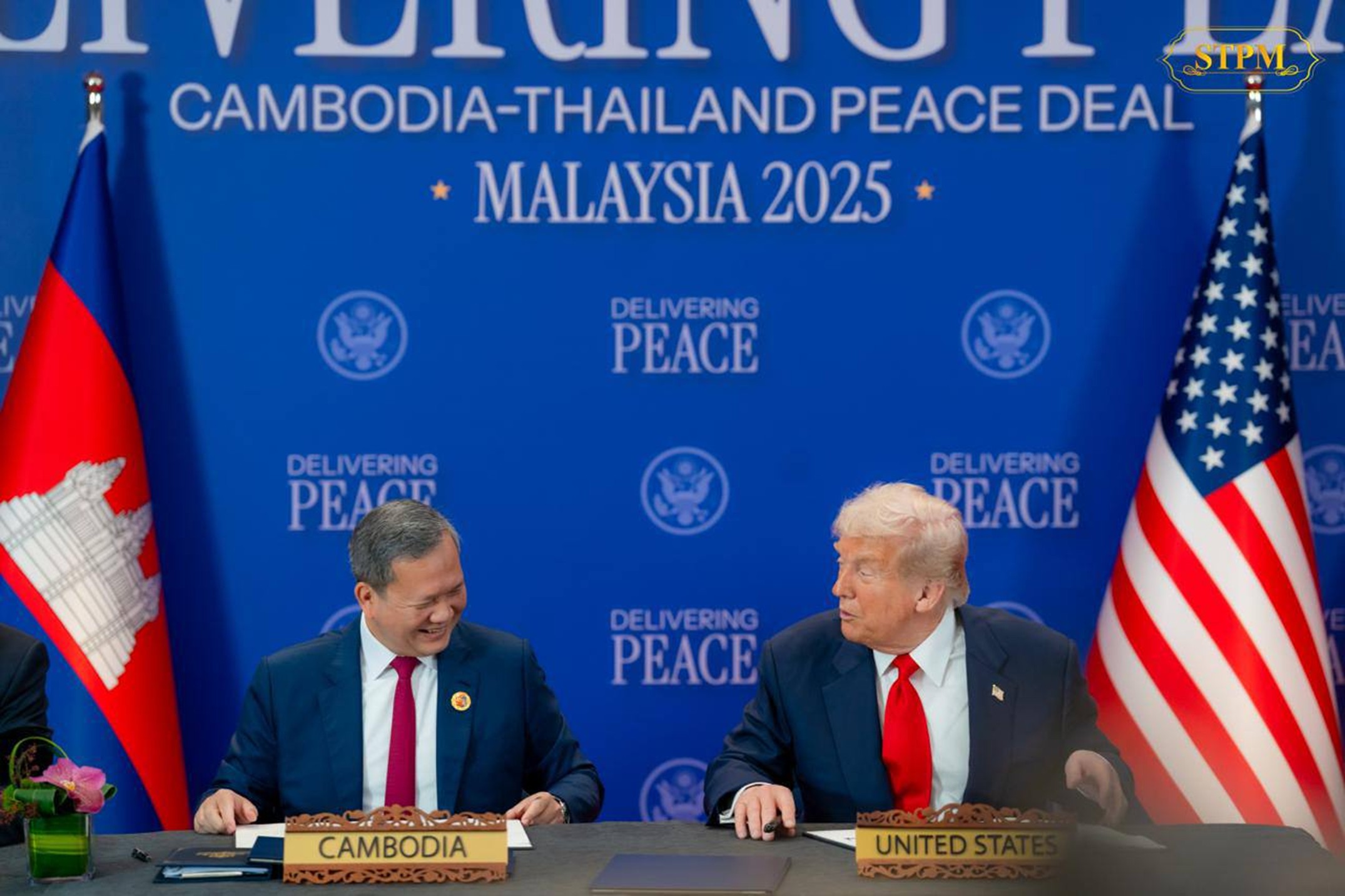
Trump brokered the ceasefire agreement between Cambodia and Thailand on July 28 last year after five days of fighting along the border, before witnessing the signing of the Kuala Lumpur Peace Accord on October 26.
Regarding opportunities, Phea said the platform offers invaluable access to high-level “personal diplomacy” with influential global leaders and decision-makers.
“It elevates Cambodia’s international prestige, potentially attracting investment and allowing the nation to directly shape its narrative on the world stage, ensuring its voice is heard clearly and respected in the West,” he added.
-Khmer Times-
—————-