Cambodia dismisses Thai claims of ‘third round’ of fighting
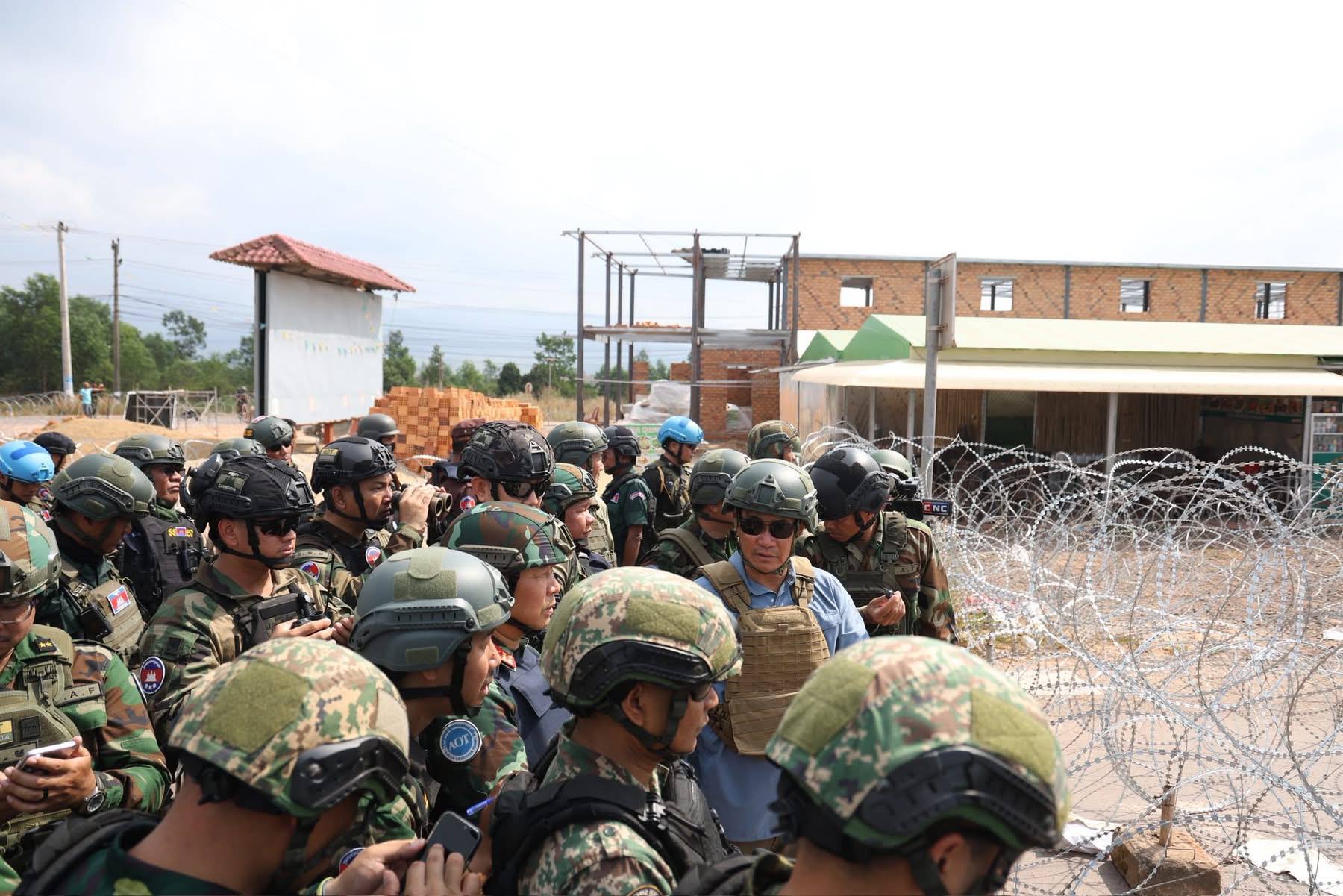 An ASEAN Observer Team inspects the area fenced off with barbed wire by the Thai army along the Cambodia-Thailand border, on January 16. KT/Khem Sovannara
#National
Synopsis: Phnom Penh says it remains committed to the ceasefire as it rejects reports of a military build-up along the border potentially leading to another eruption of clashes.
Preah Vihear province – Cambodian security officials firmly rejected Thai media reports warning of a military build-up along the border and a possible “third round” of fighting, reiterating Phnom Penh’s commitment to the ceasefire.
The officials dismissed the Thai media reports as “unfounded and misleading” while cautioning against misinformation amid heightened tensions following Thailand’s general election.
Several Thai media outlets recently warned of a potential “third round” of border clashes between Cambodia and Thailand, quoting unnamed security sources alleging that Phnom Penh has acquired advanced anti-aircraft weaponry following the Thai elections. The reports suggested that the purchase could undermine Thailand’s long-standing aerial superiority and raise the risk of renewed hostilities along the frontier.
A Cambodian security official said that Cambodia remains committed to its peace agreements with Thailand, including the December 27, 2025 ceasefire.
“Claims that Cambodia is escalating its military capabilities are unfounded and misleading. Cambodia remains firmly committed to the Joint Statement adopted at the Third Special Meeting of the General Border Committee (GBC) between the Kingdom of Cambodia and the Kingdom of Thailand, and continues to strictly implement the ceasefire in good faith to preserve peace and stability along the border,” the official told Khmer Times.
The official added that Cambodia prioritises peaceful dialogue with neighbouring countries, while remaining committed to protecting its sovereignty and territorial integrity from foreign aggression.
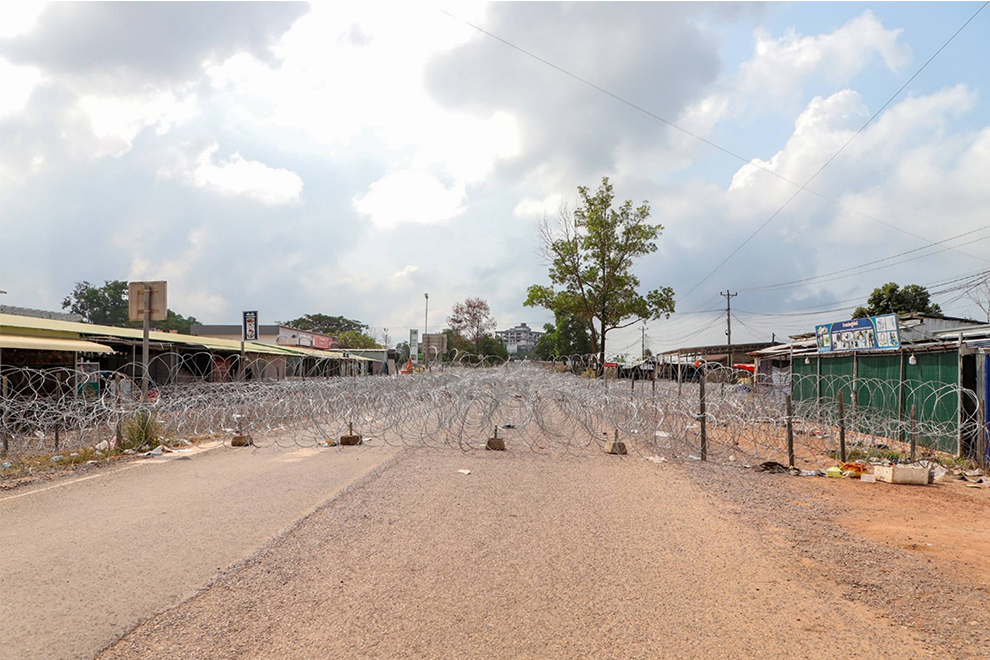
Thai media reports said Thai officials have expressed concern that Cambodia’s acquisition of sophisticated air defence systems could fundamentally change the nature of future confrontations, potentially going beyond the exchange of BM-21 rocket fire seen in previous clashes.
The border area has reportedly been designated by Thai authorities as a critical security vulnerability, with surveillance and monitoring operations intensified amid warnings that tensions in the post-election period could escalate if not carefully managed.
In public commentary cited by Thai media, security experts suggested that the current situation represents a sensitive phase in bilateral relations, with both sides maintaining heightened military preparedness along the frontier.
In the snap general election on February 8, the conservative Bhumjaithai Party, led by incumbent Prime Minister Anutin Charnvirakul, secured a commanding victory, marking the first time this century a royalist-aligned party has won a general election.
The Thai Prime Minister’s reassurance that there would be no further military clashes between Cambodia and Thailand was described by experts as a positive signal, though they cautioned that Cambodia must remain vigilant as mutual trust has yet to be fully restored.
“Thailand will maintain its own defences while respecting the sovereignty of the other and protecting our own,” Anutin was quoted as saying. He also dismissed speculation that Cambodia was attempting to politically destabilise Thailand.
Yang Peou, Secretary-General of the Royal Academy of Cambodia (RAC), cautioned that Cambodia should not place excessive expectations on the outcome of Thailand’s election, stressing that the Kingdom must instead rely on its own capabilities.
“Cambodia should not place too much expectation on the election results in Thailand, but should instead rely more on its own capabilities. No matter which party is in power in Thailand, they still want Khmer land,” he said in a social media post.
Border tensions between Cambodia and Thailand boiled over twice in 2025, once in July and again in December, which the ruling Cambodian People’s Party (CPP) described as a “full-scale invasion” involving infantry, naval and air strikes, resulting in significant humanitarian and economic consequences for communities along the frontier.
During 21 days of fighting in December, about 640,000 Cambodian civilians were forced to flee their homes. Thirty civilians were killed and 87 others injured. As of yesterday, 86,447 people—including 45,376 women and 28,012 children—remain in displacement camps, the Ministry of Interior reported.
The ministry, as the lead institution for territorial administrative management, said it has been coordinating with sub-national administrations and relevant ministries to restore livelihoods and public services while ensuring comprehensive support for displaced civilians.
The report also outlined extensive damage to civilian infrastructure since December 7, 2025. Damage to private property includes 980 houses, 10 apartments or hotels, four petrol stations, one private market, 34 cars, 10 motorcycles, warehouses, cell towers, water facilities and agricultural assets.
Public infrastructure damage includes schools, hospitals, government buildings, pagodas, ancient temples, bridges, roads, electricity facilities and transmission lines. Authorities said assessments are ongoing.
The ministry said Cambodia will not accept any concessions that compromise national sovereignty or territorial integrity. It added that ceasefire agreements do not constitute territorial exchanges and that all border issues must be resolved strictly in accordance with international law, including technical surveying and border management.
It expressed support for the government’s protest against recent actions by Thai armed forces, including the placement of containers blocking road access and road construction activities in areas that Cambodia maintains are well within its sovereign territory under the Franco-Siamese Convention of 1904 and the Treaty of 1907.
The ministry called on the international community, ASEAN and the United Nations to support a peaceful resolution based on international law and existing agreements, while emphasising that borders must not be altered by force.
Cambodians were warned to remain vigilant against false narratives that could undermine national unity and the government’s efforts to resolve the dispute peacefully.
-Khmer Times-