Peace and Friendship and Shared Destiny
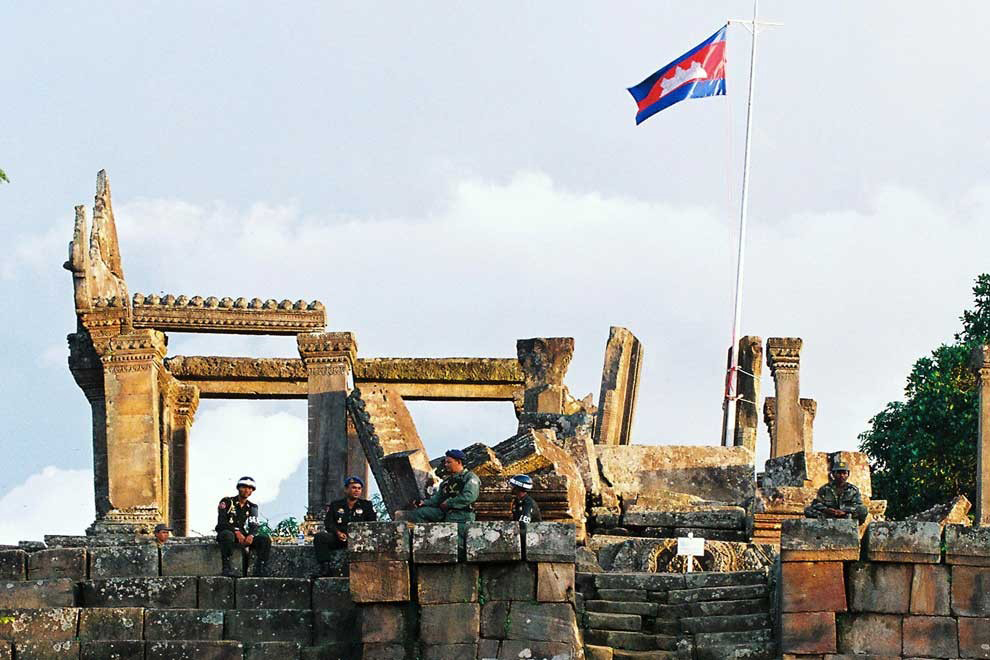 [The Temple of Preah Vihear dates back to the period when Angkor flourished during the 9th to the 14th centuries. Post staff]
-Opinion-
Our world today stands at a very dangerous precipice for all mankind. Now may be the most concerning time since World War II. Such a trend is now taking place against the common will of all mankind because some countries or powers have violated the principles of international law and continue to violate the sovereignty of their neighbouring countries in a brutal manner, as evidenced by the Russian invasion of Ukraine, the Israeli attack on Palestine, and perhaps most especially the recent invasion of Cambodia by the Thai army.
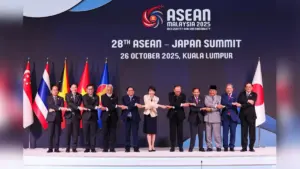
Can the ASEAN meeting in Kuala Lumpur, Malaysia on October 26 build, restore and ensure a common destiny to the bloc? Is the war between Cambodia and Thailand a common problem for ASEAN or should it be considered a separate issue, adhering to the principle of non-interference in the internal affairs of any country, from a selfish point of view? How should ASEAN members work together to resolve issues between member states to build and restore trust in the bloc?
Currently, military clashes continue to erupt in many regions of the world, especially the recent five-day war of aggression by the Thai army against Cambodia. This inflamed not just peace between Cambodia and Thailand, but also peace, security and mutual trust in the entire region.
The international community clearly saw that the war of aggression by the Thai army was a demonstration of the ambitions that the Thai army nurtures to seize territory in along the border between the two countries, which has been in existence for more than a hundred years, since 1904 and 1907.
It should be recalled that bilateral relations between Cambodia and Thailand date back to the 13th century during the Angkor period.
The Kingdom of Ayutthaya gradually replaced the declining Khmer Empire from the 14th century. The French protectorate separated Cambodia from modern Thailand during the 19th–20th centuries, and diplomatic relations between the two states were established on 19 December 1950.
Relations between the two countries remain complicated by the incomplete demarcation of the border, which has led to a protracted border dispute, particularly over the Preah Vihear Temple area, which was referred to the International Court of Justice in 1962, but experienced military clashes in 2008 and 2011, and then this year.
Diplomatic relations between Cambodia and Thailand have reached a low point, beginning with a May 28 gunfight in which Thai soldiers shot and killed a Cambodian soldier, the unilateral closure of the border crossing by the Thai army, trade threats against Cambodia, the expulsion of the Cambodian ambassador to Bangkok, and finally the closure of two temple entrances and the launch of an operation to attack the Cambodian army.
Each of these actions created increased tension between Cambodia and Thailand, until the outbreak of hostilities on July 24, initiated by the Thai army, leaving the Cambodian side with no choice but to exercise its right to self-defence.
In the past, Cambodian and Thai politicians have always held the view that they are good neighbours and strategic partners. The governments of both countries have previously shared their appreciation for the progress of friendship, relations and good cooperation in all fields between the two countries.
In recalling the 75-year diplomatic relations between the two countries, the two kingdoms declared one goal: to continue strengthening friendship and maintaining peace and development. This strong will to open a new page in the history of relations between the two countries was announced after the armed conflicts of 2008 and 2011.
The honeymoon period of less than 10 years was ruined by Thai nationalist politicians, who stoked the flames and pushed conservatives in the Thai military to seize power from the weak democratically elected government.
In recent decades, frequent changes of government in Thailand have also weakened Cambodian-Thai relations and have been volatile, often undermining economic, trade and other key areas of cooperation, especially the demarcation of the border between the two countries.
This month’s 47th ASEAN Summit in Kuala Lumpur is expected to provide an opportunity for the Cambodian and Thai governments to return to the negotiating table and resolve to look to a shared future as neighbours.
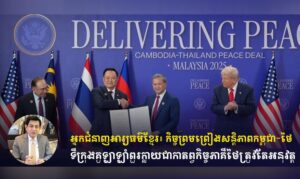
Indeed, a ceasefire agreement that came into effect on July 28 was the first such decision, although it lacked an effective guarantee mechanism. If the negotiations to end the war are concluded with the signing of a document in the presence of US President Donald Trump as a witness, including a clear mechanism to monitor and verify the withdrawal of all weapons and troops from the border, returning to the original situation as before the outbreak of the war, then the relationship between the governments and people of the two countries can be restored to a good state.
The reopening of the border will also be a panacea that will heal the psychological wounds of the people of both countries as soon as possible.
To ensure that peace and friendship between Cambodia and Thailand can be sustained, ASEAN has a very important role. The role of the ASEAN chair is to restore peace, security and friendship in the region, based on the principles stated in the ASEAN Charter, which stipulates that member states must live together in a shared destiny.
The upcoming summit should be viewed with optimism, as no member can adopt a selfish, one-size-fits-all approach. It will provide a golden opportunity for all members of the bloc to participate in solving common regional problems.
True peace and friendship between Cambodia and Thailand will only be possible if the governments and people of both countries can eliminate excessive nationalist politics and stop using nationalist, populist rhetoric to exploit their respective domestic populations.
They must demonstrate the will to work together to build and restore mutual trust, based on the long-standing traditional friendship that the people of the two countries have had in the spirit of similar cultures, traditions, customs and traditions, despite both nations having slightly different misinterpretations of their respective histories.
The upcoming ASEAN Summit in Kuala Lumpur will be closely watched by the international community.
How will the entire bloc demonstrate its collective will to ensure that the three pillars, including the political-security community, the economic community, and the socio-cultural community, are interconnected and mutually influential?
The expectation to achieve this goal is that the conflict between Cambodia and Thailand will not remain an isolated issue, but a common ASEAN one. All member states will need to implement measures to build and ensure mutual trust, especially stability, peace and long-term shared prosperity in the ASEAN bloc. We must not adopt a passive, selfish, one-size-fits-all approach.
Long Sokun is a former researcher on the 1962 Preah Vihear case and the 2007-2008 Task Force. The views and opinions expressed are his own.
-The Phnom Penh Post-