The quiet cost of restraint
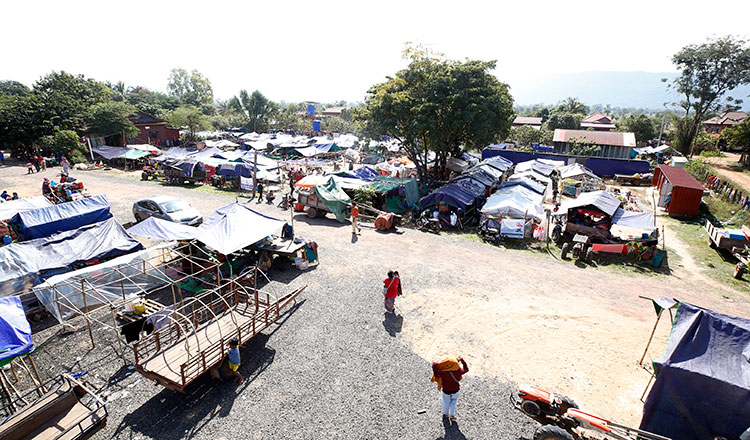 Displaced Cambodians in temporary shelters near the border with Thailand. KT/Chor Sokunthea
#opinion
What is unfolding today is not a conventional security crisis. Cambodia is not losing territory, sovereignty, or military capability. The danger is subtler—and therefore more difficult to confront.
It is a crisis of narrative and dignity
In regional and international conversations, Cambodia is increasingly discussed without Cambodia being present. Events are interpreted before facts are clarified. Assumptions harden into stories. Repetition creates “truth.”
Institutions such as the Association of Southeast Asian Nations (ASEAN), designed to preserve harmony, often default to process rather than principle. Stability becomes the goal, even when imbalance persists. Meanwhile, global bodies like the United Nations observe carefully, document thoroughly—but rarely intervene decisively.
In this environment, silence is no longer neutral.
It is being read as acceptance.
Inside the Country: A Growing Emotional Gap
Within Cambodia, the public mood is changing.
Citizens—especially younger generations—are not asking for war, nor are they reckless. What they are asking for is recognition: a sense that their country sees what they see, feels what they feel, and is willing to speak when dignity is tested.
When leadership remains silent for too long, people fill the vacuum themselves. Social media becomes the battlefield. Emotion replaces analysis. Anger spreads without direction. Patriotism risks becoming reactionary rather than constructive.
This is not a failure of the people.
It is a predictable response to prolonged uncertainty.
A nation that does not explain its restraint eventually struggles to defend it.
Restraint must be seen to be strategic
Cambodia’s leaders understand restraint deeply. The country has paid too high a price for conflict to embrace it lightly. But restraint is only effective when it is visible as a strategy, not mistaken for hesitation or fear.
Silence worked when the region assumed goodwill.
It works less well when others test boundaries repeatedly.
The issue, therefore, is not whether Cambodia should abandon restraint. It should not.
The issue is whether Cambodia can continue to exercise restraint without surrendering narrative control.
And the answer is no.
A shift is needed—not in policy, but in presence
What is required now is not louder diplomacy, harsher language, or dramatic gestures. Cambodia does not need to shout.
What it needs is disciplined presence.
This means:
Speaking calmly, but speaking clearly
Documenting facts, not trading accusations
Explaining choices to the public, not assuming understanding
Engaging institutions formally, even when outcomes are uncertain
A country that speaks sparingly—but decisively—regains authority.
A country that never speaks risks being defined by others.
The role of leadership at this moment
Leadership today is not being tested by force, but by perception management under pressure.
The question is not:
“How do we avoid escalation?”
Cambodia already knows how to do that.
The real question is: “How do we preserve peace without losing dignity?”
That balance requires leadership to step forward—not emotionally, not defensively—but deliberately.
When leaders speak, they steady the country.
When they explain, they lower public temperature.
When they define red lines quietly but firmly, they deter future miscalculation.
What the nation needs to hear
The Cambodian people do not need reassurance that everything is fine. They know it is not always fine.
They need to hear:
Why restraint is chosen
What boundaries exist
When silence is strategic—and when it will end
They need to know that patience has purpose, and that dignity has guardians.
A closing reflection for leadership
Cambodia has survived by knowing when to endure and when to adapt. This moment calls for adaptation—not of values, but of posture.
Peace is strongest when it is defended by clarity.
Restraint is most powerful when it is understood.
And dignity, once quietly lost, is far harder to regain.
This is not a call to confrontation.
It is a call to presence.
Cambodia does not need to become louder.
It needs to become unmistakably visible—on its own terms.
The author is a leading voice in Cambodia on economic transformation, public-private partnerships, strategic policy reform, impact investments and blended finance as well as TVET capacity building. He has more than four decades of experience advising government institutions, multinationals, and development institutions on building resilient, future-ready economies. The views expressed here are his own.
-Khmer Times-