Editorial – Parliamentary diplomacy for peace
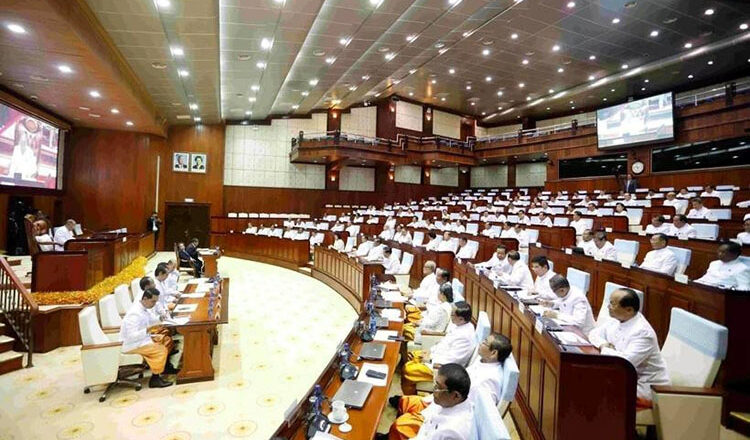 Editorial – Parliamentary diplomacy for peace
The weakening of global governance and international law, the rise of protectionism and unilateralism, and emerging multifaceted threats to humanity underscore the growing importance of parliamentary diplomacy.
In an increasingly polarised world marked by conflict and crises, the parliamentary institution— representing the voices and aspirations of the people—offers alternative and complementary channels to promote dialogue, build trust, and uphold a rules-based multilateral order.
Parliamentary diplomacy cannot replace state-to-state diplomacy, but it carries unique legitimacy, inclusiveness, and flexibility. It helps promote confidence-building measures, preventive diplomacy, and crisis management.
Notably, in today’s climate of high uncertainty and volatility, parliamentary diplomacy must evolve from rhetoric into sustained practice with a shared commitment to uphold the principles of international law.
For small- and medium-sized states in particular, parliamentary diplomacy provides an important platform to safeguard sovereignty, defend international law, and promote people-centred international cooperation.
Cambodia’s parliamentary diplomacy is driven by four core objectives: (a) fostering mutual understanding and trust through dialogue; (b) upholding the peaceful settlement of disputes; (c) advancing open, inclusive multilateralism and a rules-based international order; and (d) promoting a people-centred approach to peace and cooperation.
At the 6th World Conference of Speakers of Parliament in Geneva (2025), National Assembly President Samdech Khuon Sudary, stressed that “As a small state, Cambodia relies on international law and the multilateral system to protect its sovereignty and territorial integrity.”
At the 46th General Assembly of AIPA in Kuala Lumpur (2025), she further emphasised the rejection of doctrines such as “might is right” and “the weak must suffer in silence.” This principled stance reflects Cambodia’s conviction that peace and justice can only be preserved when all states, regardless of size, operate under the same rules.
In general, Cambodia’s parliamentary diplomacy focuses on peace and cooperation. At the 46th AIPA General Assembly, three key Cambodian parliamentary initiatives were unanimously adopted, including:
• Resolution on Advancing Peace Initiatives for People and the Planet, which acknowledges the Universal Peace Charter as a voluntary reference document and calls on AIPA parliaments to promote inclusive peacebuilding, empower local communities, and integrate climate resilience into peace initiatives.
• Resolution on the Establishment of the AIPA Leaders Forum, which aims to promote an inclusive forum for ASEAN parliamentary leaders to exchange views, share experiences, and discuss regional and global issues, thereby reinforcing ASEAN centrality and the ASEAN Community Vision 2045.
• Resolution on Establishing the AIPA Partnership Platform, which aims to enhance AIPA’s engagement with external partners and observer parliaments, reinforcing ASEAN’s outward-looking approach. It will be convened alongside the AIPA Caucus, focusing on regionally relevant issues, with the AIPA Secretariat and host parliament providing support and facilitation.
Also at the General Assembly, Cambodia sponsored a draft resolution entitled “Upholding ASEAN Solidarity and Principles to Ensure Regional Stability Amidst Challenges” under the emergency agenda item.
The proposal aimed to reaffirm ASEAN unity and centrality with emphasis on a shared responsibility in maintaining regional peace and stability. It encouraged coordinated responses to humanitarian and security concerns and set a foundation to restore peace and normalcy between Cambodia and Thailand. It also called for the swift formation and deployment of the ASEAN Observer Team to have full and effective monitoring of the implementation of the ceasefire.
This initiative reflected Cambodia’s constructive approach, placing people’s welfare, regional stability, and ASEAN unity at the forefront.
However, the Thai delegation objected to the resolution, citing allegations that Cambodia is a hub for online scammers. This justification politicised a transnational crime challenge that operates across borders and requires joint efforts.
Organised scamming networks involve multiple countries, including Thailand itself as a major transit point and operation ground. Instead of blame games, joint law enforcement and information sharing are needed.
Thailand’s objection undermined an opportunity to use parliamentary channels for reconciliation and left the ceasefire highly fragile.
Ongoing Thai violations of the ceasefire—including the illegal detention of 18 Cambodian soldiers, extraterritorial application of domestic law on Cambodian citizens, and the latest unprovoked military attack on Cambodian strategic positions in Preah Vihear province—are counterproductive to the normalisation of bilateral ties.
Without credible monitoring and sustained trust-building, the risk of renewed armed confrontation is high—an outcome that the people of both countries clearly do not wish to see.
It is therefore imperative to swiftly establish and deploy the ASEAN Observer Team to verify conditions on the ground, ensure both sides fully comply with the ceasefire, and hold accountable those who violate the agreement.
-Khmer Times-