Cambodia uses UNESCO conference to raise Preah Vihear attack concerns
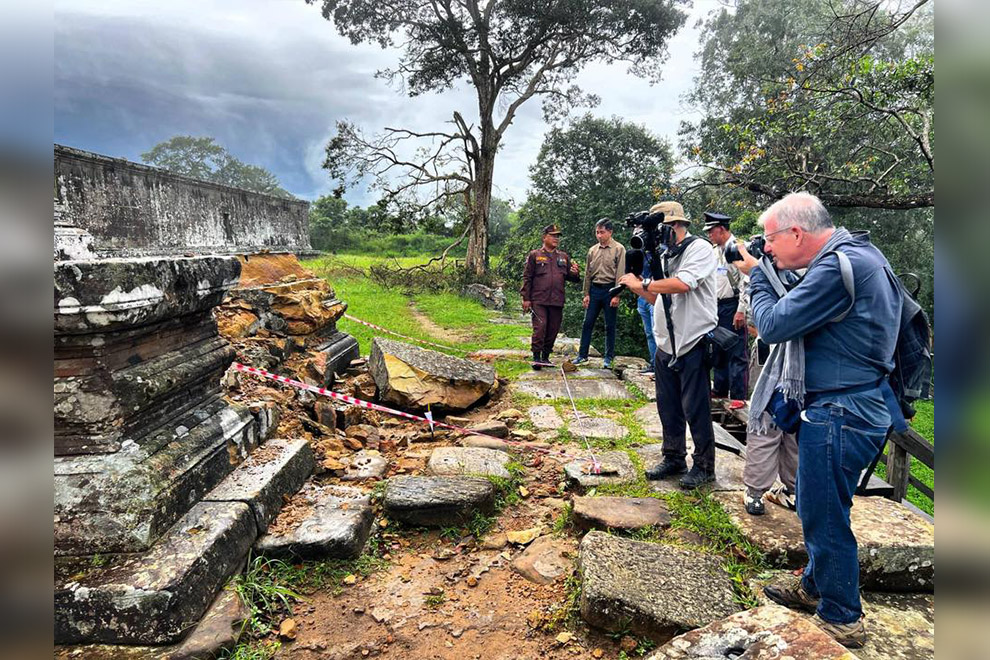 International media representatives examine the damage caused to the Preah Vihear Temple by Thai shelling, during the clashes of July 24-28. Supplied
Cambodia has shared an urgent warning over renewed attacks on the Preah Vihear Temple, telling a UNESCO global forum that the World Heritage site has faced artillery shelling and cluster bomb strikes as recently as July this year, despite international court rulings affirming Cambodia’s sovereignty.
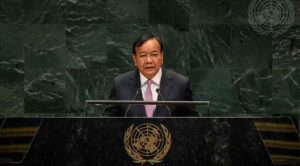
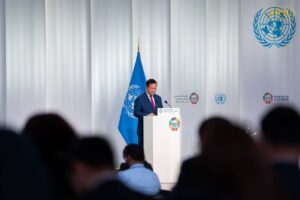
Speaking at the UNESCO World Conference on Culture Policies and Sustainable Development (MONDIACULT 2025) held in Barcelona from September 29 to October 1, Suos Yara, chairman of the Asian Cultural Council (ACC) and head of the National Assembly’s Commission on Foreign Affairs, stated that cultural heritage must never be weaponized in conflicts.
“The Preah Vihear Temple, registered as a World Heritage Site in 2008 and confirmed as Cambodian territory by the International Court of Justice in 1962 and 2013, has nonetheless suffered heavy artillery shelling and internationally-banned cluster bombs fired from rockets and fighter jets in the periods of 2008–2011 and July 2025,” Yara said.
He described the destruction of cultural heritage as not only a national tragedy but also a blow to shared human history.
“UNESCO’s role has been to uphold the sanctity of cultural heritage and advocate for peaceful resolution, even amid geopolitical disputes,” he reiterated.
At the opening ceremony, Spanish President Pedro Sánchez addressed delegates from more than 150 countries, explaining that MONDIACULT 2025 will focus on two strategic pillars: a culture of peace and artificial intelligence, in addition to the MONDIACULT 2022 Declaration.
He stressed that culture is the foundation of sustainable development and social justice, and called for multilateral cooperation in building a just and humane world.
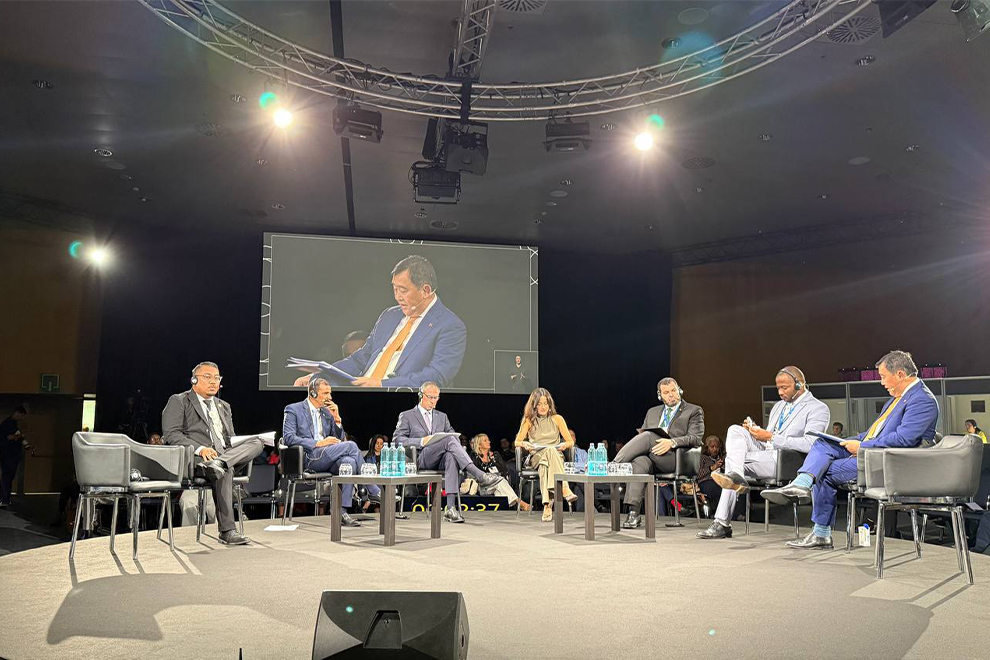
Cambodia urged greater international action to protect cultural sites in conflict zones, calling on ASEAN, the UN Secretary-General and relevant UN bodies to help de-escalate tensions and ensure international law is respected.
Tara added that cultural heritage must be safeguarded as a bridge for dialogue, reconciliation and sustainable peace.
The Preah Vihear Temple, perched on the Dangrek mountain range along the Thai-Cambodian border, has long been a flashpoint in the two countries’ territorial disputes.
Despite the ICJ’s rulings in favour of Cambodia, fighting around the temple in past years has caused numerous casualties, displaced people and damaged the sacred site.
At MONDIACULT 2025, Yara linked the attacks to a broader challenge of protecting heritage in conflict, calling for stronger mechanisms of preventive diplomacy, peacekeeping and border monitoring at cultural sites.
Cambodia also used the platform to promote long-term solutions, including the establishment of a UNESCO Category 2 Centre for Asia under the ACC, aimed at promoting cultural diplomacy, heritage protection and peacebuilding across the region.
The 12th ICAPP General Assembly and the 3rd Asian Cultural Council (ACC) Meeting in Cambodia in 2024 also adopted the “Phnom Penh Peace Declaration”, endorsing the Universal Peace Charter for People and Planet (UPC) with five pillars: 1) Peacebuilding, 2) Conflict Prevention, 3) Transitional Justice, 4) Food Security, and 5) Post-conflict Reconstruction, which has now been endorsed by more than 60 international parliaments and institutions.
The ACC highlighted Cambodia’s experience, where culture has made tangible contributions to peacebuilding through international cooperation in the conservation of cultural heritage.
“Cambodia has made remarkable achievements in protecting tangible and intangible heritage through international mechanisms and partnerships, including the ICC-Angkor and IOC-Preah Vihear mechanisms, which have demonstrated how multilateral cooperation can safeguard world cultural heritage sites and promote peace,” according to ACC.
Un Bophana, permanent representative of Cambodia to UNESCO, also addressed the ACC.
She spoke about culture and education, stressing the importance of incorporating the truth of history and literature into school curricula.
Bophana underlined that these are essential foundations for building a culture of peace, understanding and coexistence among different ethnic groups — particularly between neighbouring countries — so as to avoid historical misunderstandings that continue to affect younger generations.
She emphasised that this is vital to building confidence and lasting peace in the future.
-The Phnom Penh Post-