Editorial 65 – Pollination Is an Exchange
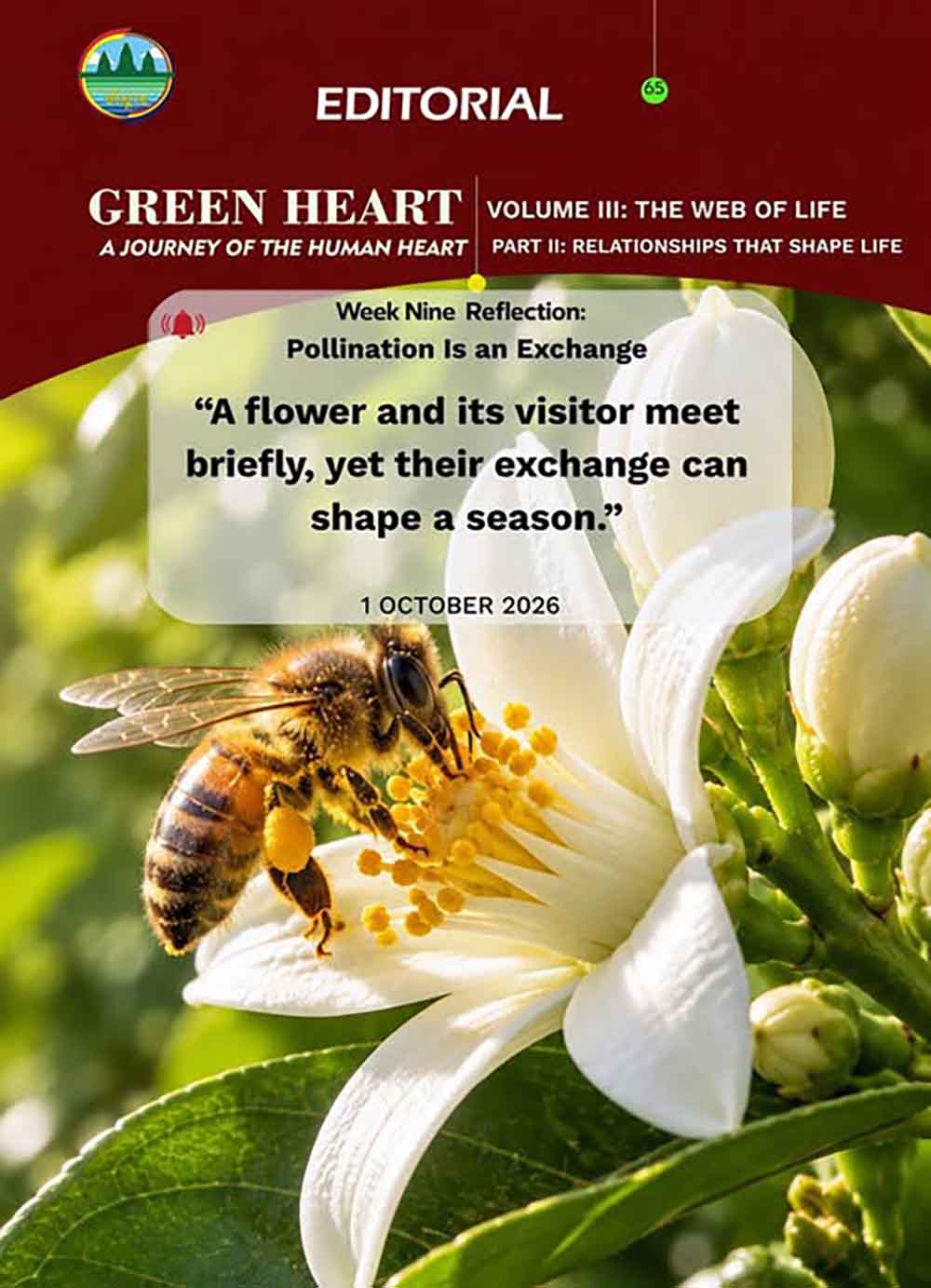 Editorial 65 – Pollination Is an Exchange
Opening Thought
“A flower and its visitor meet briefly, yet their exchange can shape a season.”
Editorial
Volume II introduced pollinators as carriers of the future. Now we look more closely at the relationship itself.
Flowers use colors, shapes, scents, nectar, pollen, timing, and other features that influence which visitors arrive. An animal seeks food or another resource. Pollen is transferred within or between flowers, sometimes leading to fertilization and seed production.
This relationship is not a conscious agreement. It developed through evolution as traits in plants and animals influenced one another over generations. Some relationships are broad: a pollinator visits many plant species. Others are highly specialized.
Wind-pollinated plants follow another strategy. They often release large amounts of light pollen into moving air. Grasses and many trees rely on this method. Pollination is therefore an ecological process with multiple pathways.
Timing matters. If a plant flowers when its pollinator is absent, reproduction may decline. Climate change, habitat alteration, or introduced species can shift timing and relationships. Researchers monitor these changes because the effects may spread into food webs.
Pollinator decline has many possible causes, including habitat loss, pesticide exposure, disease, invasive species, climate change, and poor nutrition. Solutions must address local causes rather than rely on one universal answer.
Farmers may support pollination through habitat, crop diversity, managed bees, reduced pesticide risk, and landscape planning. Wild pollinators and managed pollinators can both contribute, depending on the crop and region.
We should not romanticize every exchange. Some visitors take nectar without pollinating. Plants may attract animals in ways that primarily benefit themselves. Ecology includes cooperation, exploitation, and everything between.
The lesson is that reproduction can depend on a meeting. If either participant disappears, a relationship formed across generations may be broken.
Watch a flower from a respectful distance. Its beauty is not only decoration. It is communication within a web. A brief visitor may carry the message to the next bloom, and the next generation begins.
Because the exchange crosses property boundaries, protection works best across landscapes. One garden may provide flowers while another provides nesting space. Connected patches allow pollinators to find resources through changing seasons. Neighbors can cooperate without needing one enormous habitat.
This landscape view also prevents competition between crops and conservation. Habitat placed along suitable edges, waterways, or unused corners may support pollinators while productive land continues feeding people. Design turns apparent conflict into shared benefit.
Buddhist Reflection
Generosity and receiving can exist in the same relationship. Healthy exchange does not always require sacrifice; both sides may benefit. Human cooperation also becomes durable when care and benefit can move in more than one direction.
Today’s Reflection
What conditions must come together for successful animal pollination?
Today’s Action
Choose one flowering plant and research whether it is pollinated by animals, wind, water, or itself.
Today’s Pledge
Today I will protect the meetings through which flowers, food, and future seeds become possible.
When we protect nature, we protect all beings—including ourselves.