No Shortcuts: Why Cambodia Needs Two Generations to Build a Meritocratic Bureaucracy and Education System
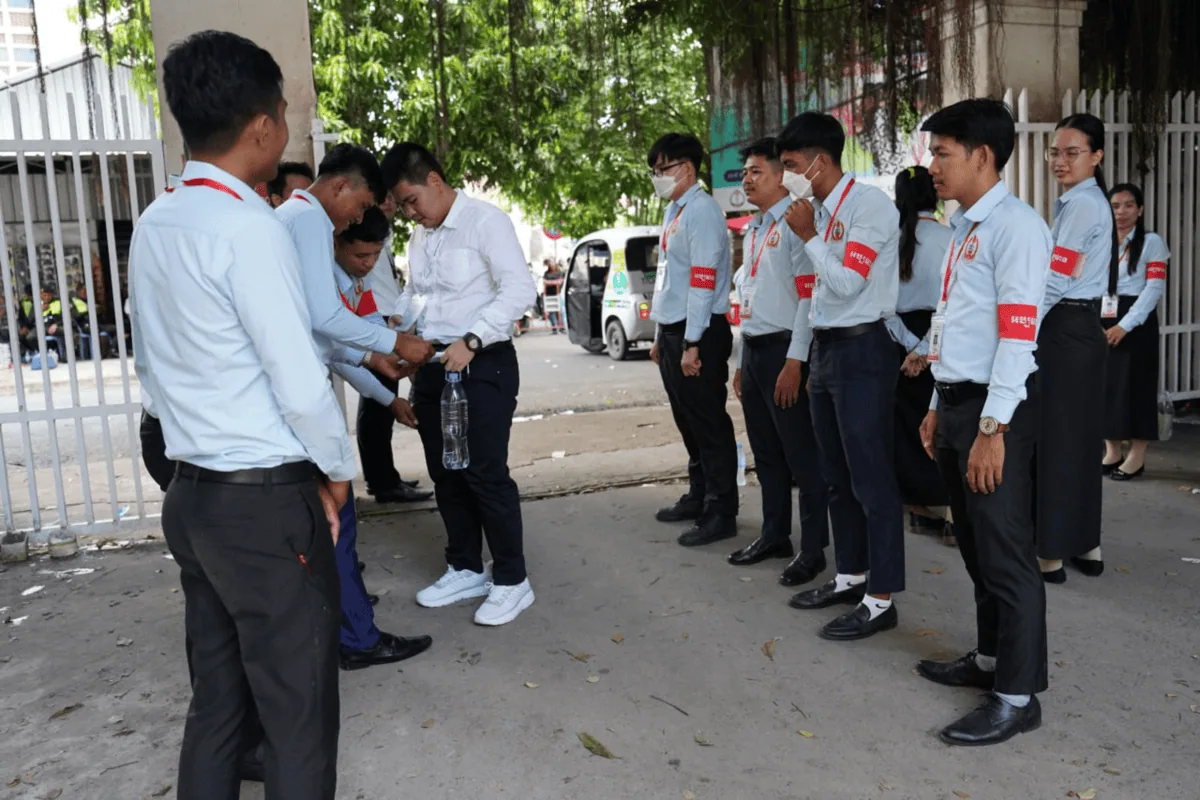 Baccalaureate II candidates enter an exam centre last year. Thenh Rithy
The pragmatic answer, grounded in historical realities and sociology, is that Cambodia requires at least two generations (roughly 30 to 40 years) to fundamentally transform its public administration and educational framework into a truly meritocratic, rule-of-law state.
This timeframe is neither an excuse for delay nor a compromise with inertia; it is a sober recognition of historical truth. The Khmer Rouge regime completely decimated the nation’s human capital and intellectual foundation. Post-war, the first generation focused strictly on survival and peacebuilding. The Win-Win Policy of 1998 prioritised national reconciliation and social stability, which inherently demanded political compromises and the retention of existing administrative cadres rather than the immediate enforcement of absolute meritocracy.
The byproduct of maintaining legacy forces while continually hiring new personnel was an inflated bureaucracy and a reliance on patronage or seniority.
However, this two-generation transition is entering a transformative phase, driven by the natural attrition and retirement of the older generation. To ensure this generational handover is smooth and effective, Cambodia relies on seven interconnected reform pillars:
1. Tripartite Synergy Across Key Ministries
For reform to take root, three core ministries must operate as an integrated value chain:
- Ministry of Education, Youth and Sport: Sows and nurtures the foundational “seeds” through strong general knowledge, civic ethics and scientific thinking.
- Ministry of Labour and Vocational Training: Arms youth with practical technical and vocational skills (TVET), aligns career trajectories, and expands the private labour market to reduce over-reliance on public sector recruitment.
- Ministry of Civil Service: Serves as the filter, organising transparent, merit-based entrance exams to recruit high-calibre talent from the candidate pool developed by the former two ministries.
2. Curbing Corruption via Digital Governance and Big Data
Political will against corruption must manifest through paperless, contactless public services. Leveraging the verify.gov.kh website alongside inter-ministerial Big Data via CamDX should eliminate fraudulent degrees and falsified credentials. When digital systems automate verification and decision-making, petty corruption is cut off at the source, ensuring that only individuals with genuine competence and verified credentials enter and advance within the civil service.
3. Unified STEAM Curriculum and Foreign Language Parity
The education sector must move past the rigid division between “Science” and “Social Science” streams at the high school level, which historically created social disparities and skill gaps. Cambodia needs a unified STEAM approach, equipping every student with logic, technology, ethical grounding and social analysis skills. Raising foreign language grading weight to equal core subjects will bridge the gap between urban and rural students, granting all youth equal footing in global competition.
4. Green Infrastructure, Local Teacher Deployment and the “Wat Bo” Standard
Equipping rural high schools with solar-powered computer labs addresses power instability and digital divides simultaneously. Concurrently, a “Recruit Locally, Deploy Locally” strategy — paired with special civil service entrance pathways for high-performing contract teachers — ensures sustainable teaching capacity in remote areas. Crucially, the governance, discipline and moral education model of Siem Reap’s Wat Bo Primary School should serve as a national Key Performance Indicator (KPI) benchmark for public school principals nationwide.
5. The Royal School of Administration as a Professional Forge
The Royal School of Administration (RSA) must act as the primary forge transforming educated individuals into professional civil servants. Modernising its curriculum around digital governance, public ethics and data-driven policymaking is paramount. Passing rigorous leadership tracks at the RSA should remain a mandatory prerequisite for senior civil service promotions.
6. Daily Discipline: A Mirror of the Rule of Law
Deep reform is not merely an abstract concept on paper; it is reflected in daily civic discipline, such as traffic compliance and waste management. Fostering civic duty from primary school onward, combined with equal digital enforcement (such as automated camera traffic fines), serves as the primary classroom for shaping a clean, orderly and law-abiding society.
However, sustainable reform cannot proceed through zero-sum confrontation or radical purges. The essence of a modern Win-Win strategy is not to strip power or influence from elites, but to reframe influence into lasting legacy building. Encouraging elites to invest in the genuine competence of their descendants and support clean public institutions provides a “security umbrella”. When children of the elite succeed on merit and credentials within a transparent system, their status is protected by the rule of law and backed by genuine public respect.
Building a meritocratic public administration and education system is not the responsibility of a single faction, nor is it a platform for pointing fingers. It represents a unified social contract requiring active participation across all sectors of society. The government provides digital transparency and equal opportunity; the wealthy contribute as philanthropic sponsors and role models of civic duty; parents invest in their children’s education with integrity; and youth dedicate themselves to mastering modern skills while remaining actively patient.
When we stop pointing fingers and step forward together, these two generations will prove to be a meaningful journey — one that leads Cambodia toward a prosperous, clean and dignified future on the international stage.
Vichana Sar is a Phnom Penh-based researcher into digital governance and geopolitical trends. The views and opinions expressed are his own.
-Phnom Penh post-