Japan Reaffirms Commitment to Peace and Regional Stability, Expands Defence Cooperation Framework
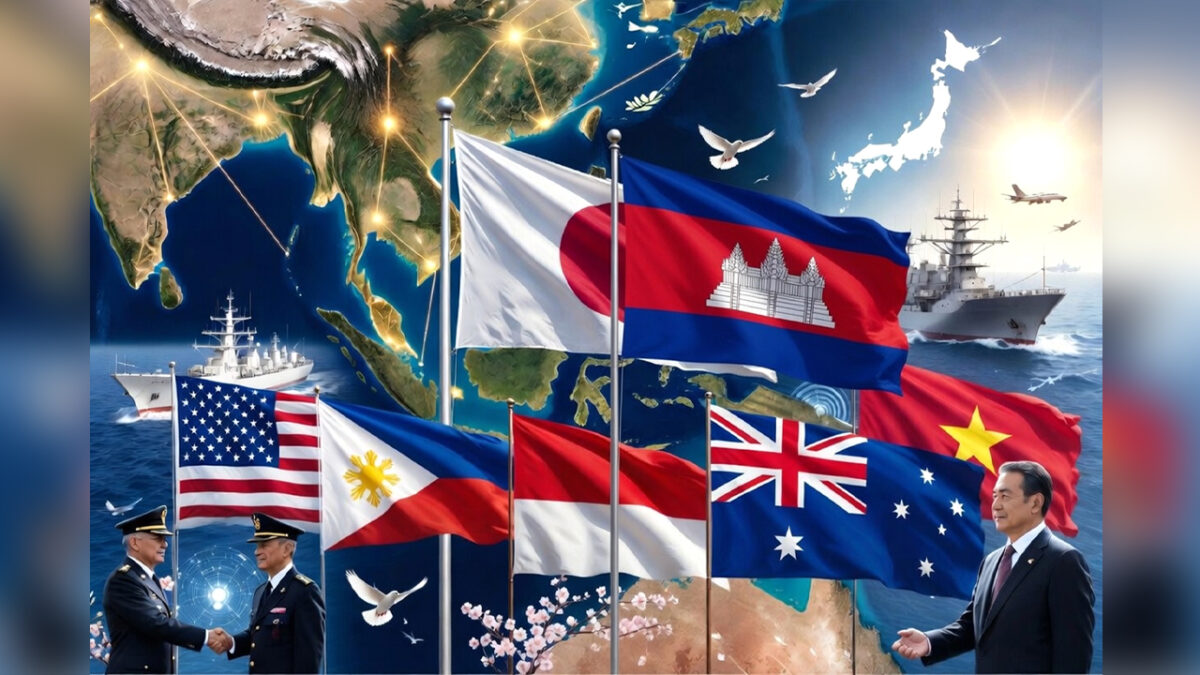 Japan Reaffirms Commitment to Peace and Regional Stability, Expands Defence Cooperation Framework
Japan has long stood as a steadfast partner in Cambodia’s development and a champion of international peace. In a detailed policy statement, Tokyo has reiterated its foundational commitment to a rules-based international order while announcing significant adjustments to its defence equipment transfer policies. These changes reflect Japan’s proactive response to an increasingly complex global security environment and offer new avenues for cooperation with partners like Cambodia.
Since the end of World War II, Japan has consistently contributed to international peace and prosperity.
The country has adhered strictly to international law, including the UN Charter, and worked tirelessly to maintain and strengthen a free and open international order grounded in the rule of law. This position enjoys broad recognition and appreciation across the international community, including in Cambodia. Japanese officials emphasise that this stance remains unchanged. Japan positions itself as a nation dedicated to diplomatic efforts that steer the world away from division and conflict toward reconciliation and collaboration.
A Historic Turning Point in Defence Policy
On April 21, 2026, the Japanese government approved partial revisions to its Three Principles on Transfer of Defence Equipment and the associated implementation guidelines. This marks one of the most significant shifts in Japan’s post-war defence posture.
Previously, transfers of finished defence products were restricted to five non-lethal categories: humanitarian assistance, transportation, disaster prevention, surveillance and maritime mine clearance. The revision opens the door, in principle, to transfers of all defence equipment, including finished products with lethal capabilities, provided they meet strict criteria. The aim is to enhance peace and stability in the region and beyond by bolstering the defence capabilities of like-minded partners.
In an era where no single country can guarantee its security alone, Japan stresses the importance of mutual support among partners. Southeast Asian nations, Australia, Europe and others have expressed strong interest in Japanese defence technology. Transfers are expected to improve recipients’ defensive capacities and help deter conflicts.
Japan has pledged to maintain rigorous oversight. All transfers will comply with international export control regimes, such as the Wassenaar Arrangement and the Arms Trade Treaty.
Each case will undergo strict examination to prevent any contribution to conflict escalation. Equipment with lethal capabilities will be approved only for countries that commit to using it in accordance with the UN Charter. As a general rule, transfers will not go to nations actively engaged in armed conflict, except under exceptional circumstances tied to Japan’s own security needs.
Despite these expansions, Japanese officials are emphatic: the country will continue upholding its identity as a peace-loving nation, a principle steadfastly maintained for more than 80 years since the end of World War II.
Deepening Ties with Cambodia
The timing of this policy clarification is particularly relevant for Cambodia. Bilateral relations between Japan and Cambodia have flourished, elevated to a Comprehensive Strategic Partnership in 2023. Japan has been a major development partner, contributing extensively to infrastructure, education, health and demining efforts.
Security cooperation has gained momentum in recent years. Japan has provided patrol boats to enhance Cambodia’s maritime law enforcement and conducted goodwill visits by Japan Maritime Self-Defence Force vessels to Ream Naval Base. Discussions on Official Security Assistance (OSA) are underway, signalling growing trust and collaboration in defence and security matters.
For Cambodia, which navigates complex regional dynamics, Japan’s approach offers a reliable partnership based on mutual respect, non-interference, and shared interests in stability. Japanese defence equipment and technology could potentially support Cambodia’s modernization efforts in areas such as maritime security, disaster response and humanitarian operations.
Broader Regional and Global Context
The international security landscape has become more challenging, with rising tensions, territorial disputes, and traditional and non-traditional threats. Japan argues that enhanced cooperation is essential. By enabling responsible defence transfers, Tokyo seeks to contribute to collective resilience rather than fuel an arms race.
This policy shift aligns with Japan’s Free and Open Indo-Pacific (FOIP) vision, which emphasises the rule of law, freedom of navigation and peaceful dispute resolution — principles that resonate strongly in Southeast Asia, including Cambodia.
Critics, particularly from certain quarters, have expressed concerns about the relaxation of export rules. However, Japanese authorities counter that the changes are accompanied by robust safeguards and a continued commitment to peace. The revisions are framed not as a departure from pacifism but as a pragmatic evolution to meet contemporary realities while preserving core values.
Opportunities for Cambodia-Japan Partnership
As Japan implements its revised guidelines, opportunities for enhanced bilateral cooperation with Cambodia are likely to expand. Beyond defence, the partnership spans economic development, trade, investment, tourism and cultural exchange. Japan remains one of Cambodia’s top investors and donors.
Cambodian leaders have consistently welcomed Japan’s engagement as a balancing and constructive force in the region. With the new defence transfer framework, future collaboration could include capacity-building programmes, technology sharing, joint training and support for Cambodia’s defence modernisation on mutually agreed terms.
Experts note that Japan’s defence industry, long constrained by export restrictions, may now pursue more active international partnerships. This could lead to co-development projects, maintenance support and other forms of collaboration beneficial to recipient nations.
Japan’s message is clear: Japan will continue its diplomatic efforts to promote reconciliation and cooperation globally while working closely with partners like Cambodia to safeguard peace, security and prosperity in the region.
In a world facing multiple challenges, Japan’s reaffirmed basic position and policy adjustments underscore its readiness to play a more active role in shaping a stable and peaceful international order — one where the rule of law prevails and nations support one another responsibly.
Seun Sam is a policy analyst at the Royal Academy of Cambodia. The views and opinions expressed are his own.