Primate protectors respond to wildlife trafficking warnings; highlight plight of Angkor macaques
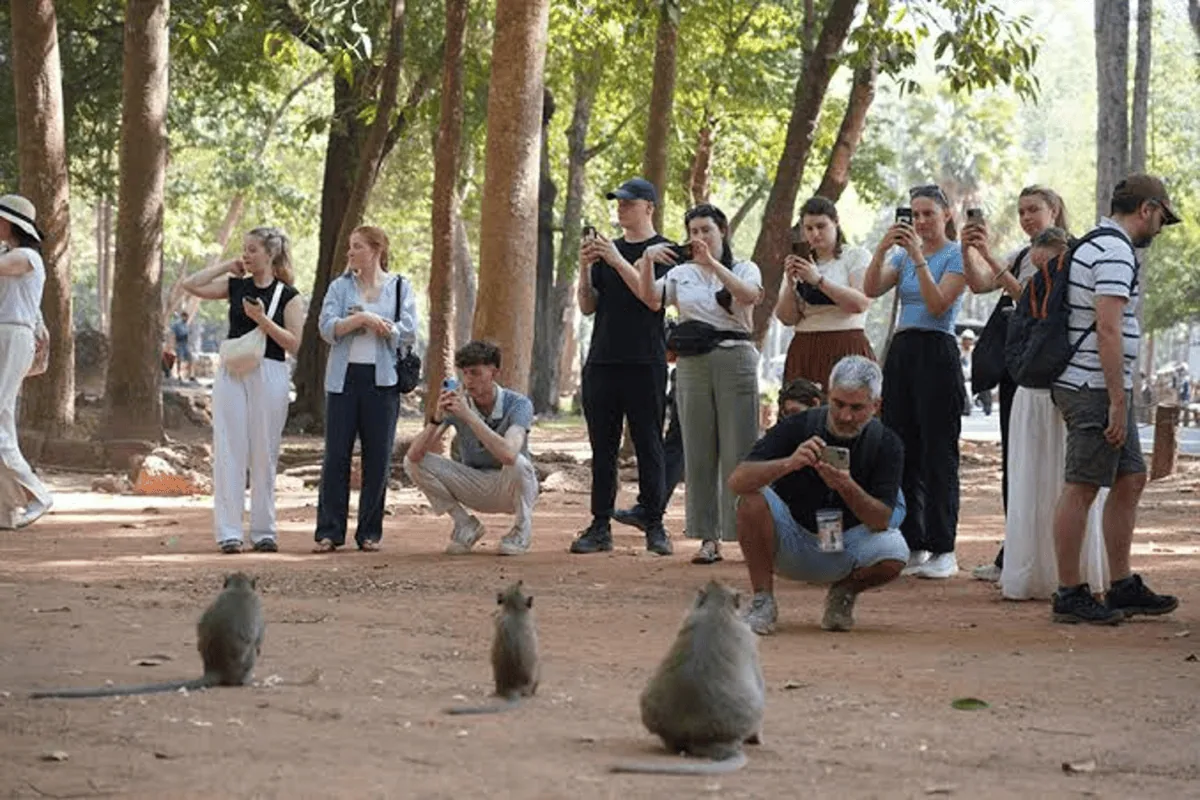 Foreign visitors to the Angkor Archaeological Park in Siem Reap take pictures of the temple's resident macaques. Post Staff
A response from Action for Primates to an environment ministry statement, as reported in The Post.
Action for Primates welcomes calls from the Ministry of Environment for an immediate end to social media posts featuring wildlife whether for sale or being used to attract attention and generate “clicks”, thereby acknowledging the negative impact and harm that certain social media content creators are having on the environment, wildlife and biodiversity.
As part of this call, Action for Primates urges the ministry not to forget the exploitation and persecution of macaques living at the Angkor Wat UNESCO World Heritage Site and to stop the activities of the many camera operators who have created an “industry” of following and filming the macaques and are responsible for the mistreatment of and interference with the monkeys for the sole purpose of “entertainment” and making a profit.
The videos are posted on social media platforms, such as YouTube and Facebook, and are often monetised, sometimes with requests for donations to help the monkeys. The main monkey species impacted is the long-tailed macaque, listed under Appendix II on CITES, and with a conservation status assessed as Endangered, with a decreasing population trend, on the IUCN Red List.
Some examples of human behaviour that is extremely detrimental include:
Ongoing harassment of and physical interference with monkeys; relentlessly pursuing them, crowding, chasing, and grabbing monkeys, and using sticks against them; deliberately creating stressful situations for the monkeys, such as irresponsibly abandoning ‘pet’ macaques, who were raised in human households and are generally highly distressed, into the existing population at Angkor Wat; encouraging tourists to feed and interact with monkeys (this can have and has had serious consequences, resulting in people being attacked); the use of fake rescues or treatment to elicit donations: video operators often pretend to be “rescuers”.
“We have previously raised concerns with APSARA National Authority and UNESCO, and now urge the Ministry of Environment to clamp down on the highly irresponsible and potentially dangerous activities of social media content creators at Angkor Wat to prevent the substantial negative impact on the welfare and well-being of these Endangered monkeys and in the interest of public safety,” said Sarah Kite, co-founder of Action for Primates.
Action for Primates is a UK-based not-for-profit project that campaigns on behalf of non-human primates worldwide. The views and opinions expressed are the organisation’s own.
-Phnom Penh Post-