Thailand’s Rule of Force and the Silence of Observers
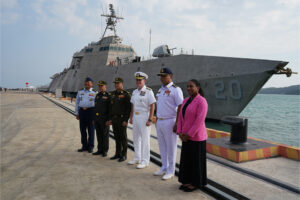
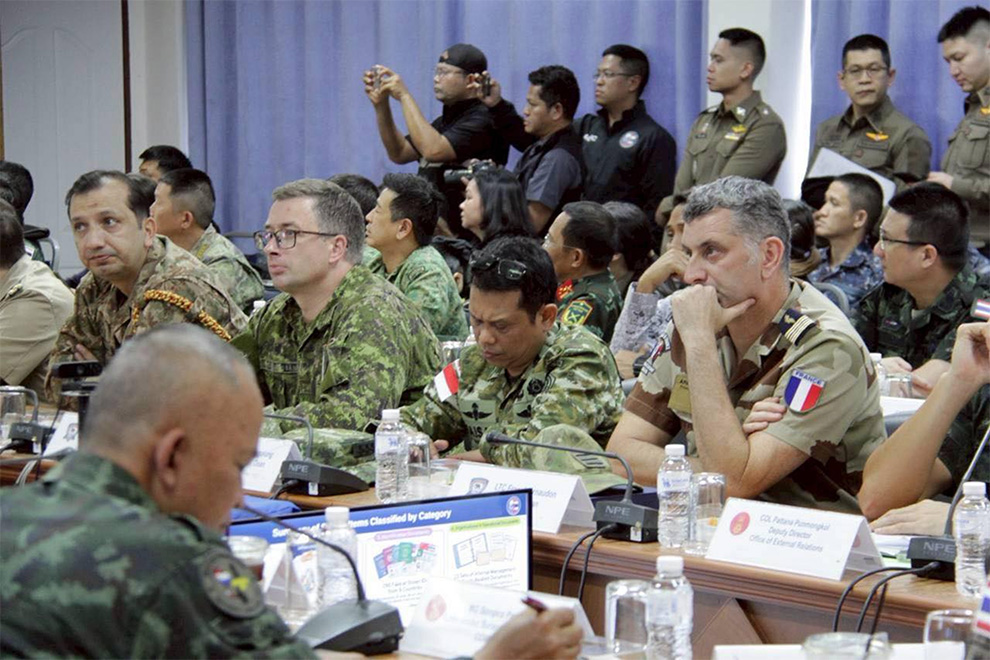 Foreign military attachés were briefed by Thai army officials before entering Cambodia's O'Smach area on February 2. Thai army
#opinion
The recent guided tour led by Thailand’s military intelligence chief through occupied border areas was not a routine briefing. It was a calculated political performance — one that openly normalised the use of force over law on Cambodian sovereign territory.
I ask directly: what did you feel when you stood on land that international maps and historical records identify as Cambodian, while it was presented to you as Thai-controlled ground? Was there no unease when military occupation was reframed as administrative normalcy?
More troubling still is whether Thailand’s military intelligence chief anticipated — or deliberately avoided — the most basic question any serious observer should ask: Which country does this land legally belong to? A glance at internationally recognised maps would have made the answer unavoidable. If that question had been asked, would the tour have continued so confidently?
Let us be clear: The delegation did not travel to the border for tourism. The presence of military attachés from 20 embassies and representatives linked to US law enforcement strongly suggests an inquiry into whether Thailand has crossed the line from border management into outright invasion. In that light, The Phnom Penh Post’s headline — “A Tour of Occupation” — was not rhetorical flourish; it was an accurate description of reality.
Thailand’s actions reflect a dangerous mindset: that territorial disputes can be settled by military presence rather than legal process. This is not diplomacy. It is lynch law at the international level, where power dictates facts on the ground and legality is treated as an inconvenience.
If Thailand has grievances with Cambodia, the lawful avenues are well established: bilateral dialogue, ASEAN mechanisms, the UN, the International Court of Justice, or other international legal forums. Cambodia has used these paths before. Choosing military occupation instead is not only unlawful — it is a direct challenge to the rules-based international order that Thailand itself claims to respect.
What makes this episode especially alarming is the risk of normalisation. When foreign observers are escorted through occupied territory without openly questioning sovereignty, silence begins to resemble acquiescence. History teaches us that occupations left unchallenged harden into precedents, and precedents invite wider instability.
Cambodia is not demanding favouritism. It is demanding consistency: That borders be respected, disputes be resolved through law, and military force are not disguised as fact-finding tours.
If the international community remains cautious to the point of quietness, it must also accept responsibility for the consequences. Peace in ASEAN cannot be sustained by overlooking aggression. It can only endure when law is defended as firmly as territory is claimed.
Tesh Chanthorn is a Cambodian who longs for peace, The views and opinions expressed are his own.
-Phnom Penh Post-
———————