The Correct Place for Thai Accusations ss The Hague (ICJ/ICC)
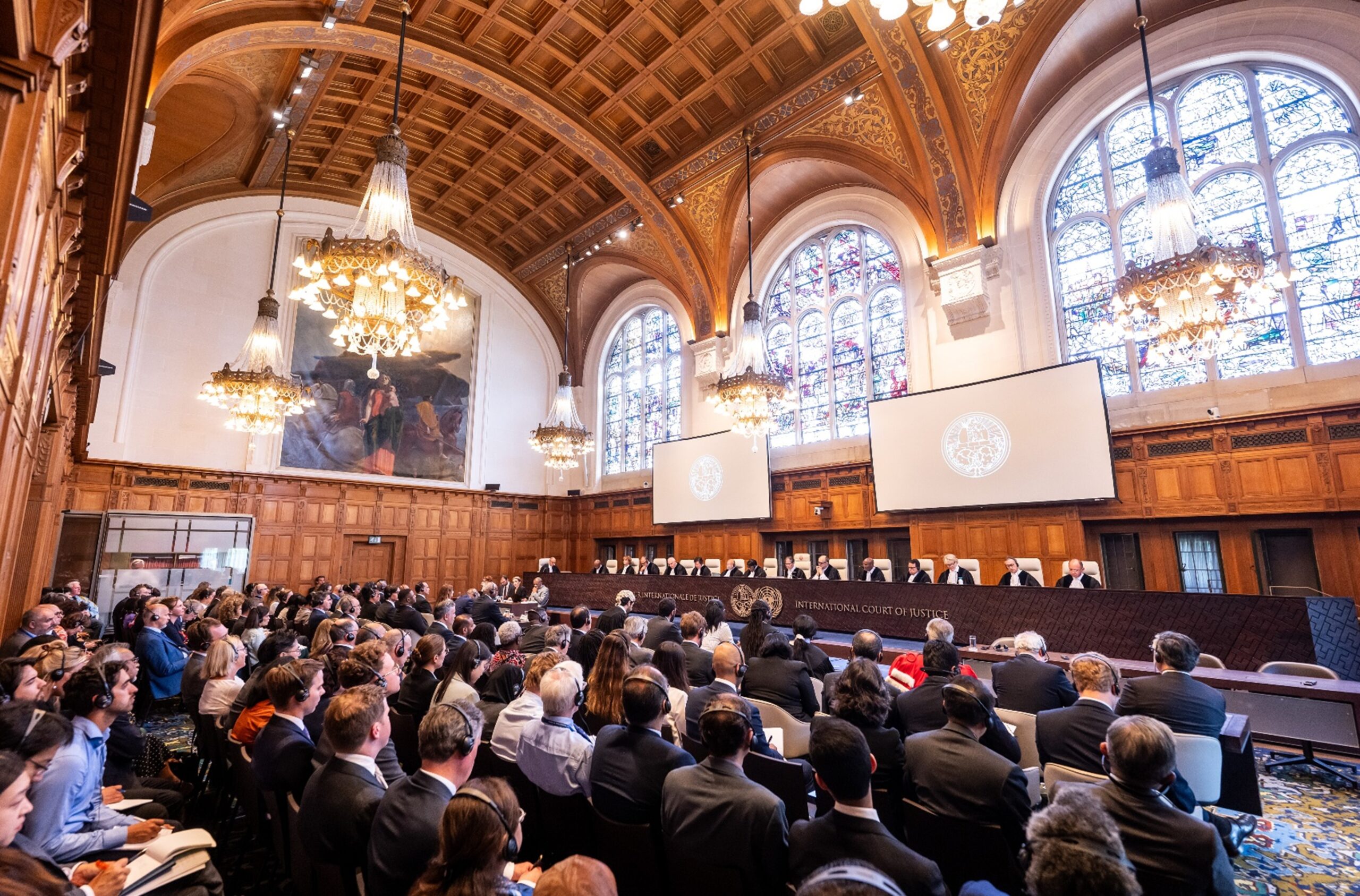 IMAGE: A 2025 hearing at the ICJ, which the author believes would be the correct place for Thailand to file its accusations against Cambodian leaders, rather than through Interpol. ICJ
#opinion
Recent reporting by Thai media outlet The Nation has drawn public attention to an unusual development in regional affairs.
According to the report: “Thailand’s National Security Council secretary-general, Chatchai Bangchuad, filed a complaint in Surin Provincial Court seeking the inclusion of Cambodian leaders on an Interpol ‘blacklist.’”
The report suggests that Cambodian leaders, including the president of the Cambodian Senate and the prime minister, were accused of ordering attacks against Thailand, including civilian areas.
While the facts and legal status of this complaint are yet to be independently verified, the report raises important questions about the proper use of international legal and law-enforcement mechanisms in sensitive interstate contexts. From the standpoint of international law, this is an issue that deserves careful legal reflection rather than political escalation.
Interpol Is Not an Extension of Domestic Courts
It is important to recall that Interpol is not a court, nor is it an enforcement body controlled by national authorities. Interpol exists primarily as a platform for police cooperation in ordinary criminal matters.
Red Notices and related alerts are processed through Interpol’s own institutional procedures, involving National Central Bureaus and review by the Interpol General Secretariat. A complaint filed in a provincial court cannot, by itself, compel Interpol action against foreign officials.
This distinction matters, because Interpol is frequently misunderstood in public discourse as an international arrest authority, when in reality it operates under strict constitutional limits.
Interpol’s Constitution Prohibits Political and Military Cases
Perhaps the most significant legal barrier is found in Interpol’s own Constitution.
“It is strictly forbidden for the Organization to undertake any intervention or activities of a political, military, religious or racial character,” says Article 3.
Allegations involving attacks ordered by senior political leaders of one state against another are inherently political and military in character. Historically, Interpol has been cautious in such contexts, precisely to avoid becoming a forum for interstate confrontation.
If the reported complaint is intended to internationalise a political dispute through police mechanisms, it is difficult to see how such a request could fall outside Article 3’s prohibition.
The Question of Immunity Under International Law
Another important issue concerns the immunity of senior state officials.
Under customary international law, a sitting Head of Government enjoys personal immunity from foreign criminal jurisdiction. This principle was affirmed by the International Court of Justice in the Arrest Warrant Case (Democratic Republic of Congo v. Belgium, 2002), where the Court emphasised that such immunity protects the sovereign equality and functioning of states.
As a result, any attempt to pursue criminal proceedings or arrest mechanisms against a sitting prime minister in a foreign domestic context would face serious legal obstacles.
With respect to other senior constitutional officials, such as a senate president, questions of immunity may depend on the nature of the acts alleged and whether they are considered official state conduct. At minimum, international law does not easily support the unilateral criminalisation of another state’s leadership through domestic judicial processes.
Sovereignty and Non-Intervention
The UN Charter is grounded in sovereign equality.
Article 2(1) affirms that all member states are equal, and Article 2(7) reflects the principle of non-intervention in matters within the domestic jurisdiction of states.
In addition, the Friendly Relations Declaration (UN General Assembly Resolution 2625, 1970) calls upon states to refrain from coercive measures that threaten the political independence of others.
While states may pursue legitimate security concerns, international law requires caution when domestic legal actions appear directed at the political leadership of another sovereign neighbour.
ASEAN’s Commitment to Peaceful Dispute Settlement
Cambodia and Thailand are both members of ASEAN and parties to the Treaty of Amity and Cooperation in Southeast Asia (TAC), which emphasises peaceful settlement of disputes and mutual respect.
ASEAN’s regional framework was built not on judicial confrontation but on dialogue, consultation and restraint. Escalating sensitive disputes through domestic complaints framed in international enforcement terms risks undermining that regional spirit.
Domestic Law and International Adjudication
Thailand, like any state, has the right to apply its domestic laws and investigate allegations affecting its security. However, when judicial mechanisms are invoked in ways that appear closely linked to interstate political tensions, the international community will naturally observe whether such processes remain consistent with judicial neutrality and due process.
Resorting to a provincial court complaint while invoking Interpol language may give the appearance of seeking advantage through domestic procedure rather than through neutral international adjudication. Cambodia could easily respond in kind through its own courts, but that would only turn a serious interstate matter into a cycle of competing legal theatrics.
If Thailand’s allegations are truly as grave as suggested, then it should have the confidence to bring them before the International Court of Justice — where evidence, not political signalling, determines responsibility — or, if it genuinely claims the commission of international crimes, to pursue accountability through appropriate international criminal mechanisms such as the International Criminal Court, where jurisdiction exists, subject to the strict requirements of international law.
To the extent that any party alleges conduct amounting to international crimes, the appropriate avenues lie not in politicised domestic filings but in established international mechanisms. Such pathways, however, require clear jurisdictional foundations and strict adherence to international legal standards, rather than unilateral legal manoeuvring.
The Broader Risk of Misusing Interpol
Interpol’s credibility depends on neutrality.
If states attempt to use Red Notices or similar mechanisms for political purposes, it weakens international cooperation against genuine transnational crime.
Interpol has established oversight bodies, including the Commission for the Control of Files (CCF), to prevent abuse and ensure compliance with Article 3. These safeguards exist precisely because politicisation would harm the integrity of the system.
Conclusion
In my view, the reported Thai complaint raises complex legal concerns under Interpol’s constitutional framework, international immunity rules and ASEAN’s commitment to peaceful dispute resolution.
International institutions must remain governed by law and neutrality. Mechanisms designed for criminal cooperation should not be drawn into politically charged interstate disputes, especially in a region where stability depends on restraint, diplomacy and respect for sovereignty.
If Thailand truly believes its accusations are supported by credible evidence and rise to the level of serious violations of international law, then it should have the confidence to pursue them in the proper forum: The Hague.
The International Court of Justice exists precisely to adjudicate disputes between states on an equal legal footing. Likewise, allegations framed as international crimes belong — where jurisdiction exists — before international criminal accountability mechanisms, not provincial courts or politicised requests through Interpol.
Domestic legal theatrics cannot substitute for impartial adjudication. Serious allegations demand serious forums. If Thailand seeks justice rather than political signalling, then the proper place is not Surin, but The Hague.
Panhavuth Long is founder and an attorney-at-law at Pan & Associates Law Firm. The views and opinions expressed are his own.
-Phnom Penh Post-