Politics Drive Thailand’s Border Stance as Hard-Line Messaging Misleads Voters on Cambodia.
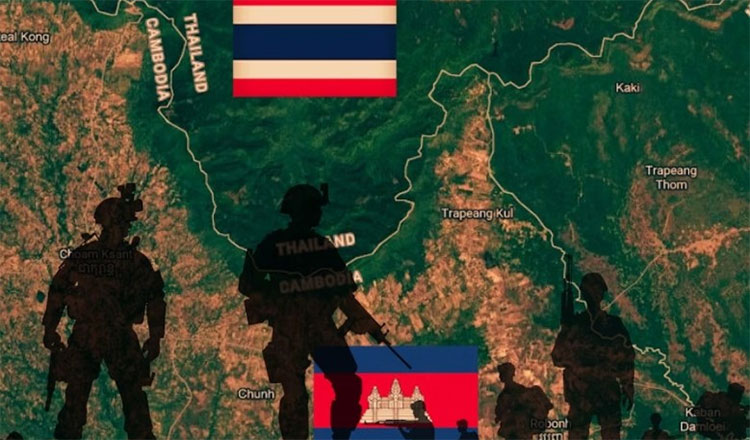 Politics Drive Thailand’s Border Stance as Hard-Line Messaging Misleads Voters on Cambodia.
-Opinion-
Anutin Charnvirakul’s decision on December 11 to seek dissolution of the House of Representatives, and move Thailand toward elections expected by mid-February 2026, place his recent posture toward Cambodia in a clearly political light.
The timing shows Thailand entering an active campaign period, with Anutin shifting his focus from governing to positioning himself for voter support. His firm statements rejecting further negotiations with Cambodia, presenting the border situation as a sovereignty challenge, and insisting on a “status quo, no ceasefire.” The position mirrors the conduct of leaders who use hard line security messaging and persist in misleading Thai voters into believing that Cambodia threatens Thailand’s sovereignty, all to mobilize key domestic constituencies ahead of elections.
These developments sit within a broader political environment marked by internal tension, and uncertainty, heightened political competition, weak governance, and persistent corruption. At the same time, Anutin is confronting growing domestic pressure from criticism over his handling of the recent flood crisis to renewed public scrutiny following leaked photos in Thai media that appear to suggest a connection to Ben Smith, a South African-born businessman implicated in regional online-scam and money laundering networks that have used Thailand as a major transit base, prompting Thai leaders to deploy strong national security messaging to project toughness, distract from internal issues, and reinforce their leadership image ahead of the 2026 elections.
In recent weeks, Thai political actors including Anutin, civilian leaders and the military, have often used national security narratives to divert attention from internal challenges, strengthen perceptions of leadership, and shape public opinion ahead of major political milestones, such as “PM Anutin says no more negotiations with Cambodia.”, “Thailand’s direction remains status quo. No ceasefire.”, “RTA vows to cripple Cambodia’s military to protect future generations.”, and “Our response is not a signal. It is a response to make it clear that they must not threaten Thailand’s sovereignty. From now on, there will be no negotiations of any kind. If the fighting is to stop, Cambodia must follow the course of action set by Thailand.”
Anutin’s current approach appears consistent with this pattern, the messaging is crafted not only to influence external dynamics but also to guide how the situation is interpreted by the Thai public at a critical electoral moment.
By combining his border related rhetoric with statements about “returning power to the people,” Anutin aims to project firmness and authority at a time when Thailand’s domestic politics remain unsettled. In this context, Cambodia becomes a platform for demonstrating resolve to voters rather than the central driver of Thailand’s policy choices.
Given these dynamics, the border situation is unlikely to stabilize in the near term, as nationalist signaling is expected to intensify throughout Thailand’s election period. De-escalation is therefore more probable only once a new Thai government is formed. With limited political control on the Thai side and an increasing likelihood that the military will shape events creating substantial risks of miscalculation and potential spillover. In this context, the most credible pathway to stabilize the border may be high-level third party intervention, potentially the third round from U.S. President Donald Trump, whose engagement could help impose restraint and restore a degree of political oversight in Bangkok.
Author: Chhay Bora – Strategic Advisor, and Government Affairs & Public Policy Expert
-Khmer Times-