Revisiting Cambodia’s economic security
 Revisiting Cambodia’s economic security
-Editorial-
Economic security is the lifeblood of a nation, ensuring stability, growth, and resilience in the face of internal and external threats and risks.
For Cambodia, the past five years have not only tested but challenged its economic security on multiple fronts. Learning from these experiences, Cambodia is compelled to develop a comprehensive economic security policy framework.
Four challenges stood out over the last five years: the Covid-19 pandemic, border conflicts with Thailand, US reciprocal tariffs, and a rising tide of online scams.
The Covid-19 Pandemic
The Covid-19 pandemic struck the Cambodia economy hard. The impacts were widespread, hitting supply chains, tourism, real estate, and labor markets.
The economy contracted by 3.6% in 2020, highlighting the urgent need to address the scarring effects on long-term growth potential.
Studies suggest that the optimal pathway forward would involve strategic upgrades in human and physical capital. This means invigorating foreign direct investment (FDI), ramping up public infrastructure investment, and restructuring technical and vocational training landscapes.
Simultaneously, structural reforms need accelerating, focusing on economic diversification, regulatory refinement, and investing in a digital economy and an innovation-driven growth model.
Border conflicts with Thailand
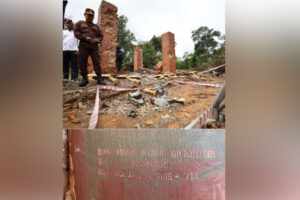
The unilateral border closure by Thailand, followed by armed aggression in July, caused significant impacts on Cambodia’s economy.
Over 130,000 civilians displaced by conflict along the border faced collapsed livelihoods and escalating debt burdens, placing them at significant financial risk despite temporary relief measures.
The economic blow manifested in halted bilateral trade, tourism declines, and reduced remittances—an essential buffer for household incomes.
Nearly a million Cambodian workers were forced to return home, with only a third finding local employment opportunities.
US reciprocal tariffs
The imposition of reciprocal tariffs by the US has been another formidable challenge. Initially threatened by a staggering 49% tariff rate, the Cambodian garment and footwear sectors found themselves in a precarious situation, facing order cancellations and layoffs.
Though the tariff was later reduced to 19%, allowing for a modest impact with an expected real consumption decline of about 0.32% by 2030/31, the continuous volatility of US trade policy remains a concern.
Cambodia’s agreement to eliminate tariffs on US goods presents an opportunity but also emphasises the need for diversification and resilience in global trade relations.
Cambodia is compelled to implement certain regulatory measures in compliance with the October 26 reciprocal trade agreement between the US and Cambodia, such as the protection of intellectual property, internationally recognised labour rights, environmental protections, and export controls.
Online scams and human trafficking
Cambodia’s reputation is currently under siege from the prevalence of online scams and human trafficking. Labelled Tier 3 in the Trafficking in Persons report, Cambodia faces international scrutiny.
The US and UK have recently sanctioned multinational organisations operating in Cambodia that are accused of running large-scale online scam operations targeting victims worldwide.
The sanctions target individuals and companies, like the Prince Group and its associates, involved in these transnational criminal activities.
Restoring trust in Cambodia as a safe destination for tourists and investors involves a coordinated strategy, focusing on prevention, rigorous law enforcement, and international cooperation and coordination.
Crafting a resilient economic security policy
Looking ahead, forging a robust economic security policy framework is necessary. This should address the sources of vulnerabilities and leverage opportunities both internally and externally.
Building strong, modern, and transparent state institutions, developing critical infrastructure, and investing in human capital are foundational steps toward building economic resilience and security.
Investment in education and training holistically addresses the skills gap, fortifying the workforce against future economic shifts.
Simultaneously, it is important to improve regulatory efficiency, governance accountability, and transparency that streamline operations across industries, enhancing competitiveness and attracting investment.
Building international confidence and internal strength
It requires strategic policy shifts and comprehensive structural reforms. To restore international confidence, Cambodia must demonstrate credible efforts in resolving issues related to online scams, human trafficking, while building a modern, credible, and smart governance structures.
Moreover, embracing digital transformation and innovation offers pathways for socio-economic upliftment.
Economic diversification remains a cornerstone of resilient economic policy. By diversifying export markets, enhancing value addition in traditional sectors, and developing new industries, Cambodia can insulate itself from external shocks.
Collaborative regional partnerships and improved diplomatic relations will further enhance Cambodia’s strategic economic positioning. In this regard, economic diplomacy needs new momentum.
Cambodia’s resilience and proactive policy interventions can pave the way for sustainable growth and security. By recognising vulnerabilities and strategically and intelligently aligning resources, Cambodia could emerge stronger and more economically secure.
It begins with decisive and transformative leadership at all levels and across sectors to enhance state institutions, build a robust investment and business environment, and boost national competitiveness.
-Khmer Times-