Cambodia scoffs at Thai criticism of film showing refugee tragedy
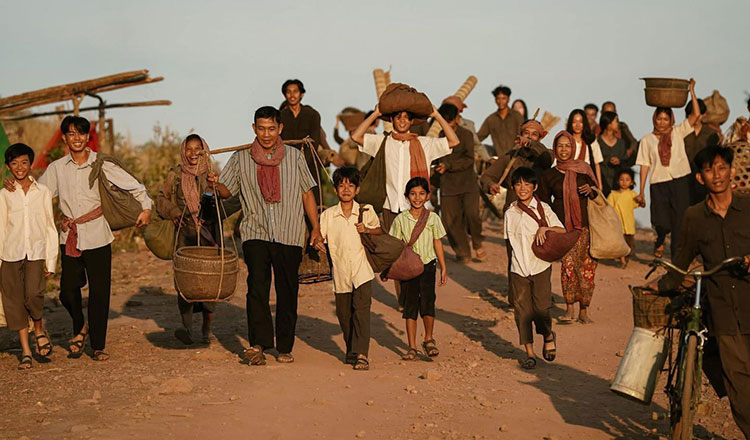 Photo: A scene from the filming of Ghost Mountain: Second Killing Field. LD Entertainment
#National
Synopsis: Ghost Mountain: Second Killing Field tells the story of Cambodian refugees who survived the Khmer Rouge’s Killing Fields and fled towards Thailand in 1979.
Cambodia has rejected Thailand’s criticism of Ghost Mountain: Second Killing Field, saying the film reflects historical memory and serves as a warning to future generations against the recurrence of mass atrocities.
The reaction follows a statement from Thailand’s Government Public Relations Department expressing concern over what it described as “serious accusations” against Thailand in the film.
“Thailand notes the information and accusations contained in the film and underlines that filmmaking should not be used to distort history or incite hatred. Thailand believes that any representation of conflict should be based on verifiable facts and also consider the impact on the relations between the people of both countries,” Thailand said.
Ghost Mountain: Second Killing Field tells the story of Cambodian refugees who survived the Khmer Rouge’s Killing Fields and later fled towards Thailand in 1979, believing it to be a place of safety. However, later the Thai military forces them to cross back into Cambodia through the Dangrek mountain range—an area heavily contaminated by landmines.
Cambodian filmmakers and historians have defended the film, saying it documents real events experienced by thousands of refugees and should not be dismissed as political provocation.
The film’s director Leak Lyda said the production was based on truth and ethical responsibility.
“I am the director of this movie. Don’t worry, I only tell the truth. I have ethics as a filmmaker,” he said.
Meanwhile, LD Productions has begun filming a documentary titled The Tragedy of Ghost Mountain, based on the book Dangrek Mountain… Unforgettable by Dr Quach Mengly, a survivor of the Khmer Rouge regime. The documentary recounts his experiences and those of other refugees who fled to Thailand after the fall of the Khmer Rouge, only to be deported back into Cambodia through dangerous, mine-infested terrain.
Dr Mengly said the story deserved to be told because it reflected historical suffering endured by Cambodian civilians.
“This film should be made because it is part of our history and what truly happened to our people in 1979,” he said. “Cambodian refugees suffered severe pain and trauma due to mistreatment and forced deportation, particularly by Thai soldiers.”
“The film is not meant to incite hostility, but to guide younger generations to remember in order to avoid such events from happening again, and that it is a piece of history we should know ourselves about the bitter past involving a neighbouring country that has repeatedly abused us for hundreds of years, oppressed and exploited us, invaded and taken our territory, and would do so again if given the opportunity; therefore, this serves as a lesson for future generations,” he added.
Historian Vong Sotheara said the story is based on facts and supported by survivor testimonies.
Sotheara said he communicated with Cambodian refugees now living in France and their accounts closely matched one another.
“They all described being deceived, put onto trucks by Thai forces, and abandoned in the Dangrek Mountains, forced to walk through landmine areas,” he said. “When people from different places tell the same story, it is not fabrication. And there are many written records and consistent accounts describing these sufferings.”
He added that the film plays a critical role in preserving historical memory, particularly for younger Cambodians born after decades of conflict.
“This film has great value in awakening national consciousness,” Sotheara said. “If future generations forget, the same tragedy could happen again.”
-Khmer Times-