Drones, Borders, and the Double Standard
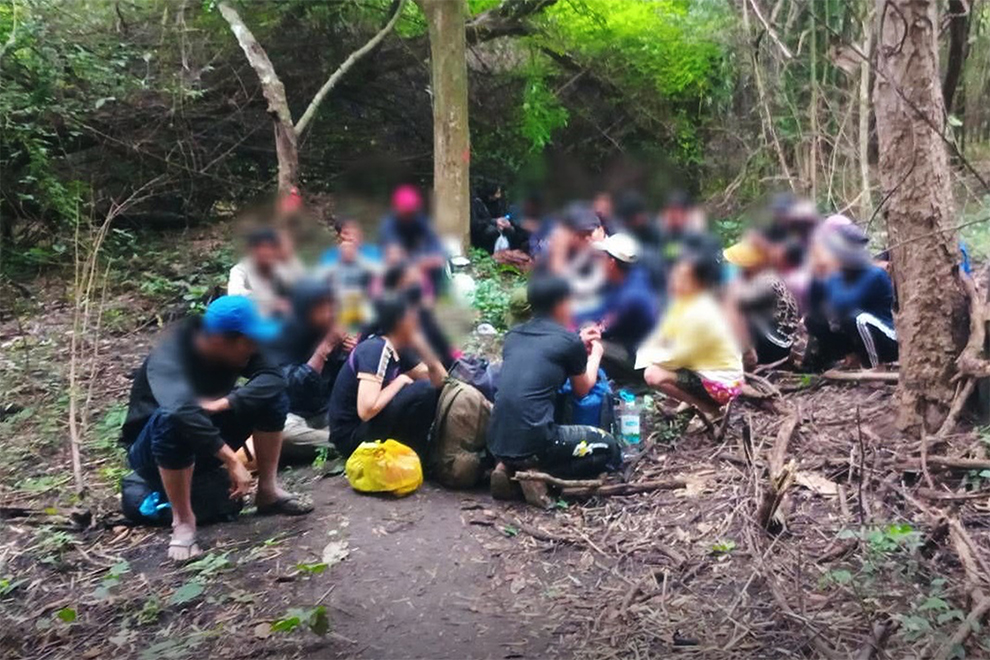 Thai authorities arrested 45 Cambodians on September 30, after they allegedly crossed the border illegally, in search of jobs. ANN/The Nation
-Opinion-
Thai authorities said they arrested 45 Cambodians in Chanthaburi earlier this week, accusing them of crossing the border illegally in search of work. Three Thai nationals were arrested alongside them, accused of guiding the crossing through Ban Laem Yai village, in Tambon Thepnimitr. The stated motive was simple and familiar: people looking for jobs. That is the basic story. But behind it, there is a bigger picture about the border, security and politics.
This incident is part of a larger problem between Thailand and Cambodia. Since May 2025, tensions have been rising in several border areas, especially near many old temples which both countries lay claim to. In June, Thailand closed several official border checkpoints, saying it needed to protect against espionage, scam groups and cross-border crime. Cambodia disagreed, saying many of these areas are still not officially marked and have always been used by villagers on both sides. The arrests in Chanthaburi fit into this larger situation, where Thailand is tightening border control and linking it to national security.
Migration and poverty are the main reasons why people keep crossing. When jobs are scarce in Cambodia and the legal border points are closed, people look for other ways. Many groups have been caught in the past few months, often in large numbers. Thailand usually presents two sides: saying migrants are victims of deception, but also suggesting they could be linked to crime. This double image helps justify stronger border action, more patrols and more technology like drones.
Security plays another role. The frontier is not just a place for workers, it is also a military zone from past conflicts. In Chanthaburi and nearby stretches, Thai forces building a road recently found old landmines and weapons. Drones and thermal cameras are now used to spot groups crossing. In a nearby case in Sa Kaeo, 51 Cambodians were tracked and arrested this way. These tools can stop smugglers, but they can also confuse local guides or family members with traffickers.
The facts about the Thai “guides” in the Chanthaburi case are not clear. Were they smugglers making money, villagers helping relatives or workers themselves? The law treats all of them as criminals, but the reality may be more complicated. The number “45” is an official count, but without independent checks we do not know if all were workers, families or even if some asked for protection.
The Sa Kaeo case shows another layer of contradiction. Thai media openly celebrated drones equipped with heat detection sensors that spotted 51 Cambodians hiding in a sugarcane field near Ban Nong Chan. Soldiers moved in quickly after the drone zoomed in on body heat. The drone itself had been donated by a Thai activist and was framed as an act of patriotism. At the same time, Thai leaders stood at the UN accusing Cambodia of using drones to escalate border tensions. This is the fracture: drones are condemned as threats when Cambodia uses them, but praised as heroic when Thailand deploys them against Cambodians.
Another question is about legal rights. Under which law are the Cambodians being held? Are they simply immigration offenders, or accused of being part of a smuggling group? Do they get interpreters, lawyers or help from their embassy? When will they be deported, or released? These details matter because they decide whether the arrests are normal enforcement or a possible human rights issue.
Timing is also political. Announcing border arrests helps Thailand show strength to its own public and to Cambodia, especially after recent disputes about drones and territory. It shapes the international image: Thailand as the enforcer, Cambodia as the sender of migrants. Without Cambodia’s side of the story, that picture risks hardening into a one-sided narrative.
There are risks if this continues. Stopping groups does not solve the reasons people cross. If legal paths remain closed and wages remain unequal, people will try again. Crackdowns push them to riskier routes and deeper debt to brokers, which can lead to more abuse and trafficking. Both governments say they want to stop exploitation, but the current approach may make it worse.
To understand these incidents properly, we would need four things: official statements from both governments, independent reporting from NGOs and families, clear explanation of the laws being used, and maps and history of the border area itself. Only with all of these can we separate security needs from political theatre.
In the end, Thailand may use these cases to pressure Cambodia for stronger controls. Cambodia may answer that Thailand is ignoring history and rights. If any mistreatment of detainees is reported, it could backfire against Thailand. The best path for both countries is practical: legal work corridors, shared patrols and clear communication to separate real traffickers from ordinary workers. Otherwise, human needs becomes part of endless border politics.
For now, the groups from Chanthaburi and Sa Kaeo are just numbers in arrest reports. What happens to them next, deportation, prosecution or release, is not being reported. Without answers, the story is left at the image: workers caught in the forest or in a sugarcane field, surrounded by soldiers, exposed by drones. That picture will spread, but whether the full truth is told depends on who demands it.
At the UN, Thais call drones a threat. At home, they celebrate drones hunting Cambodians.
Ponley Reth is a Cambodian writer and commentator based in Phnom Penh. The views and opinions expressed are his own.
-The Phnom Penh Post-