Who Speaks for Cambodia? Missed Opportunity at Australian Political Conference
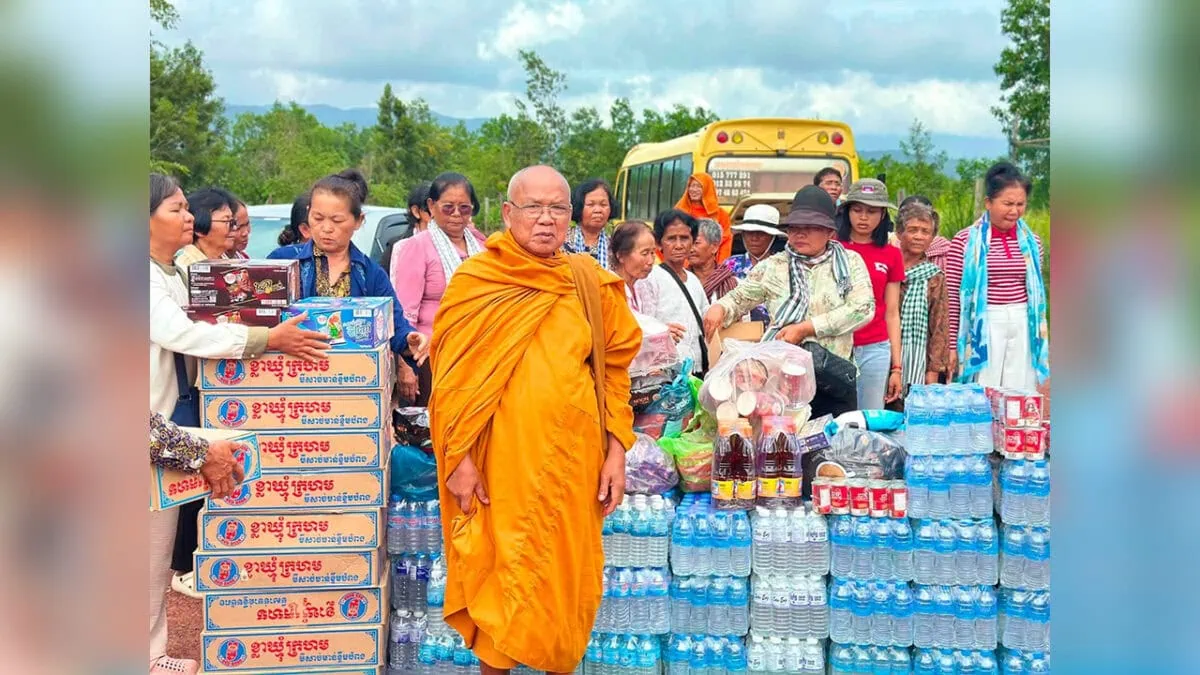 PHOTO: The most venerable Sovann Srey, president of the Cambodian Buddhist Monk Council of Australia and New Zealand, travelled to affected border communities to deliver emergency assistance. FB
The 50th National Conference of Australia’s ruling Labor Party in Adelaide demonstrated how determined advocacy can bring international humanitarian issues into Australia’s political conversation.
Yet for many Cambodian Australians, the conference will be remembered not for what was said about Cambodia — but for what was not.
Former minister Ed Husic demonstrated the conviction to publicly advocate for a debate on Gaza. Although his proposed motion reportedly failed to secure a seconder, he later reflected that he was “surprised at the extraordinary amount of energy that has been applied to stop this, as opposed to talking about this”, adding that political parties should be prepared to “disagree respectfully”.
Regardless of where one stands on the issue, his willingness to publicly advocate for concerns held by many within his community reflected an important principle of democratic representation.
This article is not about comparing one humanitarian crisis with another. Every civilian affected by war deserves compassion, dignity and protection. Rather, it asks whether those humanitarian principles are applied consistently.
If one international conflict rightly deserves national political debate, why should another humanitarian crisis receive comparatively little public attention? That question inevitably leads to Cambodia.
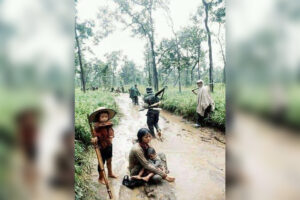
Cambodia has publicly alleged that Thailand has occupied parts of its territory, while the recent border conflict has created significant humanitarian consequences and displaced large numbers of civilians. Families have fled their homes, communities have been disrupted, and many continue to depend upon humanitarian assistance.
The humanitarian situation was witnessed firsthand by the most venerable Sovann Srey, president of the Cambodian Buddhist Monk Council of Australia and New Zealand, who personally travelled to affected border communities to deliver emergency assistance. The mission distributed food, essential supplies and financial support to displaced families.
The council described the mission as an expression of Buddhist compassion.
“Together, through compassion and unity, we can make a meaningful difference,” it said, thanking donors and volunteers whose generosity had “helped bring hope, comfort and encouragement to our fellow Cambodians during this difficult time”.
International concern has also extended well beyond the Cambodian community.
Academy Award-winning actress, humanitarian and former UNHCR Goodwill Ambassador Angelina Jolie, whose humanitarian work in Cambodia spans more than two decades and whose adopted son Maddox was born in Cambodia, recently expressed concern for Cambodians displaced by the border conflict.
Her statement reminded the international community that humanitarian compassion should never depend upon geography, politics or the amount of media attention a crisis receives.
Yet Cambodia was virtually absent from Labor’s National Conference. That silence is particularly significant because the city of Greater Dandenong, home to Australia’s largest Cambodian Australian community, has itself publicly supported peace and humanitarian concern regarding the Cambodia–Thailand border conflict.
More broadly, Cambodian Australians today occupy positions of influence across politics, government, business, education and community leadership.
Representation, however, is measured not simply by attendance at conferences, holding public office or appearing in photographs with senior political leaders.
It is measured by the willingness to raise difficult issues when one’s community expects its voice to be heard. The same question extends beyond politics.
How effectively have Cambodian-language media serving the diaspora highlighted the humanitarian consequences of the Cambodia–Thailand border conflict?
Established Cambodian-language media all play an important role in informing, connecting and representing Cambodian communities across Australia and abroad.
As new media platforms continue to grow, there is an opportunity for sustained reporting and thoughtful public discussion on issues that profoundly affect Cambodian people both in Australia and overseas.
This is not about choosing one international humanitarian crisis over another. It is about applying the principles of human rights, justice and compassion consistently.
If Australians can rightly advocate for peace, justice and humanitarian protection in one part of the world, then those same principles should apply equally to Cambodia.
No community should feel that its suffering is less deserving of attention simply because it receives less political or media focus. Nor is humanitarian engagement by the Cambodian Australian community something new.
For many years, the Australasian monk council has organised humanitarian assistance for vulnerable Cambodians. During the 30th Anniversary Cambodian Buddhist Sangha Congress held in Melbourne, senior Buddhist monks from across the world reaffirmed the community’s longstanding commitment to humanitarian service and social responsibility.
This article is not intended as a criticism of any individual’s commitment to public service.
Rather, it is an invitation to reflect on the responsibilities that accompany leadership. Political leaders, community organisations and media all play vital roles in ensuring that humanitarian issues receive the attention they deserve.
Advocacy should not depend upon the size of a community, geopolitical interests or the prominence of a conflict. It should be guided by consistent principles of humanity, compassion and justice.
The Cambodian Australian community has contributed enormously to Australia’s multicultural success story. It deserves principled representation, thoughtful advocacy and a willingness to speak without fear or favour when humanitarian issues affect Cambodian people.
Perhaps Labor’s 50th National Conference will ultimately be remembered not only for the debates that took place, but also for the important conversation that never happened. The question remains: Who will speak for Cambodia?
Thay Yim is public relations manager for the Cambodian Buddhist Monk Council of Australian and New Zealand Inc. The views and opinions expressed are his own.
-Phnom Penh Post-