How Many More Agreements Must Thailand Sign Before It Stops Violating Them?
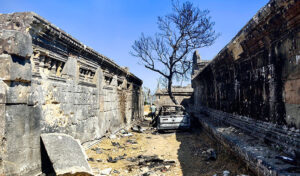
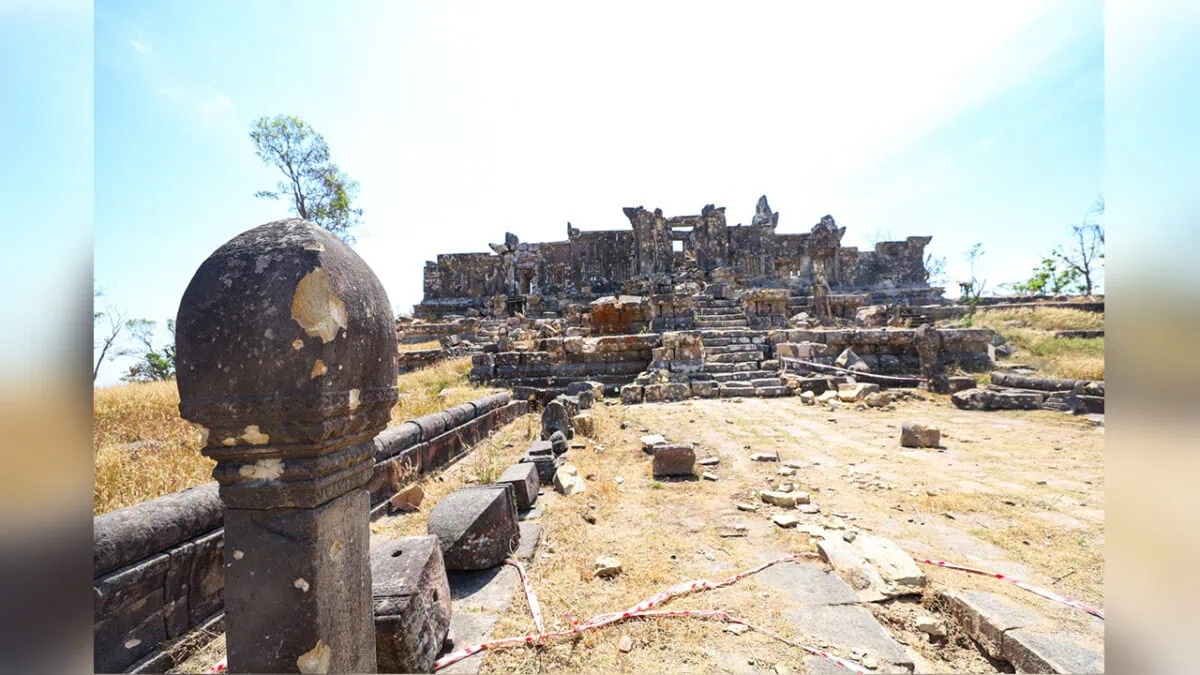 Preah Vihear Temple suffered extensive damage during the December fighting. Supplied
#Opinion
The Franco–Siamese Treaties of 1904 and 1907 clearly established the boundary between Cambodia and Siam. The official 1:200,000 maps were prepared, and boundary markers were placed by the Franco–Siamese Boundary Commission.
However, during World War II, Siam aligned itself with the Axis powers through its alliance with Imperial Japan. Backed by Japan, Siam waged the Franco–Thai War, invading and occupying parts of Cambodian territory. After the defeat of the Axis powers in 1945, and under pressure from the Allied powers, Siam was required to return the occupied Cambodian and Laos territories.
After Cambodia gained independence from France in 1953, Thai troops occupied the area surrounding the Temple of Preah Vihear in 1954. In 1962, the International Court of Justice (ICJ) ruled that the Temple of Preah Vihear is under Cambodian sovereignty and ordered Thailand to withdraw its military forces from Cambodian territory.
During the decades in which Cambodia endured internal conflict and civil war, Thailand gradually advanced its claimed boundary into Cambodian territory and unilaterally produced 1/50,000-scale maps, contrary to the boundary already established under the Franco–Siamese Treaties.
Cambodia, once the great Angkor Empire, is now a small nation that has endured decades of war and suffering. The Cambodian people have no ambition to seize anyone else’s land. We seek only to live peacefully on the small territory that remains to us — a territory recognised and deposited with the UN — with peace, stability and mutual respect for sovereignty. Yet history has repeatedly shown that Cambodia has not always received such respect.
For example, although Cambodia and Thailand signed the MoU 2000 on the Survey and Demarcation of the Land Boundary and the MoU 2001 on the Area of Overlapping Maritime Claims, armed conflict nevertheless erupted in 2008 and continued until 2013.
In July 2025, armed clashes broke out again. On 28 July 2025, Cambodia and Thailand agreed to an immediate ceasefire in Malaysia. Three months later, on 26 October 2025, the prime ministers of both countries signed the Kuala Lumpur Peace Accord, reaffirming their commitment to peace, dialogue, de-escalation and the peaceful settlement of disputes.
Yet those commitments did not bring lasting peace.
In December 2025, Cambodian territory came under attack once again. Fighting continued until a new ceasefire entered into force on 27 December 2025. During this period, Thai forces launched air attacks into Cambodian territory, resulting in civilian deaths, the displacement of hundreds of thousands of people and extensive damage to civilian infrastructure.
Homes, schools, hospitals, bridges, roads and other public infrastructure were destroyed or severely damaged. Even the Temple of Preah Vihear, a UNESCO World Heritage Site, was attacked and sustained damage.
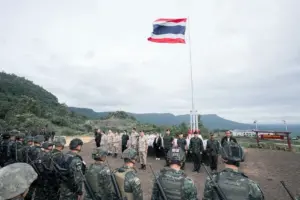
Even more troubling is that, despite the ceasefire, Thai troops continue to maintain positions in parts of Cambodian territory that they occupied through force. In these areas, Thailand has erected shipping containers and multiple rows of razor wire, preventing Cambodian civilians from accessing their homes, buildings and other property located on Cambodian sovereign territory. Many Cambodian families remain unable to return to their homes or resume their livelihoods on their own land.
Furthermore, a statue of Lord Vishnu, built by Cambodia in the occupied area, was reportedly demolished after the area came under military occupation. For the Cambodian people, the destruction of this statue represents not merely the loss of a monument, but also the destruction of a symbol of Cambodia’s identity, history, culture and civilisation — heritage that should be respected and protected by all parties.
As Cambodians, we have also witnessed innocent civilians lose their homes, property and livelihoods. Cars, motorcycles, tractors, livestock, agricultural crops and many other possessions have reportedly been destroyed or taken during the conflict.
What makes these events especially difficult for Cambodians to accept is that they occurred despite the existence of a ceasefire and peace agreements already signed by both countries.
Peace cannot be meaningful if foreign territory remains under military occupation, civilians are prevented from returning to their homes and cultural symbols are destroyed in occupied areas.
Yet despite these events, Thailand continues to claim that Cambodia is the party refusing negotiations.
Can such an accusation reasonably be sustained?
Cambodia has consistently called for peace. When bilateral mechanisms proved unable to prevent violence or achieve a durable solution, Cambodia sought assistance from the international community and turned to international legal mechanisms.
Requesting independent mediation or seeking settlement under international law does not mean rejecting negotiations. On the contrary, it reflects a commitment to the rule of law and the peaceful resolution of disputes rather than the use of military force.
This contradiction is even more evident in the maritime dispute. After Thailand unilaterally withdrew from the 2001 Memorandum of Understanding, which established the bilateral framework for addressing overlapping maritime claims, it nevertheless accused Cambodia of refusing negotiations when Cambodia turned to the dispute-settlement mechanisms available under UNCLOS.
This raises a serious question: does cancelling agreements previously signed serve to pressure Cambodia into renegotiating from a position where Thailand exercises control over Cambodian territory?
No country should be able to dismantle mutually agreed negotiation mechanisms and then accuse the other party of refusing negotiations.
Thailand is now reportedly considering withdrawing from the 2000 Memorandum of Understanding on the survey and demarcation of the land boundary — the very foundation of the work of the Joint Boundary Commission (JBC).
If that agreement is also cancelled, will Thailand once again claim that Cambodia refuses negotiations?
A country cannot continue dismantling the very mechanisms established for negotiations while simultaneously criticising the other party for choosing mediation, arbitration, adjudication or other peaceful legal avenues under international law.
Thailand’s conduct appears to reflect the belief that, because it possesses greater military and economic strength than Cambodia, it can exert pressure on its smaller neighbour. Yet military power cannot create legal rights, and economic strength is not a licence to violate another state’s sovereignty.
Cambodia does not seek war. We seek peace founded on international law, respect for agreements, sovereignty and the equal dignity of all states. We believe disputes should be resolved through genuine negotiations, impartial mediation and international legal procedures — not through military force, coercion or unilateral actions.
Peace cannot be achieved merely by signing agreements. Genuine peace requires honouring and faithfully implementing the obligations that have been undertaken. A more powerful state has no right to use force to manufacture legal claims or violate the sovereignty of a smaller nation. Respect for international law, accountability for violations and the peaceful settlement of disputes remain the only solid foundation for lasting peace.
ASEAN must encourage all its members to uphold international law, respect ASEAN’s fundamental principles and ensure that disputes between neighbouring states are resolved peacefully, in accordance with international law and mutual respect for sovereignty.
Soeun Veasoth is the CEO of a cashew processing enterprise in Stun Treng province. The views and opinions expressed are his own.
-Phnom Penh Post-