But the existence of criminal activity inside a building does not give a neighbouring country the right to bomb that building, cross an international boundary, seize the site and remain in occupation.
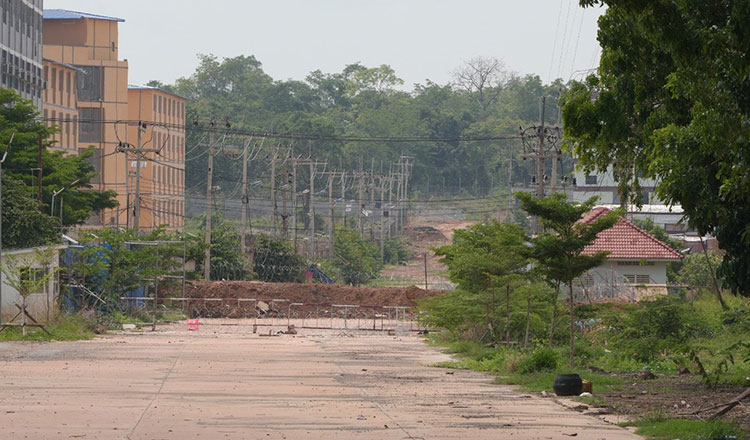
This is the fundamental distinction blurred by a Reuters investigation published on July 15 concerning alleged scam operations at the Royal Hill complex in O’Smach. The article presents documents, witness accounts and photographs suggesting that buildings near the casino had been used by criminal networks. Such evidence deserves a proper investigation.
What it does not establish is that Thailand had any legal right to attack or occupy Cambodian territory.

A justification constructed after the attack
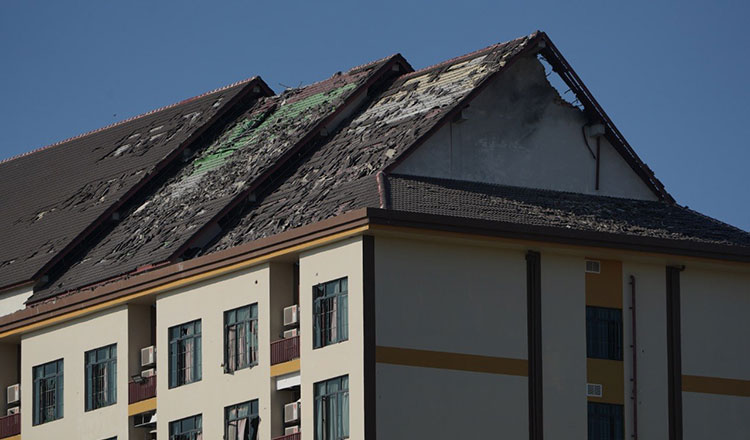
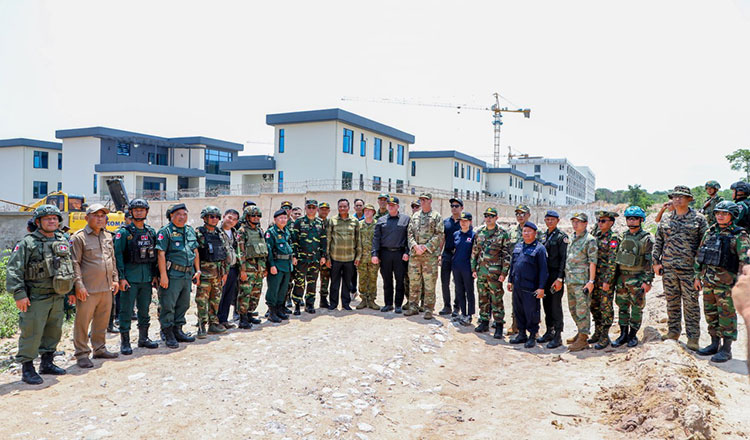
Reuters reports that the Thai military bombed Royal Hill during the December military invasion and now occupies the site. It also states that Reuters journalists visited the compound in February and March at the invitation of the Thai military.
Significantly, Thailand’s stated military justification was not that it was conducting an international anti-scam operation. Thailand claimed that Cambodian forces had commandeered casino buildings and were using them for drone and sniper attacks. Cambodia categorically rejected that allegation and maintained that Thailand had attacked civilian infrastructure.
Thailand therefore cannot now transform the discovery of alleged scam-related materials into a new, retrospective justification for its military actions.
The sequence matters. Thailand bombed the site. Thailand seized the site. Thailand controlled access to the site. Thailand then invited journalists into the territory under its military occupation to examine materials recovered there.
Evidence of fraud may help establish individual criminal responsibility. It cannot retroactively establish that a military attack was lawful.
Criminal allegations do not decide sovereignty
Even if every allegation about scam activities at Royal Hill were ultimately proven, the legal conclusion would remain unchanged: criminality does not extinguish Cambodian sovereignty.
A government’s failure, weakness or delay in suppressing crime within its territory does not authorise another state to invade that territory. Otherwise, any powerful state could identify organised crime across a border, launch air strikes, seize land and subsequently declare its actions legitimate.
That would destroy the international legal order.
Article 2(4) of the United Nations Charter requires states to refrain from the threat or use of force against the territorial integrity or political independence of another state. Article 51 recognises self-defence only when an armed attack occurs. Online fraud, illegal gambling and human trafficking—however reprehensible—do not themselves constitute an armed attack authorising cross-border military force.
Thailand must therefore prove its original military claims through credible, independently verifiable evidence. It cannot substitute scam scripts, rental contracts or fake banking rooms for proof that Cambodia launched an armed attack.
The Reuters evidence requires investigation—not political exploitation
Reuters itself acknowledges important limitations in its findings.
The news agency found no evidence that Lim Heng Group was directly involved in the fraud or human trafficking allegedly conducted at the property. Reuters also withheld the Chinese tenant’s name because it could not independently confirm his identity or his role in the scam activity. Several central claims about the size, function and operation of the compound came from Thai military, police and security sources.
These qualifications are crucial.
A lease agreement may demonstrate a commercial relationship. It does not automatically prove that a landlord knew of, directed or participated in crimes committed by a tenant. Rooms resembling police stations and banks may constitute evidence of impersonation fraud. They do not constitute evidence that the buildings were legitimate military targets.
Nor should material recovered from a bombed site under the exclusive control of one party to an armed conflict be treated as politically neutral without a transparent chain of custody and independent forensic examination.

Thailand cannot destroy a suspected crime scene, occupy it, control access to it and then selectively present what remains as justification for retaining Cambodian territory.
ASEAN prescribes cooperation—not unilateral warfare
ASEAN has already established the appropriate response to online scams.
The 2025 ASEAN Declaration on Combatting Cybercrime and Online Scams calls for law-enforcement coordination, information sharing, mutual legal assistance, extradition, coordinated operations and joint investigations conducted in accordance with domestic and international law.
The 2024 Vientiane Declaration similarly emphasises cooperation among law-enforcement and border-management agencies, prosecution of perpetrators, victim protection and joint investigations. It does not authorise one ASEAN member to bomb or occupy the territory of another.
UNODC likewise identifies shared intelligence, financial investigations, joint investigations and coordinated cross-border prosecutions as the necessary response to organised fraud.
The difference could not be clearer. Fighting transnational crime requires cooperation between sovereign states. It does not provide a licence for territorial aggression.
Cambodia is acting—and must continue acting
Cambodia should confront every credible allegation firmly and transparently. Those responsible for fraud, trafficking, unlawful detention and money laundering must be investigated and prosecuted, regardless of wealth, nationality, title or political connection.
But Reuters also acknowledges that Cambodia has adopted legislation directly targeting scammers, extradited an alleged scam kingpin to China and opened an investigation concerning the Royal Hill area. Cambodian authorities have stated that Thailand must return control of the seized locations so that those investigations can proceed.
That is a reasonable demand. A Cambodian criminal investigation cannot be properly conducted while the relevant Cambodian site remains under foreign military control.
Cambodia should invite credible international partners to assist with evidence preservation, financial tracing, victim identification and prosecution. Thailand should submit whatever evidence it possesses through established bilateral, ASEAN and international law-enforcement channels.
It should also withdraw its forces and return the site to Cambodian jurisdiction.
Crime cannot become a weapon of territorial expansion
The victims of scam syndicates deserve justice. Trafficked workers deserve rescue and protection. Those who facilitated or profited from criminal operations must be held accountable.
But these victims should not be exploited to legitimise another violation.
Thailand cannot bomb first, occupy second and search for a more attractive justification afterward. It cannot turn an anti-scam campaign into a narrative shield for military expansion. And it cannot ask the international community to believe that buildings allegedly used for criminal purposes somehow ceased to be located within Cambodian territory.
Scam crimes must be prosecuted. Sovereignty must be respected. One obligation cannot be manipulated to destroy the other.
Roth Santepheap is a geopolitical analyst based in Phnom Penh. The views expressed are his own.
-Khmer Times-