Choosing Law Over Force — Cambodia’s Enduring Strategy from Preah Vihear to UNCLOS
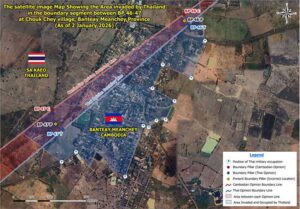
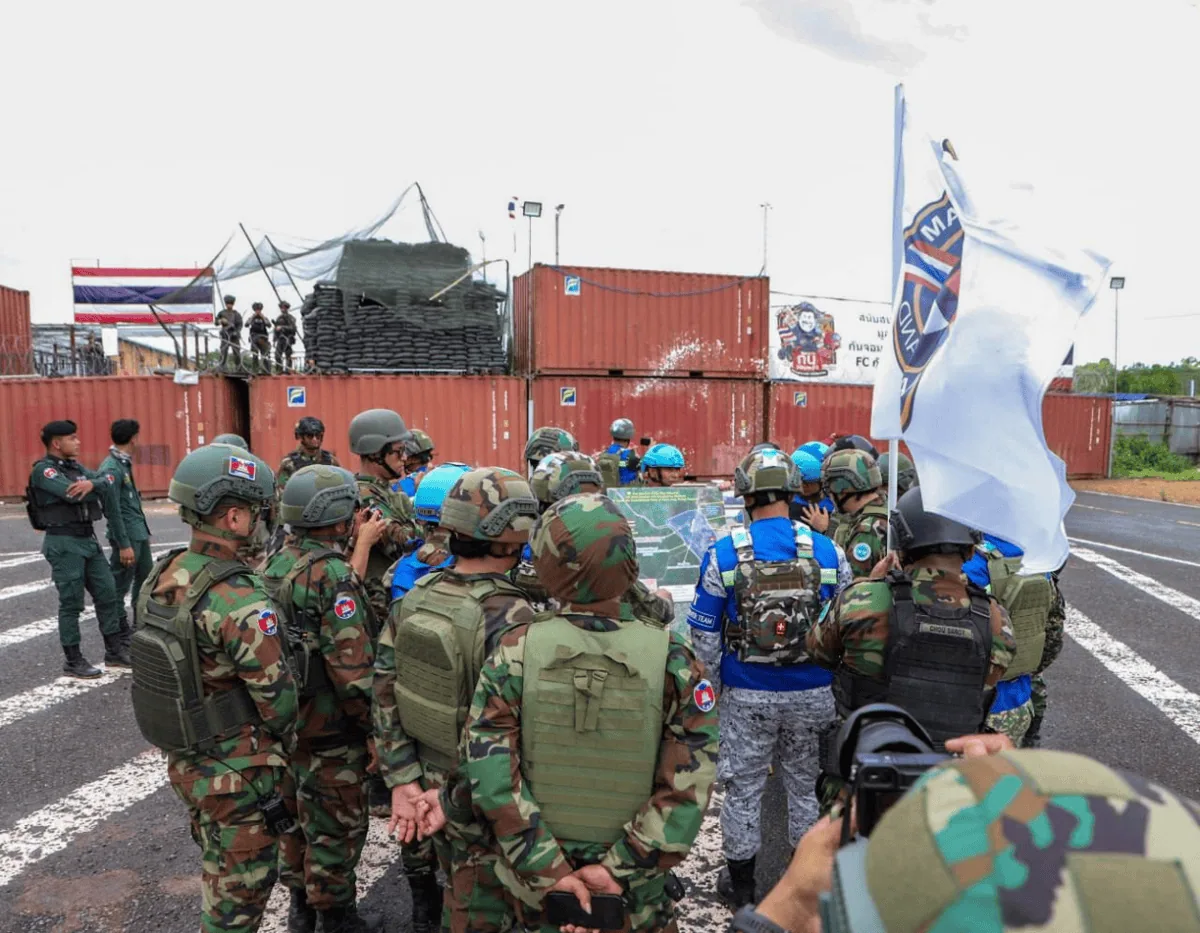 The ASEAN Observer Team (AOT) examine Thai shipping container barricades at the occupied Thma Da area on June 7. Defence ministry
#Opinion
History appears to be repeating itself, reminding us that Cambodia’s commitment to resolving disputes through international law is not a new policy, but a long-standing national tradition. In 1959, under the visionary leadership of King Norodom Sihanouk, Cambodia brought the Preah Vihear dispute before the International Court of Justice (ICJ), choosing the path of law and diplomacy rather than military confrontation.
To strengthen Cambodia’s case before the Court, His Majesty the King Father enlisted the services of Dean Acheson, one of the most respected statesmen and international lawyers of his time. Working alongside Cambodia’s legal team, Acheson played a pivotal role in presenting the country’s arguments before the ICJ. Their combined efforts contributed to the landmark 1962 judgment that affirmed Cambodia’s sovereignty over the Temple of Preah Vihear, a victory achieved through legal reasoning, historical evidence and international law.
More than six decades later, Cambodia has once again turned to international legal mechanisms to address disputes with Thailand. Just as His Majesty the King Father relied on distinguished international legal expertise to safeguard Cambodia’s national interests, the Royal Government of Cambodia today has assembled a highly qualified team of Cambodian and international legal experts.
Most notably, Cambodia has appointed two internationally recognised specialists in public international law to serve as its representatives in proceedings under the UN Convention on the Law of the Sea (UNCLOS): Peter Taksøe-Jensen, a distinguished Danish diplomat with extensive experience in maritime dispute resolution, and Jean-Marc Thouvenin, a renowned French scholar and practitioner of international law who has appeared before the ICJ on numerous occasions.
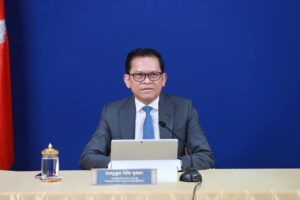
At the same time, foreign minister Prak Sokhonn has been entrusted with leading Cambodia’s broader diplomatic and legal efforts. Together with Cambodian officials and international legal advisers, these experts are tasked with presenting and defending Cambodia’s position before international institutions in accordance with international law.
The parallels between the two eras are striking. In the Preah Vihear case, Cambodia relied on treaties, historical documents, evidence and internationally recognised maps to present its case before the ICJ. Today, Cambodia is once again placing its confidence in legal processes established under the UN system, including both the ICJ and UNCLOS mechanisms, in pursuit of peaceful and durable solutions to complex disputes.
The individuals may have changed — from the leadership of His Majesty the King Father Norodom Sihanouk and the legal expertise of Dean Acheson to the contemporary contributions of Peter Taksøe-Jensen, Jean-Marc Thouvenin and Cambodia’s current diplomatic leadership — but the guiding principle remains unchanged. Cambodia continues to demonstrate its belief that disputes should be resolved through dialogue, evidence and international law rather than through the use or threat of force.
This enduring commitment reflects not only a legal strategy but also a broader national philosophy: that justice, peace and stability are best secured when nations place their trust in the rule of law and the institutions of the international community.
Tesh Chanthorn is a Cambodian citizen who longs for peace. The views and opinions expressed are his own.
-Phnom Penh Post-