“Maps May Be Rejected, but History and International Judgments Cannot Be Erased”
 “Maps May Be Rejected, but History and International Judgments Cannot Be Erased”
By Grandpa
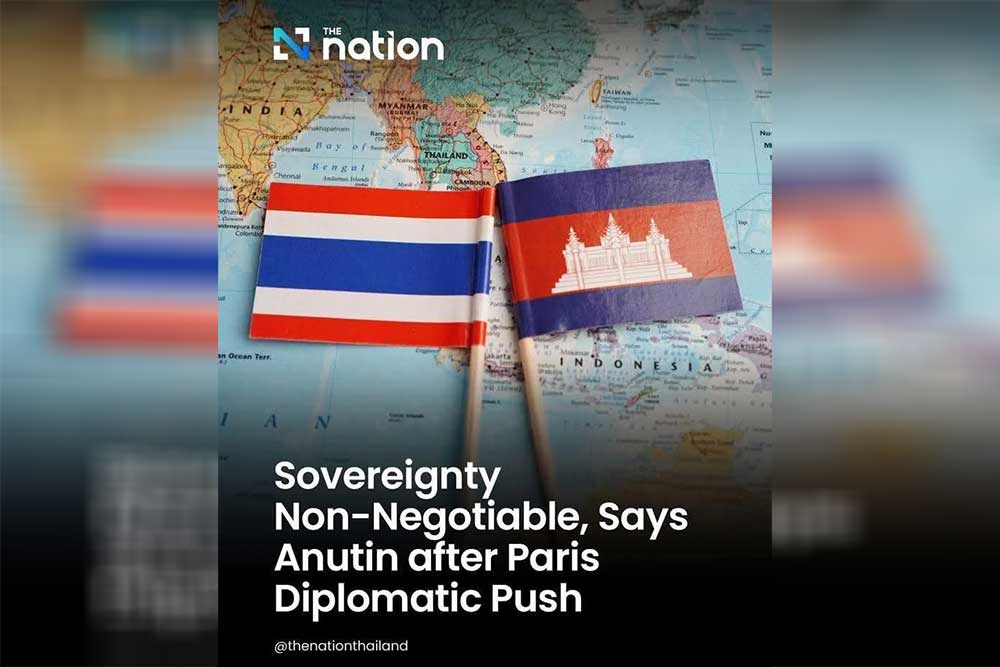
In recent months, remarks by the Thai Prime Minister regarding the rejection of the 1:200,000-scale maps produced during the French colonial period have attracted significant attention both regionally and internationally. The claim that “those maps no longer exist for the Thai government” is not merely a technical statement; rather, it is a serious political message that directly affects the principles of international law, historical legitimacy, and border stability in Southeast Asia.
The border issue between Cambodia and Thailand is not a new conflict. It is a long-standing historical matter that has persisted for decades and has been addressed through both bilateral mechanisms and international legal institutions. Therefore, rejecting maps that were once used and internationally recognized throughout history cannot be regarded as a simple technical adjustment. It is an attempt to create a “new reality” through political rhetoric.
•The 1:200,000 Map Is Not an Ordinary Document
The 1:200,000-scale maps prepared during the French colonial era are historical and legal documents of international significance. They were not maps unilaterally created by Cambodia, but rather maps produced during the border demarcation process between Siam and French Indochina under international agreements.
More importantly, the International Court of Justice (ICJ) in The Hague, in its 1962 judgment concerning the Temple of Preah Vihear, referred to and recognized the validity of these maps. The Court concluded that Thailand had effectively accepted the maps over a long period without objection. This means the maps are not merely historical records; they have become part of the foundation of international law.
Therefore, declaring that “those maps no longer exist” cannot erase international judgments or the legal obligations already established. International law does not operate according to the political will of any single government. If a state could simply reject historical documents it once recognized by declaring that they “no longer exist,” the entire international legal system would lose its security and stability.
•Sovereignty Does Not Mean the Right to Define Reality Unilaterally
Thailand’s statements have been presented in the context of “protecting national sovereignty.” However, sovereignty does not mean that a country can unilaterally determine its borders according to its own interpretation.
International borders are based on agreements, historical records, recognition, and international law. If one country could replace old maps with newly produced ones and declare, “This is more technologically advanced,” then many other countries could do the same, potentially leading the world into disorder.
Thailand’s use of 1:50,000-scale maps may indeed offer greater technical precision, but new technology cannot replace existing legal foundations. Technical matters and legal matters are two different things. The modernity of a map does not mean it can invalidate historical agreements.
•UNESCO Should Not Be Subjected to Political Pressure
Calls for UNESCO to “remain neutral” may sound reasonable, but repeated statements from the Thai side also suggest attempts to exert political pressure on international organizations.
UNESCO is an international institution with independent mechanisms that operate in accordance with international law. Cambodia has the same right as any other country to file complaints or request reviews concerning World Heritage sites. In cases involving damage or activities that may affect heritage zones, international organizations must have the right to conduct independent investigations.
Cambodia has never opposed joint inspections or international investigations. On the contrary, Cambodia has consistently welcomed transparency and factual verification because historical truth and the realities on the border can be demonstrated through evidence.
•Genuine Diplomacy Is Not the Creation of Nationalist Rhetoric
The remarks by Thai leaders also reflect shifts in domestic political direction. Strong rhetoric concerning sovereignty and historical maps may serve domestic nationalist sentiment, but it is not a sustainable way to resolve long-standing disputes.
History has already shown that nationalist rhetoric over border issues can create unnecessary tension and conflict. Peace cannot emerge from denying history or creating “new realities” based on political will. Peace comes from mutual respect, recognition of shared obligations, and adherence to international law.
•Cambodia and the Peaceful Defense of Sovereignty
Cambodia has made its position clear: it will continue to defend its territorial integrity and national heritage through peaceful means and in accordance with international law. Cambodia does not seek conflict, but neither can it accept unilateral interpretations of history that contradict international judgments and legal documents.
True negotiation must be based on honesty and respect for historical facts, not on the rejection of documents that were once recognized. Borders may appear as lines on a map, but for nations, they represent identity, sovereignty, and national dignity—matters that cannot be altered by short-term political rhetoric.