Is ASEAN becoming weaker?
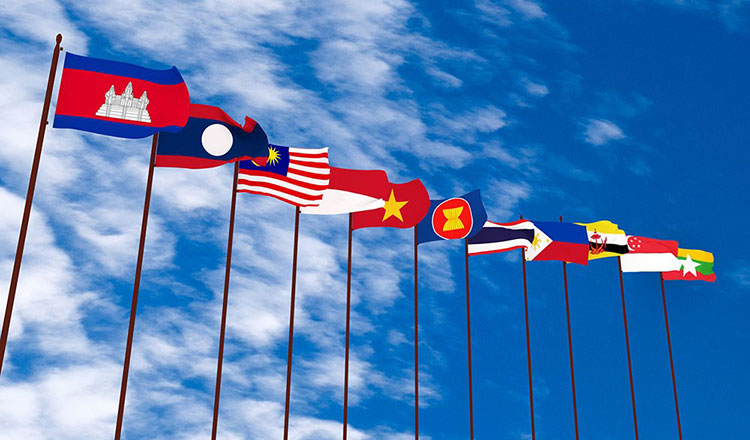 Eleven countries make up the Association of Southeast Nations. Khmer Times
#editorial
In a situation where rules-based international order is being abused and bruised by ‘might is right’ behaviours, ASEAN maintains its consistency in promoting peace and security through multilateralism. ASEAN should be more confident of itself and proactive in security agenda-setting. Among others, ASEAN can take the lead in providing a negotiation platform for the US and Iran. The bloc should also consider including Iran as a member of the ASEAN Regional Forum given the new realities of global and regional security dynamics.
For more than half a century, ASEAN has played a crucial role in managing peace and security in the region.
Let us take as examples the evolution of the ASEAN dispute settlement mechanism, through the recurrent border conflicts between Cambodia and Thailand, the role of ASEAN in the internal political crisis of Myanmar, and Russia’s invasion of Ukraine.
In 2011, ASEAN’s efforts to resolve the Cambodian-Thai border dispute were spearheaded by Indonesian Foreign Minister Marty Natalegawa, whose “shuttle diplomacy” sought to facilitate peace through the deployment of an Indonesian Observer Team (IOT). While both nations initially agreed to this oversight, the initiative ultimately stalled.
In 2025, the ASEAN institutional framework demonstrated significant evolution under the chairmanship of Malaysia, successfully moving beyond the mere proposal and conceptualisation stage of the previous decade.
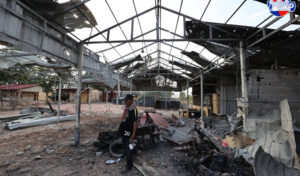
Under the leadership of Prime Minister Anwar Ibrahim, the Kuala Lumpur Peace Accord was signed on October 26, 2025, which formally established the ASEAN Observer Team (AOT) to monitor a ceasefire between Cambodia and Thailand following renewed border hostilities in July. Unlike the 2011 attempt, this mission was backed by a signed Terms of Reference (TOR) and immediate military de-escalation protocols, including the withdrawal of heavy weaponry under international supervision.
The evolution of the ASEAN dispute settlement mechanism in the context of the Cambodia-Thailand border dispute from 2011 to 2025-2026 demonstrates ASEAN’s accumulated expertise, its working frameworks adapted to the specific nature of the conflict, and its ability to consolidate its role as an impartial and reliable witness to the parties’ compliance with commitments and good faith. Through mechanisms like the AOT, ASEAN can also help as a record keeper because a ceasefire always requires third-party verification of the conduct of parties to ensure the agreement does not fall off track.
A defining characteristic of this period was ASEAN’s ability to exert centrality by involving global superpowers in regional conflict resolution. The peace negotiations were notably witnessed and supported by both the US (represented by President Donald Trump) and China, an occurrence that highlighted ASEAN’s diplomatic weight.
Another example is the case of Myanmar. During its 2022 ASEAN Chairmanship, Cambodia adopted a strategy of flexibility and pragmatism to address the deteriorating situation in Myanmar.
While the international community was often sidelined by the constraints of political correctness, ideological rigidity, and formal sanctions, Cambodian leadership recognised that every moment of inaction exacerbated the mounting casualties and the humanitarian crisis.
Samdech Techo Hun Sen’s direct engagement was a proactive attempt to prevent Myanmar from sliding into a full-scale civil war. At the time, Myanmar was battling a dual crisis: intense political infighting with the threat of civil war, and the devastating impact of the COVID-19 pandemic. Nonetheless, Cambodian leaders prioritised regional peace over personal safety, defying health and security risks to travel to and mediate talks in Myanmar.
Cambodia’s actions also illustrated how the ASEAN multilateral platform serves as a force multiplier for small states. By leading the bloc’s diplomatic efforts, Cambodia was able to navigate complex conflicts that larger global powers were unable to engage with. Its action demonstrated that diplomatic agility can be more effective than rigid international isolation.
Cambodia further expanded its diplomatic footprint by taking a principled stand on the Russian invasion of Ukraine.
Despite its long-standing friendship with Russia, Cambodia chose to support the rules-based international order. This was a rejection of “might is right” behaviours. Cambodia moved beyond ASEAN’s regional concerns to the global stage, supporting UN General Assembly resolutions that condemned the invasion and upheld the UN Charter.
In a unique collaboration, Cambodia partnered with Japan to provide demining training for Ukrainian personnel. This utilised Cambodia’s expertise—honed from its own tragic history with landmines—to provide tangible humanitarian aid in a European conflict.
Ukraine also enjoyed a significant presence at the ASEAN Summit in Cambodia that same year, where it signed the Treaty of Amity and Cooperation in Southeast Asia, further cementing its diplomatic engagement with the region.
But the Cambodian people are deeply disappointed by Ukraine’s silence during Thailand’s invasion of Cambodia. Ukraine has not uttered a word on the Cambodian-Thai conflict, not even to call for peace, respect for international law, or negotiation, even though such a stand would align with the principles that Ukraine has always upheld, without ever appearing to take sides.
The preceding examples illustrate the unique role that ASEAN can play in mediation and good offices, as a neutral and trustworthy platform, to promote multilateralism in the defense of peace and security in the region and even the world.
Each member state, large or small, old or new, possesses unique strengths, particularly in terms of national capabilities and diplomatic influence. After all, who would have thought, for example, that Cambodia would train Ukrainian deminers as part of a triangular cooperation with Japan? Malaysia provides an example of how an ASEAN member state can exert its influence in the Islamic world by promoting moderation and interfaith dialogue, essential factors for peace. It also has immense ability in connecting ASEAN to global Islamic finance and the halal economy, which can stimulate regional prosperity.
If need be, ASEAN can also provide a platform for peace negotiations between the US and Iran.
ASEAN could also consider adding Iran as a new member of the ASEAN Regional Forum (ARF), given Iran’s weight in terms of security in the Middle East, and even the world. The ARF consists of 27 members, including the 11 ASEAN nations, their dialogue partners, and regional players like North Korea, Mongolia, and Pakistan.
Iran’s weight is not something that the world can ignore. And this is where ASEAN centrality, neutrality, and relevance come into play to reflect global realities and regional security dynamics.
ASEAN should be more confident of itself.
And ASEAN member states should be more confident in leveraging the bloc to their own advantage as well as that of the region.
As long as ASEAN does not become party to the conflict, its more than half a century old platform still holds strong credibility for the world at large.
ASEAN continues, in its own humble way, to be a reference point of continuity and sustainability for rules-based multilateral order at a time when the order is being abused and bruised in the world.
-Khmer Times-