Resilience is built, not declared
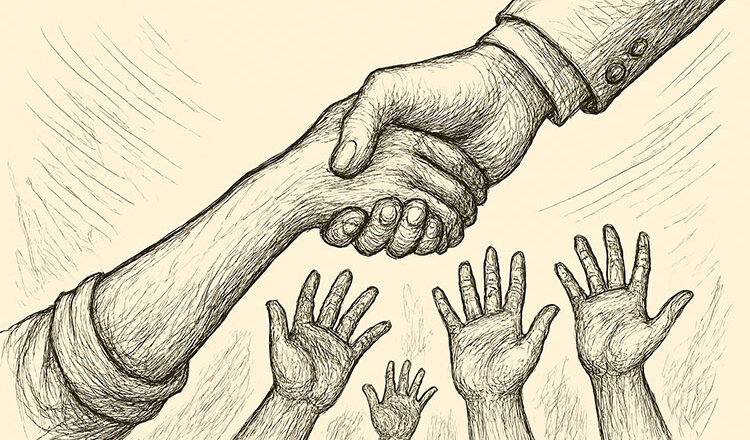 Social cohesion rests on the faoundaion of inclusive growth, social justice, and a shared national identity. Khmer Times
#opinion
In today’s fractured global politics and economy, resilience has become a governance doctrine that demands clarity, coordination, and execution.
National resilience is not simply the ability to absorb shocks. It is the capacity to recover quickly and renew the foundations of future growth.
That renewal begins with economic security and social cohesion.
Economic security is the core pillar of national resilience because it underpins everything else: social stability, political legitimacy and strategic autonomy.
It is also inherently systemic. No single ministry can deliver it. It requires coordination across trade, industry, finance, and science, technology and innovation, as well as close partnership with the private sector.
In practice, this means a whole-of-government approach, supported by a whole-of-society effort.
At the seminar on enhancing national resilience co-organised by the National Assembly and the Senate in March, representatives of government ministries highlighted their policies in relation to economic security. They focus on strengthening trade frameworks, expanding domestic production capacity, investing in science, technology and innovation, and upgrading telecommunications infrastructure.
These are necessary steps in an era defined by supply chain disruptions, technological competition, and shifting patterns of globalisation.
Social cohesion rests on the foundations of inclusive growth, social justice, and a shared national identity. These elements are mutually reinforcing and essential to sustaining long-term stability.
Rising inequality and entrenched social injustice pose significant risks to national unity. Erosion of public trust in state institutions further undermines regime legitimacy and weakens the social contract between the state and its citizens.
A critical constraint lies in the persistent gap between policy ambition and implementation. While policy frameworks are often well designed, deficiencies in execution limit their effectiveness, reducing intended outcomes and constraining broader progress.
The central question is how to deliver consistently, efficiently and at scale. This requires three elements that are often discussed but insufficiently developed: institutional strength, leadership capacity and human capital.
Institutions must be capable of coordinating across sectors and sustaining reforms beyond political cycles.
Leadership must be able to align competing interests and drive execution under pressure.
Human capital must be equipped with the skills needed for a more complex, technology-driven economy.
Without these, even the most well-designed policies risk underperformance.
The urgency of strengthening these foundations is heightened by the global environment.
The world economy is entering a period of prolonged uncertainty, downward spiral.
Geopolitical rivalry is reshaping trade and investment flows.
Supply chains are being reconfigured for resilience rather than efficiency.
Climate risks and public health threats are becoming structural rather than episodic.
At the same time, energy price volatility due to the war in the Middle East is adding pressure to households and governments alike. It is worse than the oil crises of the 1970s combined.
For smaller and open economies like Cambodia, these trends are particularly consequential.
External shocks transmit quickly, while policy space is often limited. This makes preparedness not just desirable, but essential.
Preparedness, however, is not achieved through contingency planning alone. It requires a shift in governance—from reactive to anticipatory. Systemic thinking and solutions are required.
Crisis leadership must be institutionalised. Public institutions must become more agile, data-driven and collaborative. And accountability must be shared across agencies, rather than fragmented.
A critical dimension of this effort is the relationship between the legislative and executive branches. Effective resilience-building depends on alignment between policy design and policy implementation. Where coordination is weak, reforms stall. Where it is strong, governments can act with speed and coherence.
Equally important is the role of inclusive dialogue.
Economic security cannot be built in isolation. It requires continuous engagement between government, business and other stakeholders to ensure that policies are both practical and forward-looking. Such dialogue also helps build trust—a necessary ingredient for national unity.
Because ultimately, resilience is not only institutional. It is societal.
A nation’s ability to navigate uncertainty depends on whether it can mobilise collective effort. It depends on whether public and private actors can work towards shared goals. And it depends on whether citizens believe that the system is capable of delivering stability and opportunity.
The path towards national resilience is an uphill struggle against the backdrop of a perfect storm. It will require sustained commitment and difficult trade-offs. But the direction should be clear.
Resilience is not declared in speeches. It is built through systems thinking, inclusive policy design, effective institutions, transformative and innovative leadership, and coordinated action.
And in a world defined by uncertainty, those who build it best will be best positioned to endure—and to grow.
Cambodia is at a critical juncture in defining its future based on how it could strengthen its national resilience.
Chheang Vannarith is Chairman of the National Assembly Advisory Council. The views expressed here are solely those of the author.
-Khmer Times-
—————-