Despite Thai claims, MOU 2000 too late to cancel under international law
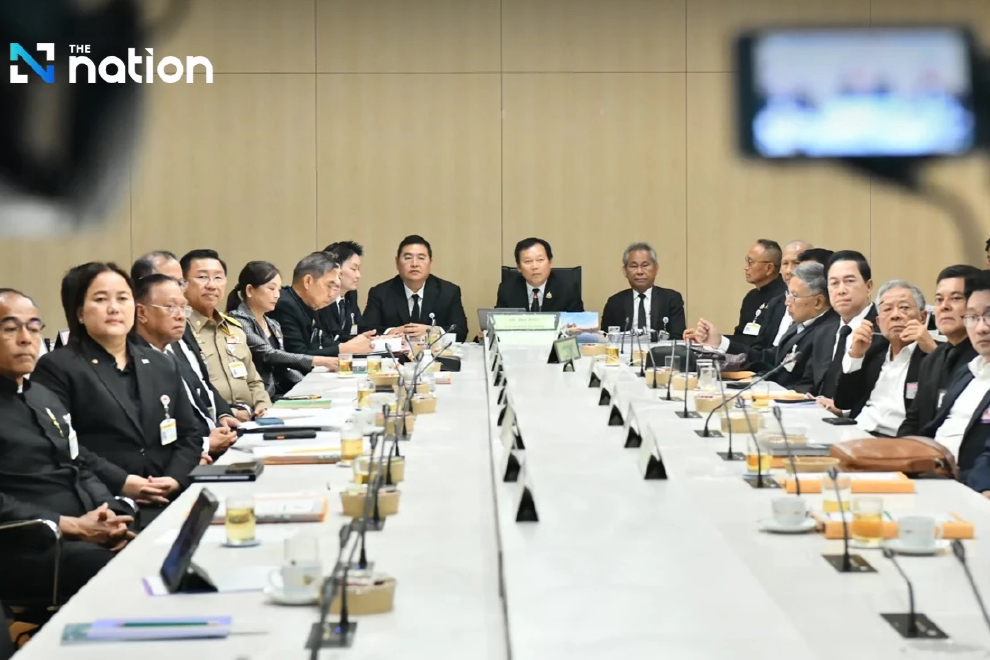 A Thai Senate ad hoc committee has claimed that the MOU 2000 should be revoked. ANN/The Nation Thailand
#National
The State Secretariat of Border Affairs (SSBA) has firmly rejected each of the reasons and recommendations to revoke the MOU 2000 that have been offered by a Thai Senate ad hoc Committee, noting that they are unfounded and contravene international law. The secretariat suggested that the recommendations were clearly driven by political motives aimed at undermining the achievements made by the Joint Boundary Commission (JBC) of both parties in the past.
The statement followed a recommendation by the Thai Senate committee that MOU 43 (MOU 2000) should be revoked. They argued that the MoU accepts a historic 1:200,000 scale map that favours Cambodia. They also claimed that the JBC lacks the authority to address border issues, despite the fact that they have been working with Cambodia for over a decade under the MoU and only postponed it on December 27, 2025.
A SSBA statement clarified that the MOU 2000 was signed by the Royal Governments of both Cambodia and Thailand and entered into force on the date it was signed. It was also registered and deposited with the UN.
“The MOU 2000 constitutes a treaty or bilateral agreement concerning border affairs, creating obligations under international law and serves as an important framework for both parties to resolve border issues peacefully through the JBC mechanism,” it said.
The secretariat stressed that based on principles of international law, under any circumstances Thailand cannot use domestic laws or internal procedures, or any other reasons, as a means to revoke the MOU 2000, which is a border-related treaty to which it is a party (as stipulated in Article 62, paragraph 2, of the Vienna Convention on the Law of Treaties (VCLT) 1969).
The MOU 2000 grants full authority and competence to the JBC of both parties to resolve border issues peacefully based on the Franco-Siamese Convention 1904, the Franco-Siamese Treaty 1907, maps resulting from the work of the Commissions of Delimitation of Boundary between Indo-China and Siam, Procès-verbaux d’abornement of the Indo-China-Siamese Commissions, the Terms of Reference (TOR) 2003 and the agreed minutes of JBC meetings of both parties.
It added that JBC has achieved positive results, including identifying the precise locations of all 74 French-era border markers, repairing and maintaining the agreed markers, conducting surveys and emplacing temporary markers, establishing a joint geodetic network between Cambodia and Thailand, and carrying out detailed surveys at border checkpoints.
“The SSCA would also like to emphasise that the Cambodian side consistently adheres to resolving border issues through all peaceful means, including existing bilateral mechanisms, particularly the JBC,” said the secretariat.
Cambodia remains fully prepared to continue advancing the work of the survey and demarcation the land boundary on the ground with the Thai side to completion, with the objective of maintaining long-term peace along the border between the two countries, it added.
“Revoking the MOU 2000 for any reason would not only violate international law and the principle of intangibility of frontiers (uti possidetis juris), but also hinder the peaceful resolution of border issues between the two countries and prevent the establishment of the border of stability, peace and development,” it stated.
-Phnom Penh Post-
———————