The ASEAN Illusion: The Legal and Human Casualties of the Thai-Cambodian Crisis
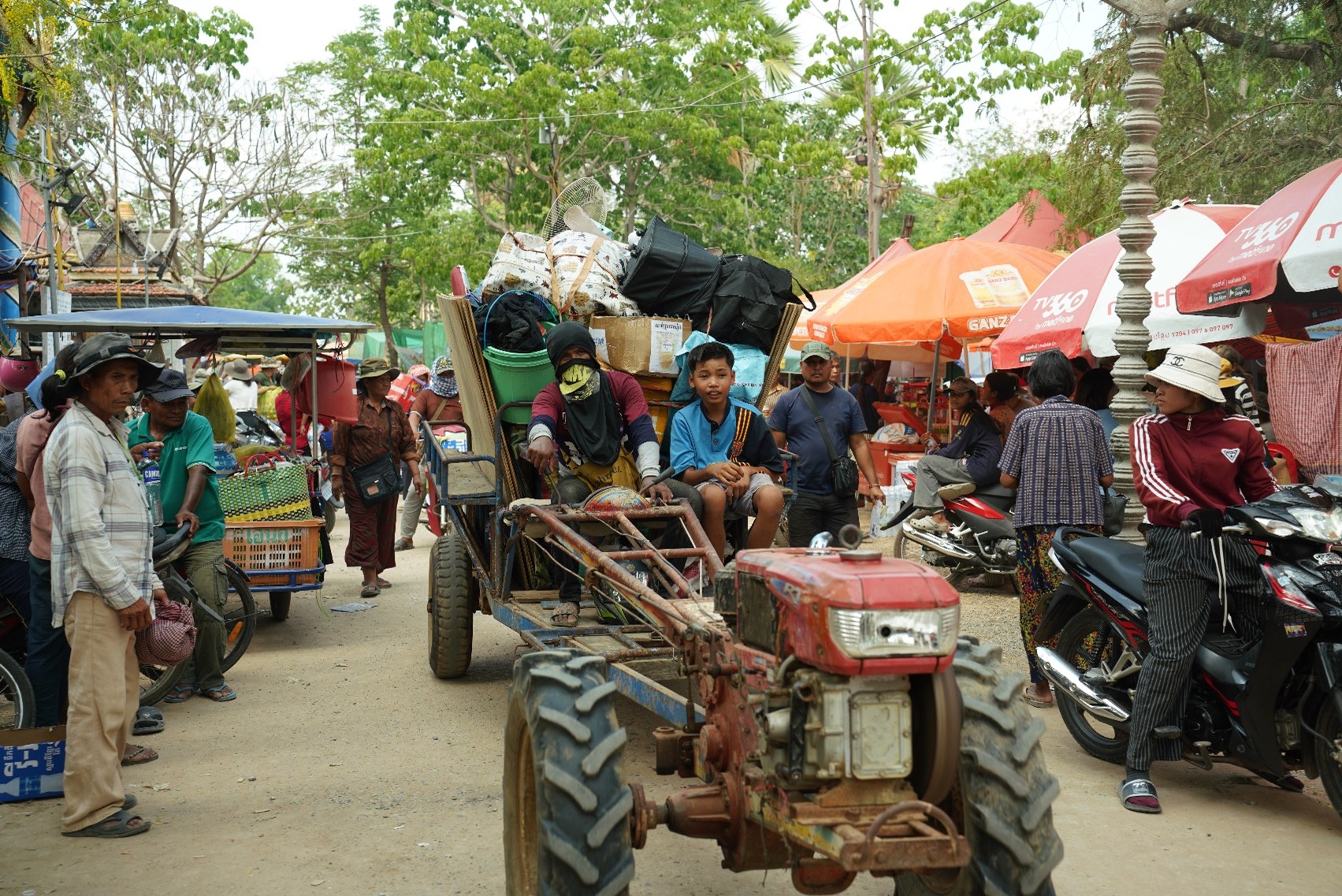 Displaced people relocate to a temporary shelter in Oddar Meanchey province on March 20. Hong Raksmey
#opinion
The foundation of the Association of Southeast Asian Nations (ASEAN) rests on a codified promise of shared prosperity and the peaceful resolution of disputes. The ASEAN Political-Security Community (APSC) Blueprint and the Treaty of Amity and Cooperation (TAC) legally bind member states to renounce the use of force.
Despite this, the devastating 2025–2026 border conflict between Thailand and Cambodia — marked by artillery exchanges, airstrikes and the displacement of hundreds of thousands of civilians — has violently shattered this institutional illusion.
This crisis exposes a sobering reality: ASEAN’s legal frameworks are structurally unequipped to restrain a regionally dominant member state when its domestic politics demand a show of force. The resulting fallout has not only destabilised the security architecture of mainland Southeast Asia but has weaponised the livelihoods of the region’s most vulnerable demographic: migrant workers.
The Paralysis of the “ASEAN Way”
From a strictly legal and diplomatic standpoint, the events of the past year represent a catastrophic failure of regional dispute mechanisms. When territorial skirmishes over non-demarcated border zones escalated into sustained military engagements in July and December of 2025, ASEAN’s response was paralysed by its own foundational doctrine of non-interference.
Despite urgent calls for an immediate ceasefire by Malaysia during its 2025 chairmanship, diplomatic mediation was initially rejected by Bangkok in favour of bilateral coercion. The fact that the fragile December 2025 ceasefire and earlier peace accords required the heavy-handed intervention of external global powers — namely the US and China — demonstrates a dangerous vacuum in regional leadership.
When ASEAN cannot police its own borders, enforce the TAC or support Cambodia’s June 2025 appeal to the International Court of Justice (ICJ), it invites foreign superpowers to dictate the regional order, effectively turning Southeast Asia into a theatre for broader geopolitical manoeuvring.
Nationalist Politics Trumping International Law
To understand Thailand’s aggressive posture, one must look beyond the 1904-1907 Franco-Siamese treaties and into the ballot box. Driven by the highly polarised February 2026 snap elections, Thai political factions weaponised nationalist sentiment to secure domestic leverage.
By adopting a hardline military stance against Cambodia, Thai leadership effectively exported its internal political volatility. Thailand may not be a global superpower, but its economic weight and military capacity allow it to act as a regional hegemon. By unilaterally closing border crossings, severing trade arteries and launching military strikes, Thailand disrupted vital supply chains and stalled negotiations over the Overlapping Claims Area (OCA). This brand of unilateralism directly violates the ASEAN Economic Community’s vision of a seamlessly integrated market, substituting collective security with “managed tension”.
The False Dichotomy: Security vs. Business Development
The ASEAN Charter inextricably links regional security with business development and economic integration. Article 1 of the Charter explicitly mandates the creation of a single market and production base to facilitate the free flow of goods, services, investment, and labour. The ASEAN Economic Community (AEC) Blueprint operates on the core premise that comprehensive security is the bedrock of economic prosperity. Security, within the ASEAN framework, was designed to be a catalyst for cross-border business development — fostering a stable, predictable environment where supply chains, foreign direct investment and trade can seamlessly thrive.
However, the current crisis creates a destructive false dichotomy, pitting aggressive national security against regional economic cooperation. By weaponising borders and strangling labour mobility, unilateral militarisation doesn’t just breach political treaties; it actively suffocates the region’s economic engine.
When a member state dismantles the infrastructure of trade and disrupts commercial corridors to serve nationalist posturing, it undermines the very economic competitiveness that ASEAN relies upon to survive in the global market. True regional security cannot exist in a vacuum; it is fundamentally dependent on unimpeded economic integration and the mutual business development of all member states.
The Current Reality: The 2025 Border Crisis and 2026 Labour Policies
The reality on the ground has recently clashed with these ASEAN ideals. The escalation of violence between Thailand and Cambodia — which peaked in July and December of 2025 involving armed skirmishes, airstrikes and civilian displacement — has deeply impacted labour migration. The human cost of this geopolitical manoeuvring is most evident in the draconian shifts in cross-border labour policy:
Mass Displacement: The 2025 conflict triggered the sudden return of over 400,000 Cambodian migrant workers from Thailand, many of whom faced unpaid wages, debt and severe vulnerability upon returning home. Organisations like the ILO have had to step in with emergency support, highlighting a severe humanitarian emergency that leaves returnees burdened by predatory debt and limited employment opportunities at home.
Thailand’s March 2026 Labour Ban: As of March 2026, the Thai government implemented a strict policy banning the entry of new Cambodian migrant workers, citing “national security concerns”. While Thai authorities state they will continue to manage and recognise the Cambodian workers who are already in Thailand with valid permits, they are subjecting them to much stricter background screening.
This labour blockade stands in direct violation of the spirit of the ASEAN Consensus on the Protection and Promotion of the Rights of Migrant Workers. It is also an economic paradox. Thailand’s private sector is warning of severe labour shortages in construction, agriculture and manufacturing, yet political optics have superseded economic rationality. By subjecting legally permitted Cambodian workers to intense security scrutiny and blocking new labour mobility, migrant workers have been reduced to highly monitored political pawns.
A Mandate for Structural Reform
The Thai-Cambodian border crisis is not merely a bilateral dispute; it is an existential stress test for ASEAN. If the bloc is to retain its credibility and relevance on the global stage, it must evolve beyond non-binding blueprints and the paralysing constraints of the “ASEAN Way.”
The region requires robust, enforceable legal mechanisms for conflict resolution that do not rely on the goodwill of belligerents or the intervention of foreign powers. Furthermore, the legal protection of migrant workers must be insulated from the volatile swings of member states’ domestic elections. Until ASEAN can guarantee both the sovereignty of its borders and the fundamental rights of its cross-border workforce, the vision of a secure and unified Southeast Asia will remain little more than ink on paper.
Panhavuth Long is founder and attorney-at-law at Pan & Associates Law Firm. The views and opinions expressed are his own.
-Phnom Penh Post-
———————