When Aggression Is Disguised as Security: Thailand’s Violations of International Law in Cambodia
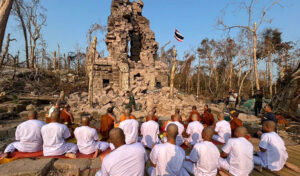
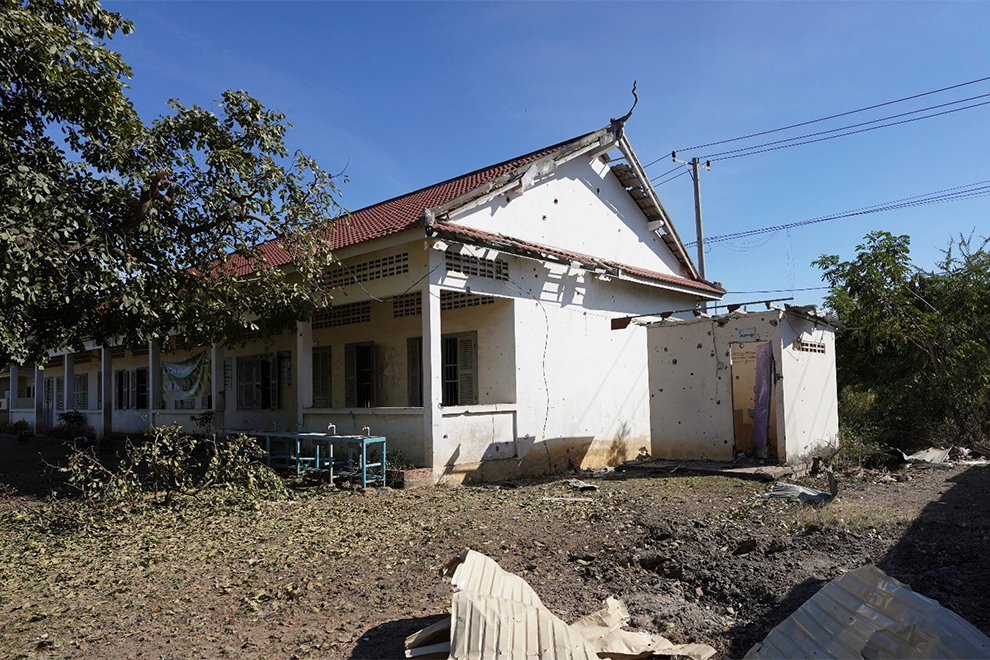 A school in Banteay Meanchey was extensively damaged by Thai shelling this week. Supplied
[Opinion]
Thailand’s ongoing military actions against Cambodia represent a clear and troubling abuse of international law. Under the pretext of “security concerns”, Thai armed forces have crossed into Cambodian territory and carried out attacks that go far beyond any lawful claim of self-defence. These actions constitute violations of Cambodia’s sovereignty and breaches of the most fundamental principles governing the conduct of states in times of conflict.
At the core of the international legal order lies the prohibition on the use of force. Article 2(4) of the UN Charter strictly forbids states from using force against the territorial integrity or political independence of another state. Cambodia has not launched an armed attack against Thailand that would justify the use of force under Article 51. Thailand’s military incursions therefore cannot be legally defended as self-defence; they amount instead to acts of aggression.
Even more alarming is the nature of the targets. Thai military operations have not been limited to military objectives. Civilian areas and civilian infrastructure have been struck, including residential zones and facilities essential to daily life. International humanitarian law, particularly the Geneva Conventions and their Additional Protocols, draws a bright legal line between combatants and civilians. Civilians and civilian objects must never be targeted, and all parties to a conflict are obligated to take constant care to spare the civilian population.
By attacking civilians and civilian infrastructure, Thailand is not merely engaging in a bilateral dispute — it is undermining the legal framework designed to protect human life during armed conflict. Such actions may constitute grave breaches of international humanitarian law and expose those responsible to international accountability. No political narrative or media distraction can erase this legal reality.
Thailand has attempted to redirect international attention by reframing its military actions through alternative narratives. However, under international law, intentions and justifications matter far less than conduct. Bombs that fall on civilian areas do not become lawful because they are accompanied by political explanations. Sovereignty is not negotiable, and civilian protection is not optional.
Cambodia, by contrast, is exercising its inherent right to self-defence within its own territory. Defending national sovereignty against external aggression is a lawful and recognised right under the UN Charter. Cambodia has repeatedly called for respect for international law, restraint and peaceful resolution through diplomatic and legal mechanisms.
The international community must not remain silent. Selective concern and double standards only weaken the credibility of international law and embolden future violations. Upholding the rules-based international order requires calling out aggression when it occurs, regardless of the country responsible.
This is not merely a dispute between two neighbouring states. It is a test of whether international law still carries meaning in protecting sovereignty, civilians and peace. If violations are ignored or excused, the consequences will extend far beyond Cambodia’s borders.
Roth Santepheap is a geopolitical analyst based in Phnom Penh. The views and opinions expressed are his own.
-The Phnom Penh Post-