Thailand’s Moral Mask: How Anutin’s Diplomacy Hides a Deep Rot
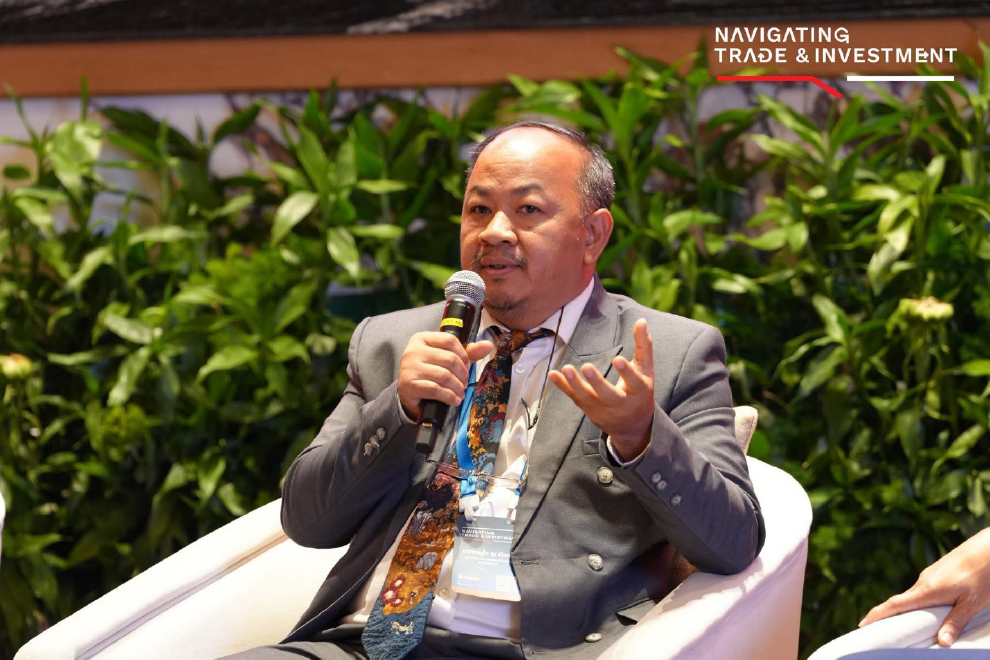 [Thourn Sinan is a cultural and tourism analyst.]
-Opinion-
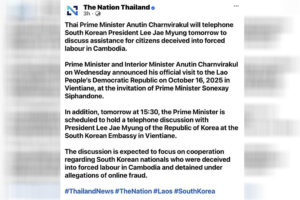
Thai Prime Minister and Interior Minister Anutin Charnvirakul has announced that he will hold a phone discussion with South Korean President Lee Jae Myung to discuss the Korean citizens who are allegedly trapped in scam operations in Cambodia.
To the uninformed observer, it may sound like a noble act of concern. But for those who understand Southeast Asian politics, this is no humanitarian mission — it’s a cynical attempt by Bangkok to whitewash its own failures and disguise the decay eating away at its political core.
The Illusion of Leadership
Anutin rose to power through parliamentary bargaining after years of political instability. Today, he holds two of the most powerful positions in Thailand — prime minister and interior minister — controlling both the state’s internal security and its provincial administration.
Instead of ushering in a new era of integrity, his government has become a showcase of moral hypocrisy. Under Anutin’s leadership, Thailand projects itself as a regional leader, yet its internal problems — from systemic corruption to criminal complicity — continue to deepen.
The Thai state machinery under Anutin has perfected a certain art: preaching virtue abroad while tolerating vice at home.
Hiding Decay Behind “Humanitarian” Diplomacy
Thailand’s sudden concern for South Korean scam victims in Cambodia is a textbook case of political theatre.
Bangkok wants to appear as a moral protector in ASEAN — the “big brother” that rescues victims, lectures its neighbours and wins diplomatic credit. But beneath this performance lies an unspoken truth: many of the same criminal networks operating in Cambodia are financed, managed or laundered through Thailand itself.
Operations like “SKYFALL” and “Interpol partnerships” have made headlines, but the real flow of dirty money — through Bangkok’s casinos, banks and underground exchanges — remains untouched. Thailand has long been described by international analysts as a financial laundromat for regional crime.
Even Thai lawmakers admit it. Opposition MP Rangsiman Rome recently warned about a “grey economy network” tied to political elites — a web of shadow businesses, online scams, and illegal capital moving freely under government protection.
When Anutin claims moral authority on cross-border crime, it is nothing less than a performance built on denial.
Criminal Connections and Selective Justice
In 2025, the Thai Criminal Court issued an arrest warrant for Kok An, a Cambodian tycoon accused of facilitating scam and trafficking networks through his Poipet casinos. But let’s be honest — such moves only happen when the political wind changes.
For years, Bangkok turned a blind eye to these operations because they benefited Thailand’s own networks of brokers, money couriers and investors.
When the tide of global outrage grew, Anutin’s government rushed to show “action” — not to protect victims, but to protect Thailand’s image. Even as it points fingers at Cambodia, Thailand remains a safe haven for the same type of digital fraudsters and human traffickers it claims to condemn.
Under Anutin’s leadership, Thailand’s justice is not blind — it’s selective.
Collapsing Credibility in ASEAN
Thailand once enjoyed a reputation for diplomatic tact and regional stability. Today, it is viewed with suspicion.
Neighbours see a country that uses moral rhetoric to mask opportunism and insecurity. Instead of cooperation, Thailand under Anutin has chosen confrontation and manipulation — using the Cambodian scam issue to score political points and shift attention away from its own decaying governance.
Even the format of this latest diplomatic stunt — a phone call with South Korea’s president — reeks of desperation for legitimacy.
At a time when Thailand’s domestic economy is slowing, foreign investment is uncertain and corruption cases are rising, Bangkok’s government is searching for symbolic victories. The “scam victim diplomacy” is one such illusion — meant to distract its citizens and impress outsiders.
But ASEAN nations are not blind. Cambodia, Vietnam, and Malaysia have all seen through Thailand’s double standards: preaching ethics while harbouring crime and laundering its profits.
The Hollow State Beneath the Smile
Thailand loves to market itself as the “Land of Smiles”. But beneath that smile lies an expanding black market, political corruption and a culture of impunity. Under Anutin, the country has become a stage-managed democracy — ruled by deals, powered by money and wrapped in patriotic slogans.
A true regional leader would look inward first — reforming the police, dismantling corruption and creating transparency.
Anutin has done none of that. Instead, his administration spends its energy chasing foreign headlines and exporting blame.
The world should not be fooled by Thailand’s diplomatic showmanship. A phone call cannot erase a decade of moral erosion.
A Call for Authentic Regional Ethics
If ASEAN is to move forward, countries must stop playing politics with human suffering.
Thailand should stop pretending to be a saviour and start acting as a responsible partner. It must confront the rot within — not point fingers outward.
True leadership begins with honesty. Until then, under Anutin’s rule, Thailand will remain a cautionary tale of how power, when mixed with arrogance, can turn a nation’s diplomacy into its own downfall.
Dr. Thourn Sinan is a cultural and tourism analyst. The views and opinions expressed are his own.
-The Phnom Penh Post-