Records Over Rhetoric: Cambodia’s Lawful Response to Thailand’s Pressure
 Records Over Rhetoric: Cambodia’s Lawful Response to Thailand’s Pressure
Borders are not mere lines on a map—they are agreements grounded in law, treaties, and mutual respect. Yet recent events along the Cambodia–Thailand boundary reveal a worrying trend: procedure has been weaponized, turning dialogue into leverage and deadlines into coercion.
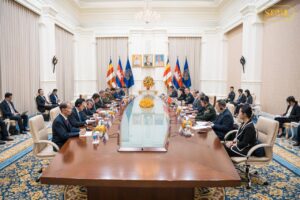
Thailand’s First Army Area recently demanded that Cambodia submit an “evacuation plan” for civilians in Cambodian villages Chork Chey, Prey Chan and O’Beychorn by October 7, linking submission to attendance at the Regional Border Committee meeting from October 10–12. By compressing timelines and tying participation to compliance, Thailand transforms negotiation into a test of obedience.
Cambodia’s measured refusal is not defiance but adherence to law. Only the Joint Boundary Commission (JBC)—not the military-led Regional Border Committee—has authority over the border. Cambodia’s letters, maps, bilingual minutes, and formal records are acts of sovereignty, creating a living archive of fact and legality for ASEAN observers, the international community, and domestic audiences alike. Silence is not weakness; it is proof.
Thailand’s domestic narrative further complicates matters. Prime Minister Anutin’s framing of outdated MOUs as obsolete links bureaucratic tension to national politics, while “observer tours” in Buri Ram present pre-selected sites and scripted explanations as neutral transparency. ASEAN diplomats and the Thai public should recognize that staged visits cannot replace legal legitimacy. In diplomacy, perception may dominate headlines, but law defines reality.
The repeated phrase “tangible results” has migrated across Thai media, shaping domestic perception that procedure equals legitimacy. Yet credibility is built on law, not repetition. The 1904 and 1907 treaties remain binding under international law; no press release or staged observation can rewrite history.
Cambodia’s strategic documentation transforms patience into proof. Every letter, map, photograph, and bilingual minute is preserved and circulated through ASEAN and UN channels. In this “war of minutes,” records themselves become instruments of deterrence. Procedure is not merely compliance; it is the architecture of sovereignty.
For ASEAN, the message is clear: genuine transparency, legal authority, and respect for established mechanisms must guide regional cooperation. For Thai citizens, the lesson is equally important: bureaucratic performance should facilitate dialogue, not coerce compliance or manipulate perception.
The border will not be decided by deadlines, press releases, or curated tours. It will be determined by law, documented fact, and enduring records. Cambodia’s approach—principled, meticulous, and patient—ensures that sovereignty is preserved, ASEAN principles are upheld, and regional stability is maintained. In this war of minutes and documents, endurance is the strongest weapon.
Roth Santepheap is a geopolitical analyst based in Phnom Penh. The views expressed are his own.
-The Phnom Penh Post-
#CambodiaWantsPeace
#JusticeForCambodia
#Cambodianeedpeace
#TruthFromCambodia
#ThaiLawOnCambodianSovereignty
#ទាហានថៃបានអនុវត្តច្បាប់ថៃនៅលើទឹកដីខ្មែរ