Peace Beyond Declarations: Cambodia’s Francophonie Summit and the Responsibility to Uphold Peace, Sovereignty and Cultural Heritage
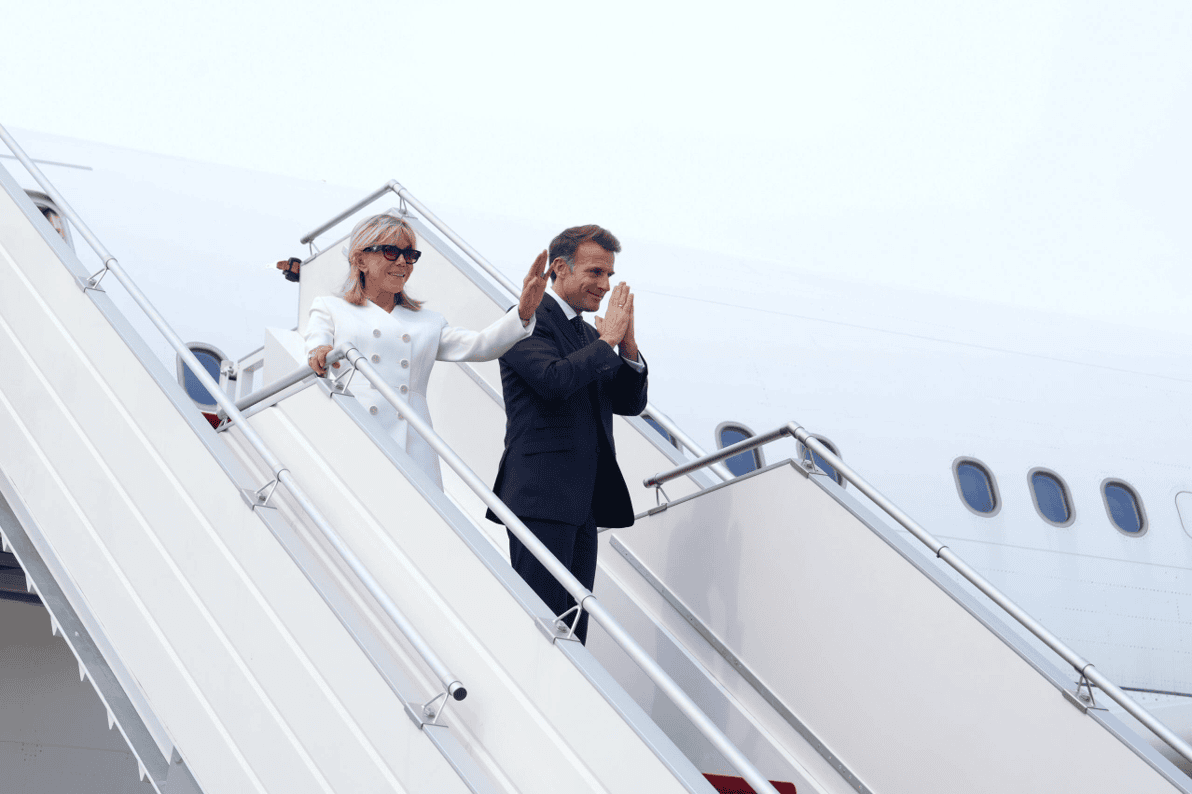 French President Emmanuelle Macron and his wife Brigette depart Phnom Penh for Siem Reap on November 16. AKP
The 20th Francophonie Summit, held in Phnom Penh on November 15-26, under the theme “Reinvest in Peace for Shared Prosperity and Lasting Stability”, comes at a defining moment for Cambodia and the wider international community.
For Cambodia, the Summit is an opportunity to advance a message shaped by its history: peace must be protected, sovereignty respected, international law upheld and commitments translated into action.
Cambodia understands the cost of losing peace. Decades of conflict devastated its institutions, communities and cultural heritage. The 1991 Paris Peace Agreements opened the way to national reconciliation and reconstruction, demonstrating that lasting stability requires dialogue, cooperation and political commitment. Peace cannot be taken for granted; it depends on respect for the principles governing relations between states.
The message expressed by Prime Minister Hun Manet at the summit was clear: No border should be changed by force or through faits accomplis. He called for the resumption of joint survey and demarcation with Thailand, respect for international law and the safe return of Cambodian citizens displaced by the border conflict. His proposal for a Francophone network for conflict prevention and mediation reflects an ambition for the organisation to do more to prevent disputes escalating into violence.
Peace is not simply the absence of armed confrontation. It requires security, dignity, respect for sovereignty and confidence that agreements will be honoured.
Three documents, a shared responsibility
The Summit’s outcome documents offer a framework for translating this vision into action.
The Phnom Penh Declaration reaffirms the Francophone community’s commitment to peace, peaceful coexistence, solidarity, and sustainable social and cultural development. It recognises that peace and prosperity are inseparable, and that cooperation, inclusion and cultural diversity are essential to lasting stability.
The Resolution on Crisis Situations, Post-Crisis Recovery and Peacebuilding addresses the practical responsibilities arising when peace is threatened or disrupted. Its focus on prevention, international coordination, crisis resolution, recovery and peacebuilding reflects an essential lesson: the international community must act before violence escalates, sustaining mediation, humanitarian protection and reconstruction.
The third initiative, the Phnom Penh Appeal, proposed by Cambodia, seeks to strengthen the protection of cultural heritage and promote cultural diversity. Drawing on Cambodia’s experience of damage to cultural sites, it argues that heritage must be protected even when political relations deteriorate.
These three documents were finalised at the 48th Session of the Francophonie Ministerial Conference and submitted to the heads of state and government for consideration at the Summit. Their significance depends on participating states translating their principles into practical cooperation.
Together, these initiatives convey a coherent message: peace must be prevented from breaking down, restored after conflict and sustained through respect for peoples’ identity, dignity and heritage. The Francophonie must strengthen dialogue, prevention and practical cooperation.
Cambodia and Thailand: commitments must be implemented
These principles have immediate relevance to Cambodia and Thailand.
Cambodia maintains that outstanding boundary issues must be resolved peacefully, through established bilateral mechanisms and in accordance with international law. The October 26, 2025, Kuala Lumpur Joint Declaration provided an important political framework for reducing tensions. It reaffirmed commitments concerning sovereignty, territorial integrity, non-use of force and the use of existing mechanisms, including the Regional Border Committee, the General Border Committee (GBC) and the Joint Boundary Commission (JBC), with the ASEAN Observer Team playing a supporting role.
The subsequent Joint Statement of the Third Special Meeting of the GBC on December 27, 2025, established further ceasefire arrangements. Together, these commitments offer a path away from confrontation and towards normal relations.
Yet agreements cannot fulfil their purpose if implementation remains incomplete. A ceasefire must create conditions for civilian return, restored confidence and resumed negotiations.
Thailand must therefore engage constructively and without further delay in implementing the Kuala Lumpur Joint Declaration and subsequent ceasefire commitments. This requires refraining from actions that undermine confidence, supporting the effective operation of existing bilateral mechanisms and resuming substantive JBC discussions, including technical surveys and boundary demarcation in accordance with applicable agreements and international law. Cambodia, for its part, must remain ready to engage in good faith.
The two countries may interpret the border situation and the origins of the conflict differently. That is precisely why established mechanisms and international law matter: neither unilateral action nor competing narratives can replace a peaceful, mutually recognised process.
Cambodia is not asking the Francophonie to adjudicate the border dispute, endorse its territorial claims or take sides. Those matters belong in appropriate legal and bilateral processes. The Francophone community should nevertheless affirm the principles underpinning peaceful relations: respect for sovereignty, rejection of force to determine borders and fulfilment of commitments.
Thailand’s participation in the Francophonie as an observer does not create additional legal obligations concerning the bilateral dispute. It nevertheless offers Thailand an opportunity to demonstrate constructive engagement with the organisation’s principles of dialogue, peaceful coexistence and cooperation, and to contribute positively to peaceful dispute resolution.
The immediate objective should be clear: implementation of existing commitments, substantive resumption of boundary negotiations, a stable and peaceful border, and the safe, voluntary and dignified return of displaced Cambodian families.
Displaced families: the real test of peace
For displaced families, peace is not an abstract concept. It means returning home, reopening businesses, cultivating land, sending children to school and rebuilding ordinary lives.
At the summit, Prime Minister Hun Manet stated that approximately 20,000 Cambodian citizens remained unable to return safely and with dignity to their homes. The UN Special Rapporteur on human rights in Cambodia, Tom Andrews, reported a similar figure in July and urged both governments to expedite their return. The figures highlight the conflict’s continuing humanitarian consequences and the distance between a declared ceasefire and normal life.
The safe, voluntary and dignified return of displaced families must therefore be treated as an essential measure of ceasefire implementation. It requires practical cooperation, credible security arrangements and removal of obstacles to civilians resuming their lives.
Civilian displacement must not be treated as secondary until political negotiations conclude. Human dignity and civilian protection are central to peace. The Francophonie cannot compel a settlement, but it can encourage compliance, support dialogue and insist that civilians must not continue bearing the cost of political and military tensions.
Cultural heritage: a responsibility beyond borders
Cambodia’s Phnom Penh Appeal deserves international attention. Cultural heritage is not merely a national possession; it is part of humanity’s shared historical memory.
Cambodia has raised concerns about damage to Preah Vihear and Ta Krabei temples during the 2025 border conflict. This highlights the vulnerability of cultural sites during armed conflict. Their protection must not depend on political circumstances or territorial disagreements.
The 1954 Hague Convention for the Protection of Cultural Property in the Event of Armed Conflict and the 1972 World Heritage Convention provide important, complementary international frameworks for safeguarding cultural heritage. The former addresses the protection of cultural property during armed conflict, while the latter establishes a framework for identifying, protecting and preserving cultural and natural heritage of outstanding universal value.
The Phnom Penh Appeal could strengthen cooperation, preventive protection, documentation, technical assistance and respect for cultural diversity. Its value will depend on practical measures, not symbolism.
Protecting heritage does not prejudge sovereignty. Destruction of cultural property is an irreversible loss extending beyond the parties to a conflict.
Beyond declarations: the responsibility to act
The Summit’s true measure will not be the number of documents or prominence of its participants, but whether its commitments influence state conduct and produce results.
The Phnom Penh Declaration and the Resolution on Crisis Situations, Post-Crisis Recovery and Peacebuilding provide a political framework for peace and cooperation. Cambodia’s Phnom Penh Appeal adds an initiative for cultural heritage protection. Their credibility depends on implementation.
The Francophonie should strengthen conflict prevention, dialogue, mediation, recovery and cultural protection. It should not replace the UN, international courts or bilateral mechanisms, but reinforce the principles and processes that enable peaceful solutions.
Cambodia must also apply the standards it advocates. Respect for international law, peaceful settlement and good-faith engagement must guide its own conduct. Consistency is essential to the credibility of its diplomatic position.
Cambodia asks the Francophone community to uphold principles protecting every sovereign state and civilian: agreements must be honoured, negotiations resumed, cultural heritage protected and displaced families enabled to return safely and with dignity.
For Cambodia, peace is not merely a diplomatic achievement. It is a national necessity and a responsibility to future generations. The Summit has reaffirmed that responsibility; political will must now turn declarations into action.
Long Panhavuth is founder and attorney-at-law at Pan & Associates Lawfirm. The views and opinions expressed are his own.
-Phnom Penh Post-