Editorial 82 – The Ocean Moves Heat and Climate
 Editorial 82 – The Ocean Moves Heat and Climate
Opening Thought
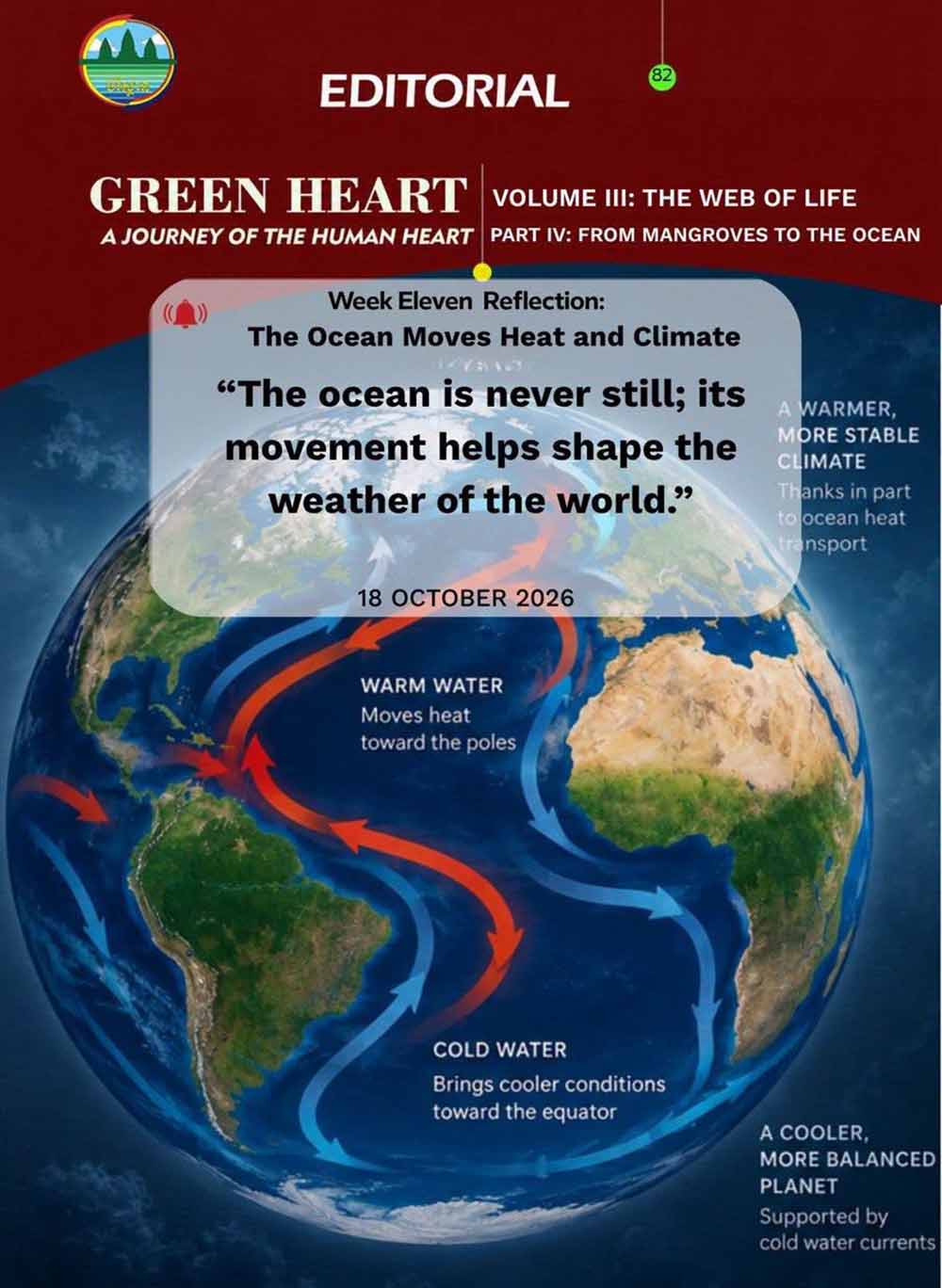
“The ocean is never still; its movement helps shape the weather of the world.”
Editorial
The ocean covers most of Earth’s surface and stores enormous amounts of heat. Water warms and cools more slowly than land, helping moderate temperatures and influence weather.
Surface currents are driven largely by wind, Earth’s rotation, and the shape of coastlines and ocean basins. Deeper circulation is influenced by differences in temperature and salinity. Together, ocean movement redistributes heat, nutrients, oxygen, organisms, and carbon.
Warm ocean water supplies energy and moisture to storms. Ocean-atmosphere patterns such as El Niño and La Niña can shift rainfall, temperature, drought, fisheries, and weather across large regions. Their effects differ by place and event.
The ocean has absorbed much of the excess heat trapped by human-caused greenhouse-gas increases. This slows atmospheric warming but raises ocean temperatures, contributes to sea-level rise through thermal expansion, and affects marine ecosystems.
Sea level also rises as land ice melts. Local sea-level change depends on currents, land movement, sediment, coastal shape, and other factors. Communities need local projections and planning.
The ocean absorbs carbon dioxide as well. This affects climate but changes seawater chemistry, causing ocean acidification. The ocean is buffering some human impact while experiencing consequences itself.
Coastal protection includes both ecosystems and infrastructure. Mangroves, reefs, wetlands, dunes, seawalls, drainage, early warnings, and careful development may each play roles. No single defense suits every coast or eliminates all risk.
Ocean observation uses ships, satellites, buoys, floats, coastal stations, and community knowledge. Measurements reveal patterns far too large for one person to see.
The water beside one shore is connected through currents to distant places. Heat released in one region may influence clouds elsewhere. Fish move with changing water. Plastics and oil travel beyond borders.
To protect climate is to protect the ocean, and to protect the ocean is to protect climate. Their conversation shapes seasons, storms, coasts, and life.
We may stand on land, but much of our weather is carrying a message from the sea.
Learning to read that message saves lives. Seasonal forecasts, storm warnings, evacuation planning, and fisher knowledge can turn ocean observations into preparation. Information becomes protective only when it is trusted, understood, and able to reach people in time.
Communication should be accessible to different languages, ages, abilities, and technologies. A perfect forecast that does not reach vulnerable people has not completed its protective journey.
Prepared communities practice the message before the emergency makes practice impossible.
Buddhist Reflection
Interdependence crosses great distances. Causes in one place can shape conditions elsewhere. This knowledge enlarges responsibility from local care to global cooperation.
Today’s Reflection
How can ocean warming affect people who do not live directly on the coast?
Today’s Action
Find one reliable map of an ocean current or El Niño/La Niña pattern and trace one effect toward your region.
Today’s Pledge
Today I will remember the moving ocean within every conversation about climate.
When we protect nature, we protect all beings—including ourselves.