
Editorial 76 – Fishing Within the Power of Renewal
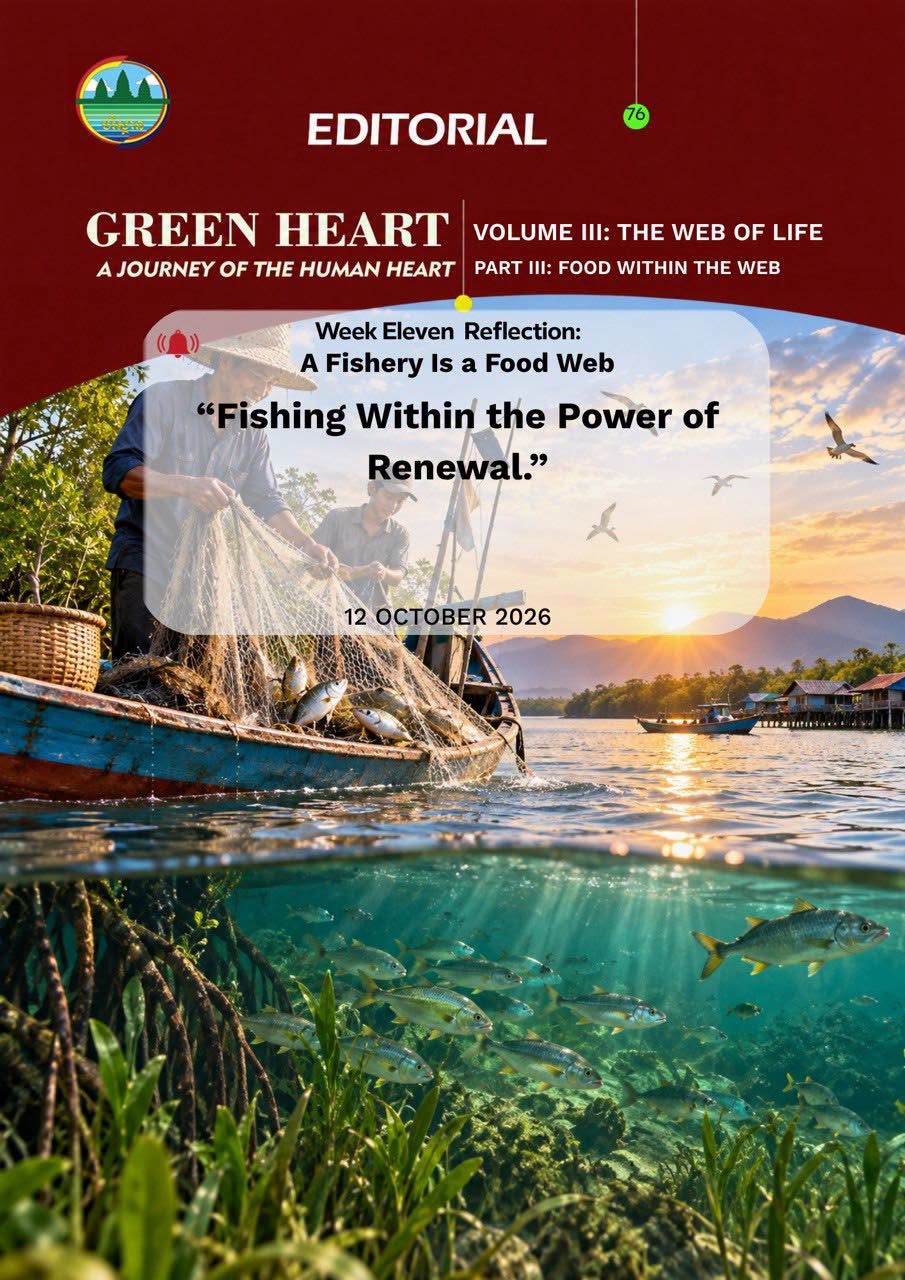 Editorial 76 – Fishing Within the Power of Renewal
Opening Thought
“A good catch today must leave enough life for the water to give again.”
Editorial
Fish populations can renew through reproduction and growth, but renewal has limits. Sustainable fishing aims to keep harvest within the capacity of populations and ecosystems to continue.
This capacity is not fixed. Reproduction, juvenile survival, food, habitat, temperature, disease, predators, and climate all change. A catch level safe in one period may be unsafe in another.
Management uses tools such as closed seasons, protected areas, gear restrictions, size limits, catch limits, licensing, and habitat protection. Each tool has strengths and weaknesses. Enforcement, monitoring, community support, and alternatives determine whether rules work.
Closed seasons can protect spawning, but timing must match biology. Size limits may allow fish to reproduce before capture, but can affect species differently. Protected areas can conserve habitat and populations, while benefits depend on placement, compliance, and movement.
Selective gear may reduce the capture of unwanted species or young fish. Unintended catch, called bycatch, can include turtles, birds, mammals, or non-target fish. Better gear, handling, timing, and location can reduce harm.
Illegal, unreported, and unregulated fishing undermines both ecosystems and responsible fishers. Addressing it requires governance, traceability, fair enforcement, and cooperation across borders.
Small-scale fishers may have limited alternatives and high dependence on local waters. Management should include their knowledge and protect food security, access, and dignity. Rules without fairness can push people toward hardship and resistance.
Consumers can ask where seafood comes from, follow local guidance, and avoid waste. Labels and certification can help, but no system is perfect; credible, transparent information matters.
The principle of renewal applies beyond fishing. Forests, groundwater, soil, and wildlife can all be used faster than they recover. Nature’s ability to renew is a gift, not permission for unlimited taking.
A fisher looking toward tomorrow understands restraint not as lost opportunity, but as protection of the next season, the next family, and the next generation.
Restraint becomes possible when society shares its cost. Temporary closures may require livelihood support, alternative income, or community funds. Asking those with the fewest resources to carry conservation alone is neither fair nor likely to succeed.
When fish populations recover, transparent rules should also guide how benefits are shared. Trust grows when communities can see that short-term sacrifice leads to fair long-term opportunity.
Renewal protected through justice has a better chance of lasting across generations.
Fairness is therefore not separate from sustainability; it is one of its essential conditions.
Buddhist Reflection
Contentment places a wise boundary around desire. Taking enough while leaving enough for renewal transforms restraint into generosity toward the future.
Today’s Reflection
Why can a fixed fishing limit become unsuitable when environmental conditions change?
Today’s Action
Learn one local fishing rule and the biological reason behind it. Share the reason, not only the rule.
Today’s Pledge
Today I will support harvests that respect renewal, fairness, and future life.
When we protect nature, we protect all beings—including ourselves.