Editorial 25 – A Clean School Begins with One Caring Student
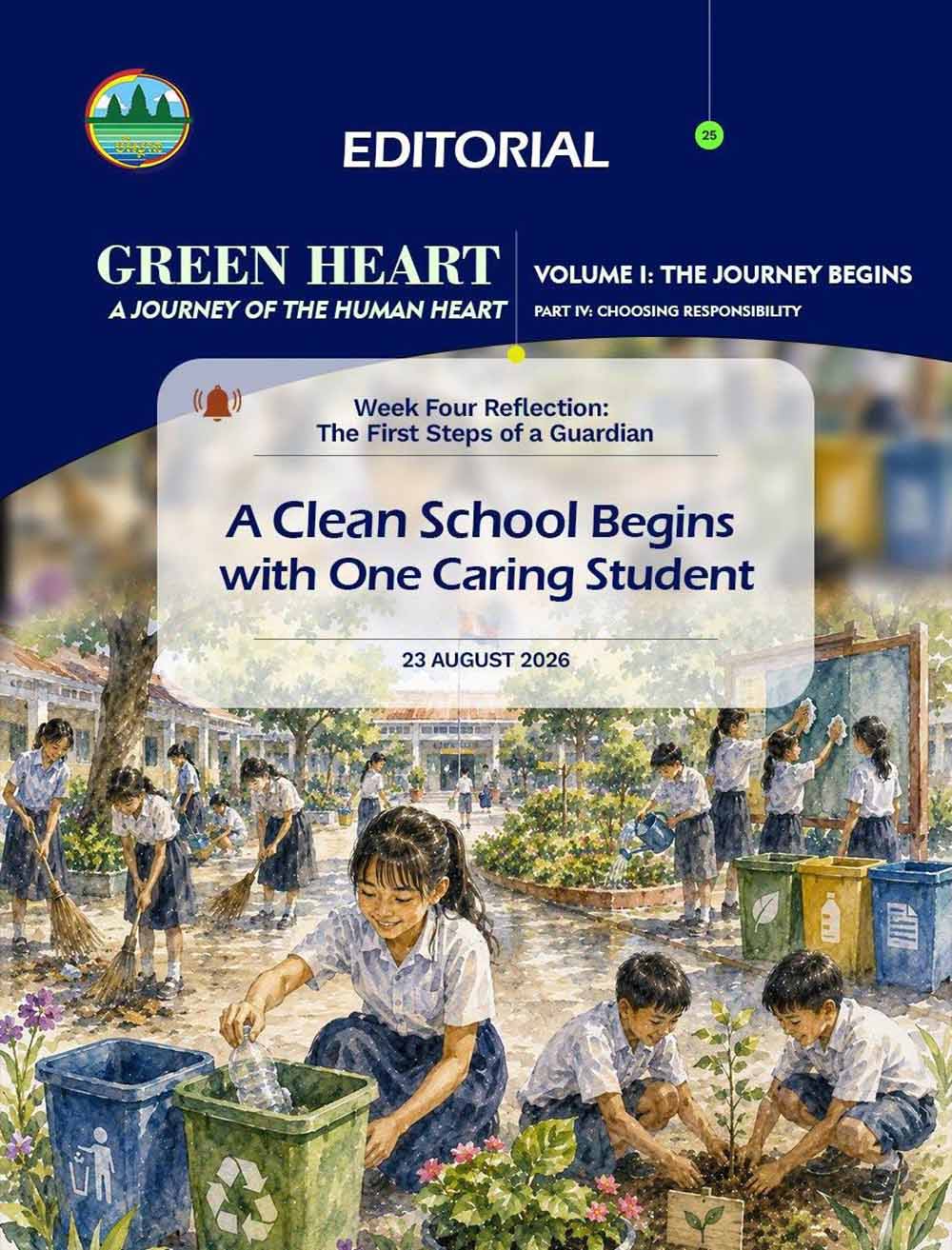 Editorial 25 – A Clean School Begins with One Caring Student
Opening Thought
“A school becomes a lesson in responsibility before anyone opens a book.”
Editorial
The condition of a school teaches silently. Clean grounds say that shared places deserve respect. Well-cared-for plants say that growth needs attention. Overflowing bins or littered corners may teach the opposite: someone else will handle it.
A caring student begins with personal behavior—using bins correctly, keeping a desk area tidy, avoiding unnecessary waste, and treating school property carefully. The next step is cooperation.
Cleaning should never be punishment or unsafe labor. Students need suitable tools, adult guidance, handwashing, and clear rules about sharp, chemical, medical, or unknown waste. A good school plan protects both people and the environment.
Prevention is better than repeatedly collecting the same rubbish. Students can observe what kinds of waste appear, where they come from, and what realistic alternatives exist. Perhaps refill water is available, paper can be used on both sides, or bins need clearer labels and better placement.
Kindness matters. Publicly blaming a student can create resistance. Friendly reminders, clear signs, and shared goals build belonging. When everyone is invited to contribute, cleanliness stops being the cleaner’s job and becomes part of school culture.
A green school also offers learning. Students can measure waste, study shade, care for suitable native plants, observe biodiversity, or investigate water use with teacher support. The campus becomes a living classroom.
One caring student cannot maintain an entire school, but can make care visible. Others may join when the action is cheerful, organized, and consistent.
Look at your school as a home shared for learning. Which corner is asking for attention? Begin safely, ask permission, and invite one friend. A cleaner place can become the first page of a larger lesson: we belong here, and our care matters.
Schools can make progress visible without turning it into competition. A class might record how much paper it avoids, celebrate a month of caring for plants, or share lessons learned from a waste check. Honest measurement helps everyone see whether an idea works.
Care should include the people who clean the school each day. Ask what would make their work safer or easier. Listening to them can reveal better solutions and teaches that environmental responsibility is also respect for human labor.
Buddhist Reflection
Mindfulness includes awareness of the places we use and the people who share them. Respectful service reduces the burden on others and cultivates humility. Caring for a school can be a daily practice of gratitude.
Today’s Reflection
What does the condition of my school teach about shared responsibility?
Today’s Action
With permission, improve one safe area and identify one way to prevent the same waste from returning.
Today’s Pledge
Today I will help my school become a clean, safe, and caring place for everyone.
When we protect nature, we protect all beings—including ourselves.