‘Operation Safed Sagar’ and the history missing from Netflix retelling
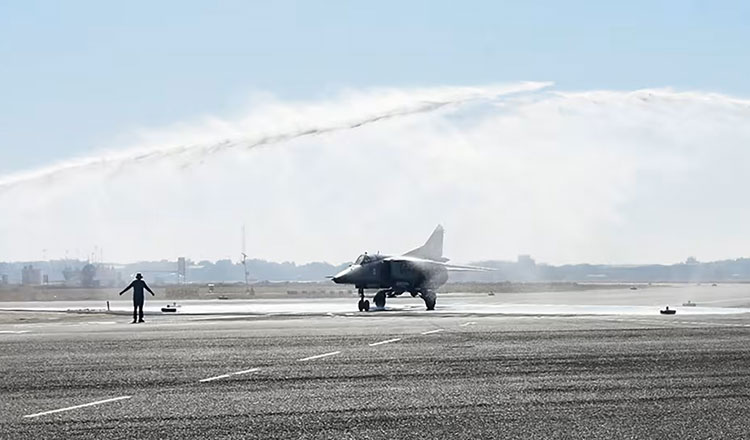 Kargil was a crucible of learning for the Indian Air Force. HT
#Opinion
The slick Netflix series, Operation Safed Sagar, has rekindled interest in events that transpired in the hills of Kargil in 1999.
We were victorious, but Kargil also highlighted flaws in our politico-military set-up that cost us 527 brave men and left hundreds injured.
It is well established that Pakistan caught us napping, a fact the Kargil Review Committee (KRC) commented on. After the war, Pakistan Air Force’s director of operations, Air Commodore Kaisar Tufael wrote, “Troops in battle gear were to be seen all over the city (Skardu)… messes were abuzz with war chatter… one wonders how Indian intelligence agencies failed to read any such signs.”
The intrusions, when finally discovered, were downplayed, and the Indian Air Force (IAF) came into the picture only in May, when it was asked for attack helicopters to strike “some intruders.” On May 14, the Army Vice-Chief made the same request to the Air Chief. On May 21, a Canberra aircraft on a reconnaissance mission was struck by a surface-to-air missile (SAM). The enormity of the Pakistani intrusions was driven home.
The IAF launched Operation Safed Sagar on May 26, after the Cabinet Committee on Security approved it. The Netflix series approaches the war through the “eyes” of one fighter squadron, with some “journalistic licence”.
The pain of losing a comrade (Squadron Leader Ajay Ahuja) and the show-must-go-on attitude exemplified the spirit and professionalism of all fighter squadrons that participated. Kargil was a learning curve for the IAF as it innovated to address an enemy entrenched at altitudes of 14,000-16,000 feet — unique in the annals of air warfare.
Innovation was key to taking on high-altitude targets. The IAF devised high-altitude GPS bombing parameters for fighter aircraft, and fast-tracked integration of the Lightning laser pod on the Mirage-2000.
The role of IAF’s transport aircraft fleet is hardly talked about — but its aircrew and technicians had worked tirelessly to ensure that men and material were moved to operational locations. Logisticians kept the supply line going; they all deserve a nation’s gratitude.
IAF helicopters were in action from the first day. Counter Measures Dispensing Systems (CMDS) to deceive SAMs were in short supply, and so were armour protection plates slapped around the cockpit. A mix-and-match approach was adopted on Mi-17s — the lead helicopter, likely to face the greatest danger from the ground, would have both, while the others would have some deficiency.
This worked the first two days, but on May 28, a Mi-17 (only one without CMDS) was lost to a SAM with four fatalities. Helicopters were thereafter withdrawn for strikes — except they were brought back for an audacious night attack on Tiger Hill.
On June 27, two Mi-17s took off at night but had to abort near Tiger Hill when a SAM was fired, and their cover was broken. They got airborne again the next day but were called back close to Zoji La; courage and intrepidness were never in short supply.
Courage, however, cannot become a substitute for organisational aptitude. Kargil was a learning crucible with many lessons, two of which stand out.
First, two and a half millennia ago, Kautilya wrote that intelligence should underpin all aspects of governance. Have we done so since? Subsequent terrorist attacks (aided by Pakistan) indicate that there is still work to be done.
Post-script: The depiction of the IAF’s social life in the Netflix series brought back fond memories of my youth. The mirth, laughter, fun and frolic is part of a life that has its share of heartaches but creates a unique bond among air warriors who guard our nation.
Manmohan Bahadur is a retired Air Vice-Marshal. The views expressed are personal.
-Khmer Times-