Editorial 14: Nature Never Wastes Anything
Opening Thought
“In nature, an ending often becomes nourishment for a beginning.”
Editorial
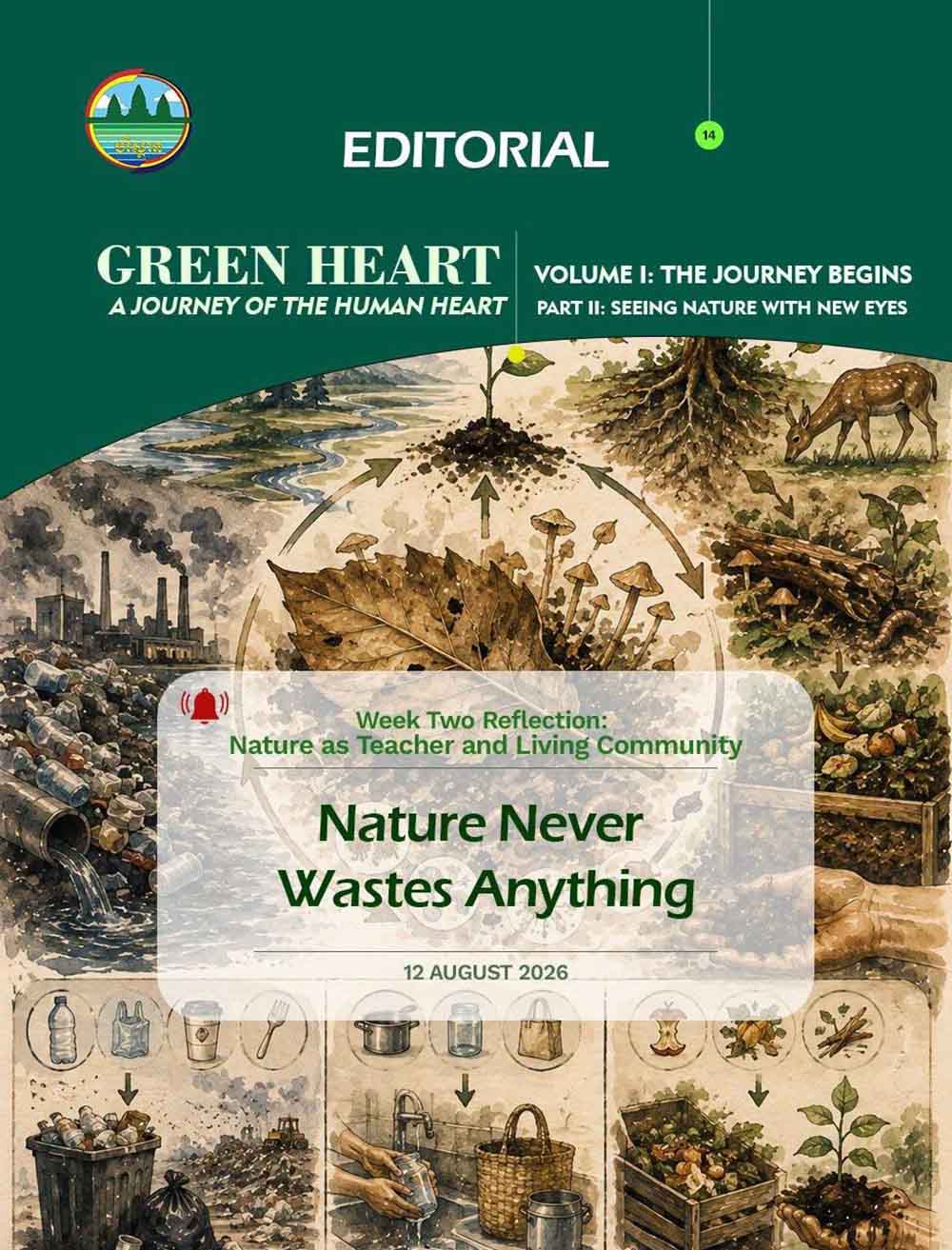
A dry leaf falls from a tree. To us, it may look like rubbish. On the ground, however, it enters another chapter. Small organisms and fungi help break it down. Its materials return to soil and may support future growth. What has finished one role begins another.
Natural systems cycle matter. Water moves through air, land, living bodies, and waterways. Carbon moves among the atmosphere, organisms, soil, and oceans. Nutrients pass through food webs and decomposition. Nature does not make waste disappear; it transforms and reuses materials through ongoing processes.
Human waste is often different. We create materials and mixtures that natural processes cannot safely absorb on a useful timescale. A plastic item may be used for minutes yet remain in the environment for many years, breaking into smaller pieces rather than becoming nourishing soil. Hazardous substances can harm life if handled poorly.
We should not copy nature carelessly—for example, leaving food waste anywhere can attract pests or create sanitation problems. Instead, we learn the principle: design with the next use in mind. Can an item be avoided, reused, repaired, recycled through an available system, or safely returned to natural cycles?
The best opportunity often comes before waste exists. Refusing what we do not need can save more resources than trying to manage it later. Reusing a durable container keeps it useful. Repairing extends an object’s life. Composting suitable organic material under proper guidance can return nutrients to soil.
Nature’s cycles also teach responsibility for what we make. There is no true “away.” A discarded object goes to a bin, dump, recycling facility, waterway, field, or atmosphere. Knowing its next destination helps us choose more wisely.
During Week Two, nature has taught us patience, community, connection, gratitude, respect for life, and now circularity. These are not distant lessons. They can guide how a classroom uses paper, how a family plans meals, and how a community thinks about materials.
Look again at the fallen leaf. It is not useless. It is participating in a cycle older than humanity. If our own choices become more circular—taking less, using longer, and returning materials safely—we can reduce waste while honoring the intelligence of living systems.
In every cycle, care helps the next beginning.
Buddhist Reflection
Change is continuous. What we call an ending is often a change of form and condition. Seeing this can help us release the illusion that discarded things simply vanish. Mindfulness follows materials beyond the moment of use and encourages choices that reduce harm.
Today’s Reflection
Where does one item I throw away actually go after it leaves my hand?
Today’s Action
Choose one disposable item you commonly use. Find one practical way to refuse, reduce, or replace it with a reusable option.
Today’s Pledge
Today I will think beyond the bin and keep useful materials in responsible cycles.
When we protect nature, we protect all beings—including ourselves.