Thai Outrage Cannot Erase the Reality of Cambodian Suffering
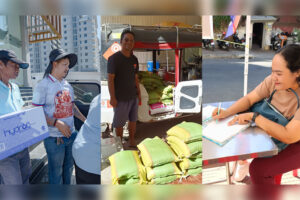
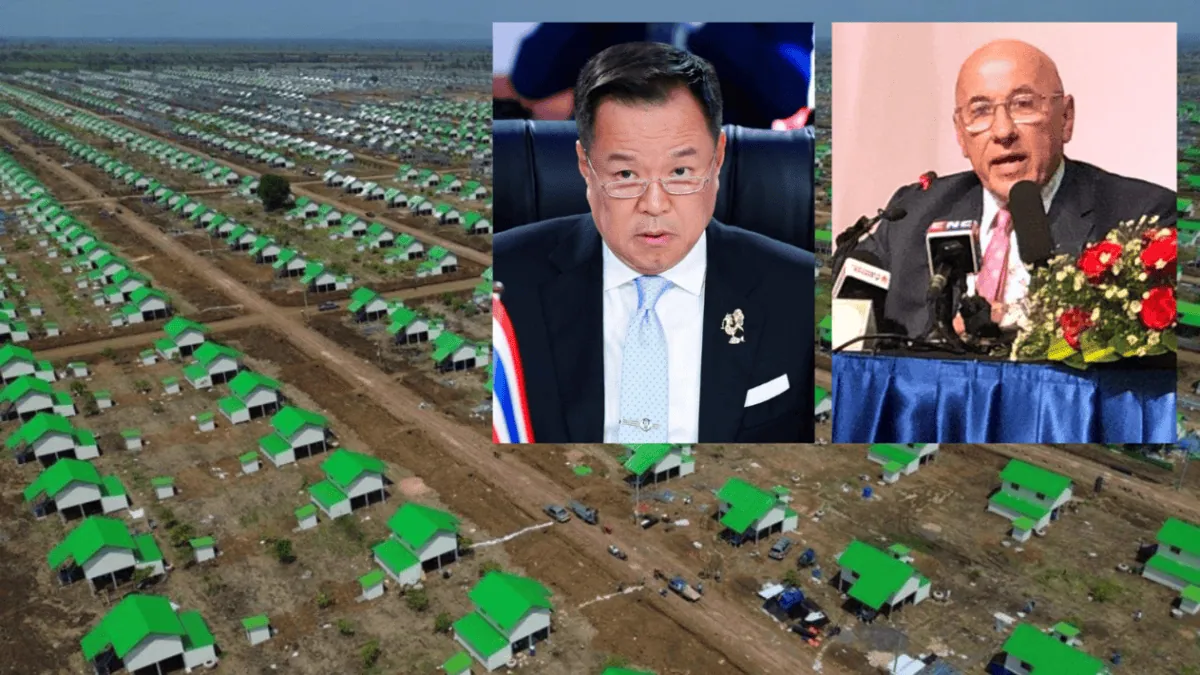 Thai authorities have disputed the work of UN special rapporteur Thomas Andrews who personally visited some of the 20,000 Cambodian civilians who remain displaced following the border conflict. Supplied
#Opinion
Thailand’s decision to attack the findings of the United Nations special rapporteur on the situation of human rights in Cambodia reveals a troubling reality: when confronted with credible, independent evidence of humanitarian suffering, Bangkok has chosen to challenge the messenger rather than address the message.
Following his recent mission to Cambodia, UN special rapporteur Thomas Andrews raised serious concerns about the plight of more than 20,000 Cambodian civilians who remain unable to return to their homes because of the continued consequences of the border conflict. He described seeing with his own eyes blocked roads, shipping containers and razor-wire barriers, and hearing first-hand accounts from displaced Cambodian families whose homes had reportedly been destroyed. His appeal was straightforward: civilians have the right under international law to return safely and swiftly to their homes.
Rather than engaging constructively with these findings, Thailand chose to challenge the credibility of the special rapporteur. This response is disappointing, but perhaps not surprising. Governments confronted with uncomfortable facts often find it easier to discredit independent observers than to confront the realities those observers document.
The office of the UN special rapporteur exists precisely to provide independent assessments free from political influence. Governments are entitled to disagree with their conclusions, but disagreement should be supported by evidence, transparency and constructive engagement — not attempts to undermine the independence and integrity of the UN human rights system.
What makes Thailand’s reaction particularly striking is its apparent inconsistency toward successive UN special rapporteurs. During earlier periods of border conflict, previous mandate holders did not publicly issue similarly strong statements highlighting the humanitarian consequences for Cambodian civilians or the alleged violations of Cambodia’s sovereignty. Thailand did not publicly question the legitimacy of the special rapporteur system during those periods.
Today, however, when an independent expert reports first-hand observations that challenge Thailand’s official narrative, Bangkok has chosen not only to dispute the findings but also to cast doubt on the credibility of the special rapporteur himself. This raises an important question: Does Thailand support independent human rights monitoring only when it produces politically convenient conclusions?
Human rights should never depend on political convenience. The suffering of displaced civilians deserves attention regardless of nationality or politics. Whether the victims are Cambodian or Thai, the international community has a responsibility to ensure that humanitarian principles are respected and that civilians are protected. The issue is not about diplomacy or public relations. It is about people.
More than 20,000 Cambodian civilians remain displaced. Families have been separated from their homes and livelihoods. Communities continue to live with uncertainty. These humanitarian concerns cannot simply be dismissed by disputing the credibility of those who document them.
If Thailand believes the special rapporteur’s findings are inaccurate, the appropriate response is straightforward: present verifiable evidence, facilitate independent access to the affected areas and cooperate fully with UN human rights mechanisms. Transparency strengthens credibility; attacking independent experts weakens it.
Ultimately, the credibility of the UN special rapporteur does not rest on whether governments approve of the findings. It rests on the independence of the mandate, the evidence collected and the integrity of the reporting process.
History has repeatedly shown that attacking those who document suffering rarely changes the facts on the ground. It merely shifts attention away from the real issue: the continuing humanitarian hardship experienced by thousands of displaced Cambodian civilians.
The international community should remain focused not on political rhetoric but on ensuring that international humanitarian and human rights law are respected, civilians can return home safely, sovereignty is respected and lasting peace is achieved through dialogue, international law and accountability.
Independent human rights mechanisms exist to give voice to victims — not to validate the political narratives of governments. When evidence becomes politically inconvenient, the answer is not to attack the institution that documents it. The answer is to confront the facts, alleviate human suffering and uphold the principles of international law. Truth does not become less true because it is politically inconvenient.
Roth Santepheap is described as a Phnom Penh-based geopolitical analyst. The views and opinions expressed are his own.
-Phnom Penh Post-