Cambodia to lead Southeast Asia’s abolition of death penalty
 The Anti-Death Penalty Asia Network welcomes Cambodia's decision to accede to the Second Optional Protocol to the International Covenant on Civil and Political Rights. Khmer Times
Synopsis: The Kingdom nears a permanent ban on capital punishment as regional advocates applaud its move to ratify a major United Nations treaty.
The Anti-Death Penalty Asia Network (ADPAN) has praised Cambodia’s decision to accede to the Second Optional Protocol to the International Covenant on Civil and Political Rights (ICCPR), describing the move as a historic step that will permanently prevent the return of capital punishment in the Kingdom.
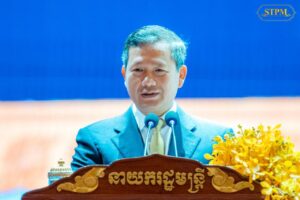
The announcement was made during the 9th World Congress Against the Death Penalty in Paris yesterday, where Cambodia declared its intention to ratify the international treaty aimed at abolishing the death penalty.
In a statement, ADPAN said the decision would “ensure that capital punishment can never be reintroduced in the country” and further strengthen Cambodia’s status as one of Southeast Asia’s only two abolitionist nations, alongside the Philippines.
“Cambodia can become a leader in the regional abolition of capital punishment,” the organisation said, noting that several neighbouring countries continue to carry out executions or have yet to reform their death penalty laws.
Cambodia abolished the death penalty in 1989, with the prohibition later enshrined in Article 32 of the 1993 Constitution. According to the Ministry of Justice, the constitutional ban reflects the Kingdom’s commitment to the right to life and human dignity.
ADPAN said Cambodia’s abolitionist stance is deeply rooted in the country’s tragic history under the Khmer Rouge regime, during which millions of people lost their lives. It also pointed to the Extraordinary Chambers in the Courts of Cambodia, where senior Khmer Rouge leaders, including S-21 Security Centre Chief Kaing Guek Eav, alias Duch, received life imprisonment rather than death sentences.
The group said Cambodia’s choice to pursue justice without executions demonstrates its long-standing rejection of capital punishment, while highlighting the irreversible nature of the death penalty in cases of judicial error.
ADPAN also recognised Cambodia’s consistent support for international efforts to end capital punishment, noting that the Kingdom has voted in favour of seven United Nations General Assembly resolutions calling for a global moratorium on the death penalty since 2007.
Although Cambodia initially postponed ratifying the Second Optional Protocol during its 2014 Universal Periodic Review (UPR) because it needed more discussions between ministries, it formally accepted the recommendations in its 2019 and 2024 UPR reviews.
The regional advocacy body called on the government to complete the ratification process without delay by securing approval from the National Assembly and Senate before depositing the instrument of ratification with the UN Secretary-General, making the commitment legally binding under international law.
ADPAN also encouraged Cambodia to use its unique position to promote moratoriums on the death penalty and abolition across Southeast Asia.
If ratified, the Second Optional Protocol to the ICCPR would reinforce Cambodia’s 36-year record without capital punishment and legally prevent its return.
International Relations Institute of Cambodia Director-General Kin Phea said the move reflects Cambodia’s commitment to human rights, stressing that the right to life is fundamental and that executions are irreversible if wrongful convictions occur.
Documentation Centre of Cambodia director Youk Chhang also welcomed the decision, describing the right to life as an inherent and fundamental human right.
-Khmer Times-
_____________