Rome Visit Highlights Progress in Cambodia’s Inclusive Education Efforts
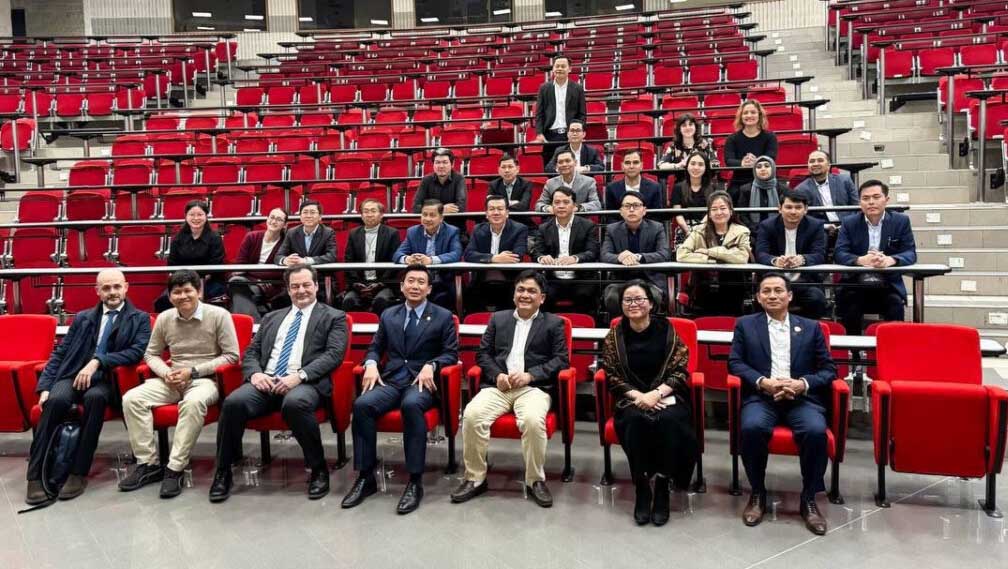 The GAIN (Growth and Inclusivity in Cambodia’s Higher Education) project was hosted by Tor Vergata University of Rome from March 30 to April 1. Supplied
#opinion
Efforts to advance inclusive higher education for Persons with Physical Disabilities (PWD) in Cambodia reached a significant milestone during the second study tour of the GAIN (Growth and Inclusivity in Cambodia’s Higher Education) project, hosted by Tor Vergata University of Rome from March 30 to April 1. The visit brought together a diverse consortium of Cambodian and European higher education institutions and stakeholders, united by a shared commitment to strengthening inclusivity within Cambodia’s tertiary education system.
Longstanding barriers
The GAIN project responds to longstanding structural barriers that continue to limit access to higher education for PWD in Cambodia. These barriers include gaps in policy implementation, limited institutional capacity, insufficient support services and the lack of accessible physical and digital infrastructure.
Students with mobility, visual, hearing, speech impairments and chronic health conditions often encounter systemic challenges that hinder both access to and success within higher education. Against this backdrop, the project seeks to promote a more equitable and enabling academic environment.
Aligned with national and regional policy frameworks, including the Cambodian Higher Education Roadmap 2030 and the ASEAN Enabling Masterplan 2025, the GAIN project emphasises the translation of policy commitments into practical and sustainable institutional reforms.
Its central objective is to equip Cambodian Higher Education Institutions (HEIs) with the tools, knowledge and structures necessary to support diverse student populations effectively. By focusing on institutional transformation, the project aims to ensure that inclusivity becomes embedded in governance, teaching practices and student support systems.
Bold collaboration
The initiative is implemented through a broad and collaborative partnership. Cambodian institutions actively participating in the project include the Royal University of Phnom Penh (RUPP), Institute of Technology of Cambodia (ITC), which serves as the coordinating institution, Western University, Phnom Penh International University (PPIU) and University of South-East Asia (USEA).
These institutions work in close coordination with the Ministry of Education, Youth and Sport, particularly through its General Department of Higher Education, which provides strategic guidance and policy alignment.
European partners contribute technical expertise and facilitate knowledge exchange based on established inclusive education models. These partners include University of Patras, Tor Vergata University of Rome, CESIE and ReadLab.
The collaboration between Cambodian and European institutions underscores the importance of cross-regional partnerships in addressing persistent challenges in inclusive education, such as unequal access to quality learning, limited teacher and academic staff training, and the need for adaptable pedagogical approaches that respond to diverse student needs.
Adapting international practices
The Rome visit served as a platform for structured dialogue, peer learning and the exchange of best practices. Cambodian representatives were able to engage directly with inclusive policies and services implemented within European universities, gaining practical insights into accessibility measures, student support systems and institutional governance.
Such exposure is critical for contextualising international practices and adapting them to Cambodia’s higher education landscape.
To date, the GAIN project has demonstrated measurable progress, with nine deliverables and four milestones successfully completed. These achievements reflect steady advancement in project implementation and coordination. The next phase of the project focuses on a series of key deliverables scheduled for 2026, which are designed to consolidate earlier efforts and translate them into tangible institutional outcomes.
Deliverable outcomes
Among the forthcoming outputs are the development of Institutional Inclusive Action Plans, scheduled for completion by April 2026. These plans will outline specific, context-sensitive strategies for each participating institution to enhance inclusivity across academic programmes, administrative processes, and campus infrastructure. In addition, a Data Analysis Tool and a Policy Conformity Toolkit, both expected by September 2026, will support institutions in monitoring progress and aligning their policies with national and international standards.
Further deliverables include an Inclusivity Engagement Portfolio and a mid-term progress report, both of which will contribute to documenting and evaluating project outcomes. By December 2026, the establishment of international inclusivity centres within participating institutions is anticipated.
Two milestones are particularly central to the project’s long-term impact. The first is the completion of Institutional Inclusive Action Plans by each Cambodian partner institution. These plans will serve as strategic roadmaps for implementing comprehensive institutional reforms. Importantly, while each plan is tailored to the specific context of the respective institution, their collective outcomes are expected to inform the development of a national framework for inclusive higher education.
This process will provide the education ministry with practical insights and evidence-based approaches to guide future policy development.
The second milestone is the establishment of inclusivity centres within participating HEIs by the end of 2026. These centres will function as dedicated hubs for supporting PWD students, offering services such as academic advising, assistive technologies, accessibility support, counselling and advocacy. Beyond service provision, the centres represent a structural commitment to inclusivity, ensuring that support mechanisms are institutionalised and sustained beyond the duration of the project.
The GAIN Project Study Visit 2 in Rome has strengthened international collaboration and reinforced a shared commitment to advancing inclusive higher education in Cambodia. By combining policy alignment, institutional capacity building and cross-cultural exchange, the project is laying the groundwork for a more equitable and accessible higher education system. As implementation progresses, the continued engagement of all partners will be essential in ensuring that the vision of inclusive education becomes a practical reality for all students.
Sengthai Lay is the GAIN Project team leader. The views and opinions expressed are his own.
-Phnom Penh Post-