The Legal Status of the Preah Vihear Boundary and the 1:200,000 Map
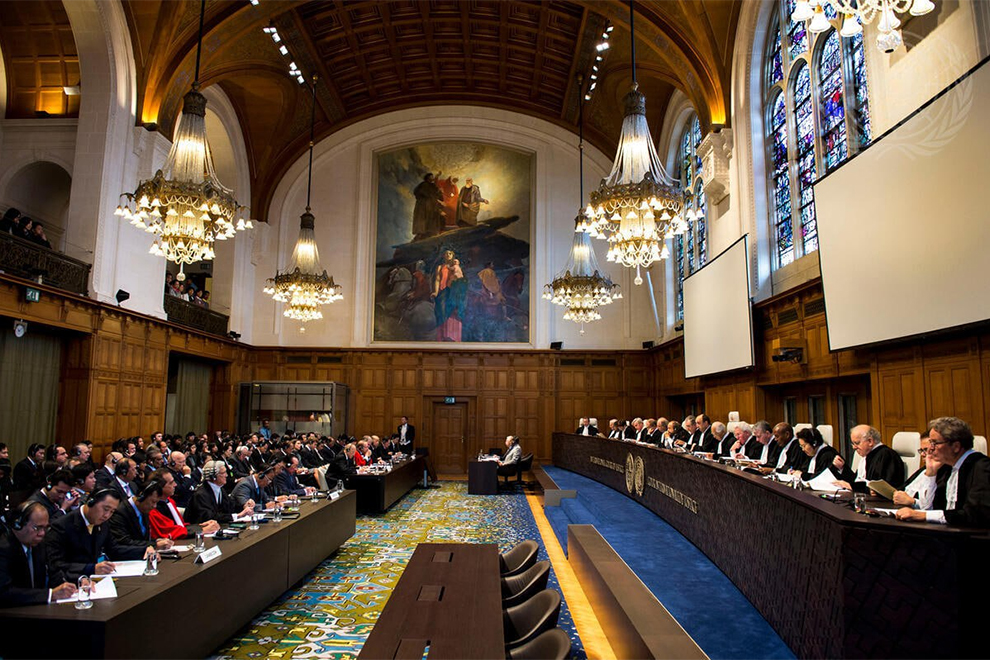 The International Court of Justice declared unanimously that the Judgment of 15 June 1962 had decided that Cambodia had sovereignty over the whole territory of the promontory of Preah Vihear (2013). ICJ
#opinion
Recent narratives circulating on Thai social media claim that newly revealed “secret documents”, technological surveys and domestic registrations somehow invalidate the long-established legal framework governing the boundary area around the Preah Vihear Temple.
Such claims are misleading and lack any credible basis. They appear intended to confuse public understanding, distort the historical and legal record, and advance unfounded narratives about the boundary.
From the standpoint of international law and judicial authority, such claims do not alter the well-established international boundary recognized by the International Court of Justice.
First, the binding judgments of the International Court of Justice in 1962 and 2013 remain the highest authoritative determinations on the matter, widely recognised worldwide as definitive under international law. In its 1962 judgment, the Court explicitly rejected Thailand’s arguments concerning the watershed principle and held that the “Annex I map” or “Dangrek Map” at the scale of 1:200,000, the result of the demarcation work of the commissions of delimitation of the boundary between Indo-China and Siam, constituted the operative basis for determining the international frontier between Cambodia and Thailand, thereby affirming that the Temple and the southern areas of the international boundary line of 1:200,000 maps belong to Cambodia.
The court emphasised that Thailand had accepted and relied upon this map for decades without formal objection. Under international law, such conduct constitutes acquiescence and recognition, making subsequent unilateral challenges legally untenable.
Second, the entire international boundary between the two countries, including in the region of the Preah Vihear Temple, was not arbitrarily created.
Rather, it resulted from the work of the commissions of delimitation of the boundary between Indo-China and Siam, which conducted delimitation and demarcation more than a century ago and produced the series of 1:200,000 maps that formed the binding international legal basis of the frontier.
In its judgments of 1962 and 2013, the International Court of Justice unequivocally reaffirmed that the Temple of Preah Vihear and the southern areas of the international boundary line of 1:200,000 maps are situated within the territory of Cambodia.
Before reaching this decision, the court first confirmed the international boundary line based on the Franco-Siamese treaties 1904 and 1907, particularly the Dangrek maps at scale 1:200.000. Consequently, it held that Thailand was under an obligation to withdraw from that territory all Thai military or police forces, as well as any other guards or personnel, that were stationed there.
Third, it is well established that international boundaries cannot be unilaterally altered. This principle, reflected in doctrines such as stability of frontiers and inherited boundaries, ensures that boundaries established by treaties and confirmed through long practice remain legally binding.
Fourth, the 2000 Memorandum of Understanding between Cambodia and Thailand did not seek to create a new international boundary.
Rather, it reaffirmed that the work of the Joint Boundary Commission (JBC) would proceed on the basis of the existing treaties 1904-1907, protocol of delimitation, the 1:200,000 scale maps, the Procès- Verbaux d’abornement of the Commission of Abornement of Boundary between Indo-China and Siam, and other related documents. Its purpose was technical verification and clarification of the existing international boundary on the ground, not renegotiation of the boundary itself.
Fifth, it is incorrect to claim that technological tools, such as LiDAR surveys can overturn these established legal foundations. Such technologies cannot alter or undermine the nature of international adjudication and the well-established international boundary. If both sides agree on their use, these tools can assist only technical teams of both side in clarifying and verifying the existing international boundary line, but not to change the existing international boundary line nor to create new boundary line.
Under international law and based on the well-established territorial titles established by the treaties of 1904–1907, as well as the accompanying maps and implementing documents, Thai domestic administrative acts, such as the registration of monuments by Thai national authorities including the monument protection and management plan, cannot override internationally recognised boundaries.
Moreover, Cambodia has consistently protested against such unilateral actions, which further reinforces the legality of its position and full compliance with international law.
In conclusion, the legal framework governing the entire international boundary between Cambodia and Thailand, including the Temple of Preah Vihear and the southern areas defined by the 1:200,000 maps, as well as other temples and heritage sites, was firmly established through the Franco-Siamese treaties of 1904 and 1907, the work of the Commissions of delimitation, and the binding judgments of the International Court of Justice in 1962 and 2013.
These legal instruments constitute the authoritative basis of the frontier and cannot be altered by unilateral narratives, domestic administrative acts or speculative technological interpretations circulated on social media.
Roth Santepheap is a geopolitical analyst based in Phnom Penh. The views and opinions expressed are his own.
-Phnom Penh Post-
———————