Thailand: The Sick Man of Southeast Asia
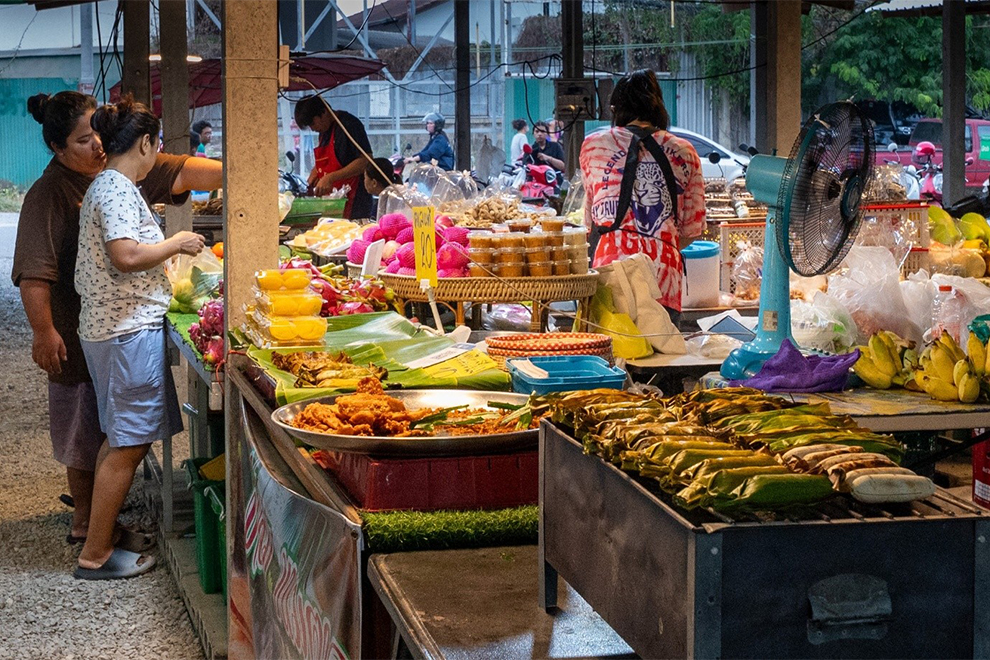 A Local market in Hua Hin, Thailand. FB
#opinion
For decades, Thailand has marketed itself as a pillar of stability, a tourism powerhouse and a gateway economy in mainland Southeast Asia. Yet beneath this carefully curated image lies a chronic condition that has repeatedly undermined the country’s political health, economic prospects, and international standing. In this sense, Thailand increasingly resembles the “sick man of Southeast Asia” — not because of poverty or lack of potential, but because of persistent military domination over politics and the deliberate externalisation of internal crises.
A Chronic Political Illness: Military Dominance
Thailand’s modern political history is marked by a revolving door of military coups, interim constitutions and fragile civilian governments. Rather than acting as a neutral defender of national security, the armed forces have entrenched themselves as a political arbiter — intervening whenever electoral outcomes threaten elite or institutional interests.
This chronic instability has produced predictable symptoms: weak civilian oversight, policy paralysis, erosion of democratic legitimacy and declining investor confidence. Instead of addressing structural problems — inequality, regional disparities or institutional reform — the military’s repeated interventions have frozen Thailand in a cycle of self-inflicted political illness.
External Conflict as Political Medicine
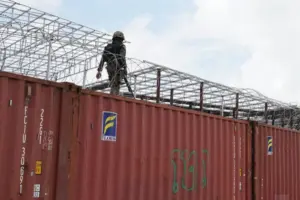
When domestic legitimacy wanes, the temptation to manufacture external threats grows. Periodic escalations along the border with Cambodia fit this pattern. These confrontations are not driven by genuine security imperatives, but by political calculation — rallying nationalist sentiment, diverting public attention and justifying continued military prominence in national life.
Such behaviour mirrors a familiar historical pattern: regimes struggling at home seek relevance abroad. Yet the cost of this strategy is severe. Border tensions disrupt trade, damage tourism flows and undermine regional cooperation — ironically harming the very economic interests that sustain Thailand’s prosperity.
Economic Self-Harm in the Name of Power
Thailand’s economy depends heavily on tourism, foreign investment and regional integration. Any sustained perception of instability — especially conflict with a neighbour — immediately translates into lost revenue, capital flight and reputational damage. Investors and visitors value predictability, not sabre-rattling.
By allowing military politics to override economic rationality, Thailand has repeatedly chosen short-term political survival over long-term national interest. The result is a paradox: a country with strong fundamentals voluntarily weakening itself through avoidable conflict and institutional dysfunction.
Reputational Decline on the Regional Stage
Within ASEAN, Thailand once played the role of mediator and stabiliser. Today, its credibility is increasingly questioned. A state that cannot subordinate its military to civilian authority — or resolve disputes without coercion — finds it difficult to claim moral or diplomatic leadership.
The international community does not view manufactured crises as strength. Instead, they are seen as symptoms of political decay: an inability to govern through consent, compromise and law.
A Curable Condition
Calling Thailand the “sick man of Southeast Asia” is not an insult — it is a diagnosis. The illness is not cultural, economic or societal. It is institutional and political. The cure is a genuine civilian supremacy, democratic accountability and a foreign policy rooted in cooperation rather than confrontation.
Until Thailand addresses the central role of its military in perpetuating instability — and abandons the costly tactic of externalising domestic crises — it will continue to weaken itself, sacrificing prosperity and reputation for the illusion of control.
Dr Kok-Thay Eng is a Cambodian political analyst. The views and opinions expressed are his own.
-Phnom Penh Post-
———————